BSR Podcast Series
Safeguarding Human Rights in High-Risk and Conflict-Affected Areas
April 14, 2026
Guests
-
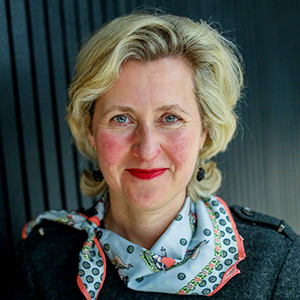
Managing Director, Business Transformation, BSR
Christine Diamente
Managing Director, Business Transformation, BSR

London
Christine leads BSR’s Business Transformation team, helping companies to manage sustainability throughout their business and across their supply chains and to develop resilient business strategies that leverage insights from BSR’s Sustainable Futures Lab.
She works with companies across sectors and geographies to structure a sustainability management approach that mitigates risk and captures emerging opportunities, creating strategic advantage for their businesses, while contributing to a more just, sustainable world. Christine also co-leads engagement with boards of directors to promote effective board governance and leadership ambition on sustainability.
She brings over 20 years of experience in leading brand, sustainability, public affairs, communications, and reputation management with multinational corporations at the executive leadership level. This also includes overseeing corporate relations with external stakeholders, such as the World Economic Forum, the UN, European institutions, and investors.
Previously, Christine was Head of Brand Strategy at Nokia. She has also held major roles at Alcatel-Lucent and Alcatel, leading Brand and Corporate Sustainability and European Affairs. Christine has also served on various boards, including as a chair of the Telecoms Industry Dialogue on human rights, as an advisory board member of Reuters Events Sustainability, as a member of the Alcatel-Lucent Foundation, and on the European Internet Foundation.
Christine holds a MA in History and a BA in History and International Politics from the University of Ottawa. She completed the Management Acceleration Program (MAP) at INSEAD, and she achieved the ESG Competent Boards Certificate and Global Competent Boards Designation (2021). She speaks English, French, Spanish, and Italian.
Recent Insights From Christine Diamente
- Double Materiality Assessments—From Compliance to Strategic Integration / August 25, 2026 / Sustainability FAQs
- Safeguarding Human Rights in High-Risk and Conflict-Affected Areas / April 14, 2026 / Audio
- ESRS Revisions Mark a Turning Point Toward Principle-Based Reporting, With Open Questions / September 23, 2025 / Insights+
- Ten Lessons on Developing Effective Sustainability Strategies / August 5, 2025 / Blog
- Beyond the Business Case Debate: Reasserting the Strategic Value of Sustainability / July 30, 2025 / Insights+
-
Managing Director, Marketing and Communications, BSR
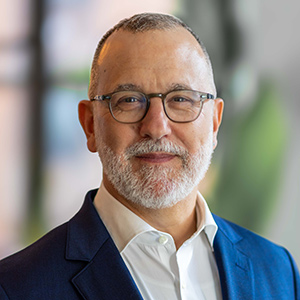
David Stearns
Managing Director, Marketing and Communications, BSR
New York
David leads BSR’s marketing and communications initiatives, working with a global team to amplify the organization’s mission and showcase its activities, impacts, and thought leadership to members, partners, and the wider business and policy community.
David previously worked for The B Team, a group of global business and civil society leaders working to catalyze a better way of doing business for the well-being of people and the planet. Throughout his 20-year career, he has worked with businesses and nonprofits in economic development, public health, and sustainability to define and communicate their purpose and impacts. .
He has built high-impact communications campaigns for a collaboration to improve maternal health in Zambia and Uganda, driven top-tier media coverage for a major economic development project in upstate New York, and helped strengthen parliamentary capacity and voter education efforts in South Africa and Zambia. He began his career as a newspaper reporter.
David earned his M.A. from The Elliott School of International Affairs at the George Washington University and his B.A. in Journalism and Political Science from Michigan State University.
Recent Insights From David Stearns
- A More Pragmatic Era for Sustainability: Time to Act / June 25, 2026 / Reports
- Responsible AI: A Conversation with Elisa Moscolin, EVP of Sustainability, Sage / May 29, 2026 / Audio
- Responsible AI: Regulatory Trends and Governance Challenges / May 20, 2026 / Audio
- Responsible AI in Practice / May 13, 2026 / Audio
- Safeguarding Human Rights in High-Risk and Conflict-Affected Areas / April 14, 2026 / Audio
-
Jenny Vaughan
Former Managing Director, Human Rights and Inclusive Business, BSR
Description
Christine Diamente, BSR Managing Director of Business Transformation, and Jenny Vaughan, BSR Managing Director of Human Rights and Inclusive Business, join host David Stearns to discuss how companies operating in conflict-affected and high-risk areas can navigate increased risk of involvement in human rights abuses. Together, they explore best practices for anticipating and mitigating potential risks, steps to protect employees across the supply chain, and BSR tools companies can use to help manage specific human rights risks in these contexts.
Listen
Transcription
David Stearns:
Welcome to BSR Insights, a series of conversations on emerging and cross-cutting business, economic, and social issues. Drawing on BSR's expertise for more than three decades of leadership and sustainable business, we'll help practitioners and decision makers to navigate today's increasingly complex world. I'm your host, David Stearns.
Thank you for joining us. In this episode, we'll be continuing our deep dive into how businesses are navigating geopolitical tension and uncertainty. Companies operating in conflict-affected and high-risk areas face increased risk of involvement in serious human rights abuses. To help us unpack the business response, we're happy to be joined today by Jenny Vaughan, BSR Managing Director for Human Rights and Inclusive Business, who leads BSR's Human Rights Working Group and advises companies across multiple sectors on the development of human rights strategies and stakeholder engagement plans. We're also joined by Christine Diamente, BSR Managing Director, who leads BSR's business transformation team, helping companies to manage sustainability throughout their businesses and across our supply chains, and to develop resilient business strategies that deliver value for companies and society.
So welcome, Christine and Jenny. It's great to be chatting with you today.
Christine Diamente:
Thank you, David. It's a real pleasure to be here and I'm delighted to be with you too, Jenny.
Jenny Vaughan:
I am equally delighted. Enjoying the conversation already.
David Stearns:
Thank you, Jenny. So I guess the best place for us to start is, when we talk about doing business in conflict-affected or high-risk areas, and this may seem obvious, but just to level set for our listeners, what conditions typically exist that would qualify a place or situation as high-risk or conflict-affected? I'm going to start with you, Jenny.
Jenny Vaughan:
Well, we're really talking about a broad range of areas. We're not just talking about active war zones. We're discussing contexts that include places affected by weak governance, corruption, social and political instability, ethnic or religious tensions, history of violence, and restricted civic space. So these are places, in other words, that are not only affected by conflict today, but are at risk of conflict tomorrow. And so as a consequence, human rights abuses are much more likely in these localities. There's a heightened risk of those human rights abuses to people all across the value chain, whether they're workers, community members, workers in the value chain, and that of course creates a range of heightened risks for businesses as well. The practical takeaway here is that companies really need a broad and forward-looking definition of conflict affected and high-risk areas, not just a narrow conflict equals war lens.
David Stearns:
Christine, anything to add?
Christine Diamente:
Well, I would agree with everything that Jenny has said in terms of how she would qualify these. It's not just one location or one specific set of circumstances. And from a general business transformation perspective, we would also look at this in terms of severity of the risks from a wider enterprise risk value perspective, and what are the negative impacts in the company operations, business continuity, their supply chains, their corporate governance risks and ethical risks, and we would balance this with how grave the negative impact would be on people risks, as well as climate and nature. So it really is about understanding the specific set of circumstances and then being able to weigh how this impacts the business and the wider operating environment on society and the environment.
David Stearns:
I guess that leads to a follow-up question for me, which is one might also wonder, should companies even be doing business in these contexts where they're at risk for conflict? What's the case for businesses continuing to operate or source from these places? Why wouldn't they just say, "You know what? There's too much risk here. The conflict is too acute. We're just going to hit pause and we’ll come back.” What's the case for staying in operation?
Christine Diamente:
Well, David, we're in a very volatile world right now that is shifting exponentially. So what seemed like low-risk a few weeks, or hours, or even short months ago, today is high risk from a people and operational safety perspective. So without repeating all the important speeches and acclimations that have been said in the last few months, including Mark Carney, who says we are now in a rupture, things are spinning at an exponential pace. That said, at BSR, we work with member companies around the world, including those who may be located or have operations in challenging business and social environments. Our work consists of working with company leaders, or sustainability leaders, or general counsel, finance, risk, procurement, supply chain, as well as executive leadership and boards to navigate these risks—whether it's human rights, climate, nature, or the use and deployment of responsible technology.
Now, your question is, what is the business case to operate or source from these locations? And the honest answer is it will vary from case to case, company to company. It will also vary on time horizons, from an immediate negative environment to the ability of that country or location to evolve in the medium to long term, and the ability of the company to have a positive transformational impact. So it's our role to support companies and business leaders on understanding the risks, the impact, the outcomes—how this can transform with the right company strategy, the right implementation, the right risk management, but also with principled, pragmatic leadership for their employees, customers, and also the geographies that they're navigating.
David Stearns:
Jenny, from the human rights lens of this, what's the case for continued operations?
Jenny Vaughan:
I'll add two points to what Christine has just said. The first is that there is a business case for operating in these locations if the right approach is taken and if the business is conducted responsibly. Those companies that can manage the heightened human rights and operational risks of doing business in these localities are, frankly, better positioned to access markets than those companies that don't have those responsible practices in place. From a human rights perspective, responsible investment and responsible business can actually contribute to the economic elements that enable peace and stability through human capital development, job creation, service delivery, and generally providing for economic stability. So from their potentially positive impacts on the context, companies can help create a enabling environment for business, as well as for peace and stability through responsible business in these places.
David Stearns:
So we've established the reason for companies to continue. I guess the question now is, how do they make sure that they get it right? How do companies effectively manage the heightened level of risk? What should companies do proactively to prepare to manage their work in conflict-affected areas that ensures the protection of human rights and business continuity? Jenny, maybe you'll take a crack at this one.
Jenny Vaughan:
Well you've suggested the answer in your framing, David. Preparation is key. You want to know first off where you are present that is considered to be conflict-affected or high-risk. And when I say present, I'm thinking of the entirety of the value chain—so operations but also sourcing, as well as sales and distribution. You want to know the anticipated human rights, as well as business risks in these localities. You want to anticipate the various scenarios for how the situation might evolve and how that will impact your business, but also how that will shift your human rights risk profile as well.
And you want to know what your key principles are for decision-making if a crisis erupts, because it is difficult to make clearheaded decisions when you're operating under a crisis context. So some of the tactical things that companies might do to prepare: one, might be mapping the company footprint across high-risk geographies, identifying and prioritizing which of those are highest risk. And then in those areas, ensuring that there are solid early warning and monitoring systems that could be drawing on global data, but also local insight and stakeholder input as well.
You might want to conduct heightened human rights due diligence in these locations. So that would entail a human rights assessment, but also a context assessment so that you can assess the ways in which your business activity interacts with the context and might risk exacerbating certain conflict dynamics or human rights risks. And then of course, you want to develop management measures to prevent and mitigate any of those anticipated human rights risks. But you also want to be thinking globally about what are your systems, policies, and processes that already come into play in conflict-affected and high-risk areas—like global risk intelligence, security management, crisis management—and consider how you can integrate human rights into those policies and procedures so that as those functions are operating in those places, they are also able to carry out their function with an awareness of how to manage human rights impacts as part of that.
David Stearns:
Christine, I'm going to turn to you in one second. But I want to ask a quick follow-up to Jenny. Because you do a lot of work on stakeholder engagement, I'm curious to know, how does one do stakeholder engagement in these contexts in a way that also protects the safety, security, and wellbeing of the stakeholders?
Jenny Vaughan:
There are two things. So first of all, stakeholder engagement is something that should be done after you've already identified, well any business activity in a place, but a high-risk context. It's difficult to develop stakeholder relationships once a situation has deteriorated. So you do want to make sure that you have done that proactively. And when we're thinking about stakeholders in conflict-affected and high-risk areas, we're thinking about a broad range of actors. We're certainly thinking about affected stakeholders who are impacted by the business activity—and it will be important to identify individuals with whom you can retain regular contact so that you're able to get in touch with them if and when communications or the context deteriorates in some way.
You also want to rely on other kinds of stakeholders that will have an awareness of the situation. So that might be the diplomatic community, the humanitarian community, peer companies. Those are actors with whom it's critical to share a joint analysis so that when a situation deteriorates, and often these are contexts that are quite opaque to outsiders, you want to make sure that you have good sources of information.
Now, once the situation has deteriorated and you're considering how to engage affected stakeholders who might be vulnerable for various reasons, it's important to consider both digital safety, as well as in person safety. So that might be using encrypted channels that might be relying on trusted relationships that you've already developed, or trusted interlocutors in civil society or within your own employee base, to engage with people. And that, of course, is going to include considerations of physical safety where you are meeting people. Are they able to get there safely? Do they put themselves at risk by sharing information? So I think, again, this is one of the reasons why developing advanced information and trusted relationships is so key, because you need to be able to rely on those to provide intelligence if and when the situation devolves.
David Stearns:
Christine, I'll throw it over to you. Anything to add to Jenny?
Christine Diamente:
Look, I think Jenny has covered all the major points. Maybe if I can add in just a few more thoughts here. When you're conducting your human rights due diligence, make sure to think holistically across human rights and the environment. Many environmental aspects today in high-conflict areas are also people-affected areas. So really have that holistic lens to due diligence. The second thing is, when you're looking at sustainability risks across the value chain and you're building those partnerships, as Jenny said, and really thinking of your stakeholders, think of your suppliers as well and your supplier resilience and building a partnership with them. They will be impacted by these high-risk situations. And so diversifying your supplier partnership base, but also deepening your relationship with your suppliers, is very important.
And then there's another consideration that is very important today. It's about energy security as well. So accelerating the energy transition, making sure that you are fostering these, using science-based data to make these company decisions, and thinking long-term. Even if it's very difficult under high pressure situations that really need you to react in the short term, it's important that leadership see that wider horizon and keep a cool head. And lastly, just two quick points. I can't agree more with what Jenny said about stakeholder engagement. It's about building those trusted partnerships across a wide array of stakeholders, including having an eye on affected stakeholders and vulnerable communities.
This can be done in an informal or more formal way, for example, with the board and leadership building advisory councils. So it allows you to anticipate some of those emerging risks and not necessarily to react to them. And finally, use foresight rather across every single step that has been outlined. We are in a volatile environment. Everything is erupting and disrupted every second of the day. Using foresight thinking to pivot to different scenarios will allow agile thinking, agile leadership, and agile businesses, hopefully in a position to positively impact these high-risk scenarios.
David Stearns:
So I think we've covered the real importance of proactive planning to do a lot of this work before things turn south. In those unfortunate situations, such as the one we find ourselves in right now—where an active conflict does emerge and we move rapidly from a relatively safe, stable, predictable operating environment into something a bit more fraught—what should companies expect to do once conflict breaks out and we move into more of a crisis management mode? What are the best practices there? I'll start with you, Jenny.
Jenny Vaughan:
Sure, David. Well, first of all, the first consideration is often going to be around staff safety and security. And so that, of course, includes not only own employees, but also contractors and perhaps workers in the value chain, as well as affected stakeholders in surrounding communities. So ensuring that they are safe is often a first consideration.
The second thing we'll often see is, of course, crisis management structures being spun up. Immediately, it is going to be critical for companies to ensure that those crisis management teams are informed by human rights expertise. Ideally, this will have been pre-positioned through awareness building and through human rights assessments. But if that hasn't been the case, then it's an opportunity to either bring in a human rights specialist or to consult a human rights specialist who can provide input to decision makers. From there, we start getting into different kinds of decisions.
Often companies will begin asking themselves, "Do we need to curtail operations in some way? Should we start considering market exit?" This is the stage at which companies will need to make informed stay/leave decisions so that no matter what they are doing, they're considering the human rights impacts of either remaining in market or exiting. And again, regardless of the decision they take, they're able to manage the, frankly, inevitable human rights impacts of either decision. The last thing we might see companies doing at this stage is a rapid human rights assessment. So that might be a quick way for companies to reassess how the context has changed, how their business footprint has changed, how their human rights risk profile has changed, and how they now need to shift their management measures in order to both enable business continuity or manage those business risks, as well as to manage the emergent human rights risks that have arisen into that context.
David Stearns:
Are there situations where companies can inadvertently, by continuing their operations or maybe even misreading the situation, contribute to heightened human rights risks? Is that part of the decision-making process that goes on here?
Jenny Vaughan:
Yes, that is the real risk. That's the real concern that we see from a number of stakeholders globally, and it can happen through a few different pathways. It can happen, for example, through business relationships if a business is in a partnership with a conflict actor—so perhaps a defense ministry or an actor that is a non-state armed actor. It can happen as well through delivery of services in places that might put staff at risk or may put customers, patients, or users of that product at risk as they access it.
So as Christine has very aptly pointed out throughout this conversation, the specific risks will vary company to company depending on the nature of their business activity. But there is the possibility that the company will either put people at greater risk because the context has changed, or that they will actually exacerbate certain conflict dynamics through the provision of resources to particular conflict actors.
David Stearns:
Christine, I want to throw it over to you. Anything you'd like to add to this?
Christine Diamente:
Well, I would like to really reemphasize the first point that Jenny made. It's really about the safety and security of employees, of customers, of the people the business operates with, and also ensuring business continuity. And if sustainability-related risks are already embedded in an enterprise risk management process, and this is reviewed on a regular basis, this for me is one of the key flags to note. Do you have a holistic thinking of sustainability impacts, risks, and opportunities on the risk size? Are they embedded in your enterprise risk management process? Are they reviewed on a regular basis? Again, so you're not reacting, but able to foresee and hopefully have the right tools and actions in place once, unfortunately, the situation arises. And this also includes thinking about your supply chain risk resilience, which is often, and particularly today, very volatile and very much exposed.
And the last thing I just want to say is that at BSR, we work with our members as trusted partners and we have tools—Jenny has listed quite a few—whether it's on human rights, whether it's on environment, whether it's on supply chain, whether it's on foresight, or on risk resilience. We're there to help our members think through different approaches, connect them with our business membership of nearly 300 members, as well as our ecosystem of trusted experts and partners. So it's from the tools to the support and advisory in a trusted business network where we can really help them think this through and make sure that they're moving towards the right actions that will foster safety, security, business resilience, and also the rule of law.
David Stearns:
That's a very convenient segue to my next question. So thank you for that, Christine. I wanted to do a bit of a look under the hood of all of this to understand, maybe a little bit more tactically, who within companies should be involved in effectively managing these responses. Presumably, a human rights team would be actively involved. Maybe not all companies have a dedicated human rights team—they'd likely have a sustainability team. But who does need to be an active and engaged participant in managing companies through these conflict-affected or higher-risk situations? Is it sustainability teams? Who beyond that? And maybe even specifically within the sustainability team, who's involved in this? I'll start with you, Christine.
Christine Diamente:
I'm going to give you a broad answer and then I'm going to defer human rights to Jenny. But really, sustainability expertise increasingly is embedded across the entire business. And it involves every major function from risk to legal, to finance, to procurement, to people functions and human resources, all the way up to executive leadership and the board. So my first major message is it's important that sustainability expertise, whether it's the chief sustainability officer or relevant functions, be at the table in the business processes that manage these crisis situations to ensure that every material sustainability-related impact, risk, and opportunity is reviewed; that they have holistic thinking of this from human rights, social impact, nature, environment, all the way to corporate governance and ethics; and that they're thinking about this broadly. We are also in the age of AI, responsible technology use and deployment, which is something that we need to act on and embed now in terms of how we review this.
And so this means all those areas need to be considered. It's not one person, it's the expertise of sustainability embedded across the functions, with the chief sustainability officer having that strategic viewpoint on what the company's impacts, risks, and opportunities are. But Jenny, why don't you tell us about human rights?
Jenny Vaughan:
Well, you've set the stage for me perfectly. I agree with the point that most sustainability and human rights are not a single function. They really should be embedded across the organization. That does require the infusion of human rights expertise at some stage, but that practice of identifying and managing human rights issues in a conflict-affected or high-risk context really sits across a number of different functions—so certainly all of those site level functions, whether that is site level management, community liaison roles, procurement functions, but also those corporate functions like risk, security, legal, procurement, etc. As always with human rights due diligence, integration is the name of the game. So monitoring, identification, and management really should be proactively integrated into policies and procedures that these other teams are utilizing across the board, but specifically in conflict affected and high risk areas.
David Stearns:
Thanks for that, Jenny. So I'm going to close us out by pulling the lens way back to talk about the broader role of responsible business or business behaving in ways that actually generate positive outcomes. And at the risk of sounding Pollyannaish, I guess the question I have is, do companies have a role to play in addressing conflict and actually contributing to the resolution of conflict and contributing to peace building? What is the positive side of this? So we've talked about risk management, mitigating risk, protecting employees, but on the other side of it, what is the role of business and actually helping to contribute to the building of peace and stability? Maybe I'll start with you, Jenny.
Jenny Vaughan:
Companies do have a role to play in creating the foundations for peace and stability. They are not typically going to be at the negotiating table, but peace and stability arise from a number of different economic, social, political, and environmental factors. And as private sector actors, companies are well positioned to shape those economic dynamics. So first of all, they are not neutral. We said that before when we talked about the impact that companies can have adversely on a context. By contrast, they can have positive impacts as well through their operations and their business relationships. Essentially, this can arise through features like job creation, human capital development, service delivery. These are, again, all really important foundations for peace and stability.
There are a couple of key principles here. One is that this needs to be intentional and conflict sensitive. So again, it's really about how business is done in these challenging contexts and whether it's done responsibly, with an awareness of conflict dynamics and consideration for not only operating in a way that doesn't exacerbate those dynamics, but in a way that might actually reinforce some of those positive dynamics and create a virtuous cycle in that context.
Second principle, of course, is this idea of first, do no harm. So make sure that you are mitigating your potential adverse impacts and then also consider, is there something that we can be doing to contribute to more peace-positive outcomes, either through the way in which we do business or as companies are thinking about their social investment programs and community investment programs? Are there things that we can be doing to enable a more active promotion of some of the elements that contribute to peace and stability in that particular location?
David Stearns:
Christine?
Christine Diamente:
I agree a hundred percent that business has a role to play. It has a role to play in defending the rule of law, democracy, and science-based thinking. I mean, companies can engage externally in a way that is principled yet pragmatic, to defend transparency and fair rules, even in difficult circumstances. They can also build coalitions, as we've talked about, with like-minded external partners that share the same principles, whether it's business, government, academia, civil society, or others.
We're in a different world. And I think it's time for leadership on the type of world you want to do business in. And BSR has published quite a bit on this. What type of world do you want to do business in? And this means going back to basics on security, on safety, on stable business operating environments where companies can foster long-term value internally for the company, as well as externally on society, the economy, and the environment.
So I think this is a time where we really need some vision, some long-term thinking, but most importantly, some principled, pragmatic leadership in a world that continues to be very, very volatile.
David Stearns:
That’s a very eloquent way of closing us out, Christine. So thank you for that. Thank you both for these really helpful insights. I would encourage all of our listeners, if you are interested in learning more about this, we have plenty of tools available on the BSR website, tools around rapid human rights due diligence, and also a suite of advisory services that can help you to navigate these issues. So visit us at bsr.org. Thanks again, Christine and Jenny, for this BSR Insights Podcast. I'm David Stearns, and we'll see you next time.
Thanks for listening. For more in-depth insights and guidance from BSR, please check out our website at bsr.org and be sure to follow us on LinkedIn.
BSR’s latest sustainability insights and events straight to your inbox.
Topics
Resilient business strategies for a complex world.