
About BSR®
(Business for Social Responsibility®)
BSR® (Business for Social Responsibility®) is a sustainable business network that provides global insights, strategic advisory services, and collaborations to nearly 300 member companies in Asia, Europe, and North America. BSR® helps its members to see a changing world more clearly, create long-term value, and scale impact.
Our Mission
BSR’s mission is to work with business to create a just and sustainable world.
Our Vision
We envision a world in which all people can thrive on a healthy planet.
Our Scope and Reach




16
million
People directly employed by BSR member companies

US$5.5
trillion
Total market cap of BSR member companies
About BSR
Learn how BSR is working with business to create a just and sustainable world.
How We Work
Delivering impact.
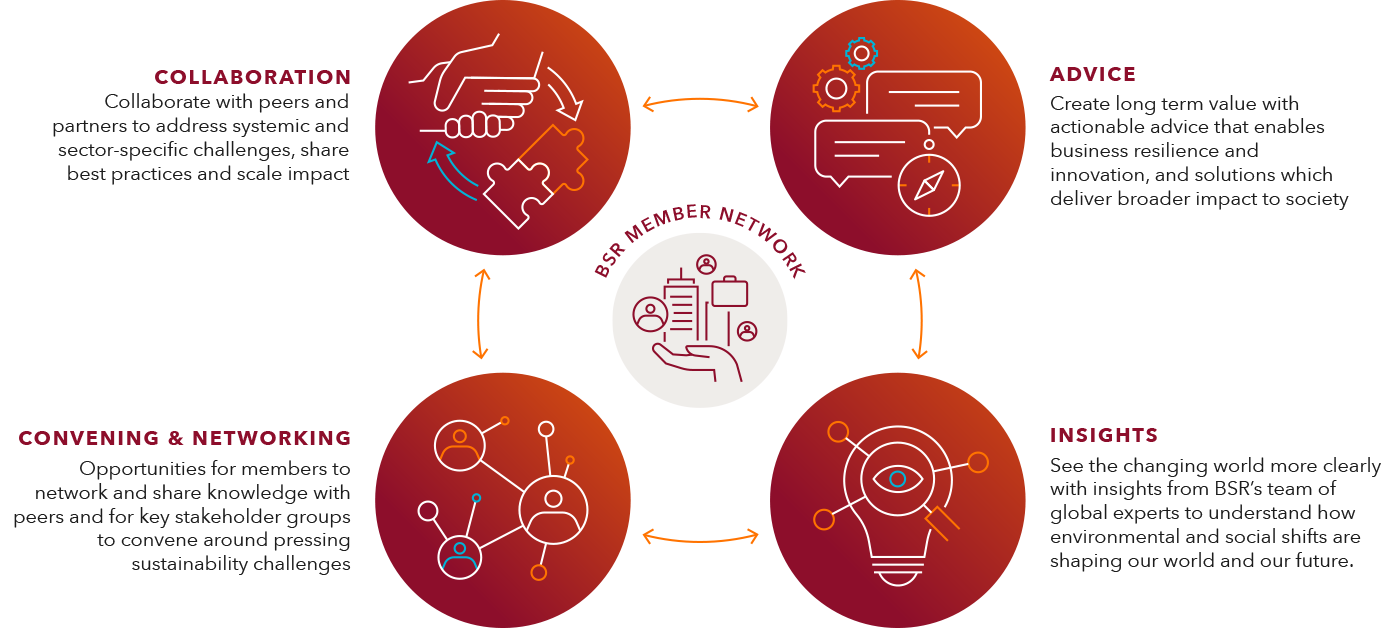
A graphic with four circles:
- Collaboration: Collaborate with peers and partners to address systemic and sector-specific challenges, share best practices and scale impact.
- Advice: Create long term value with actionable advice that enables business resilience and innovation, and solutions which deliver broader impact to society.
- Convening and Networking: Opportunities for members to network and share knowledge with peers and for key stakeholder groups to convene around pressing sustainability challenges.
- Insights: See the changing world more clearly with insights from BSR’s team of global experts to understand how environmental and social shifts are shaping our world and our future.
With BSR Membership in the center of these four circles.
Core Principles
Putting our Mission Into Action
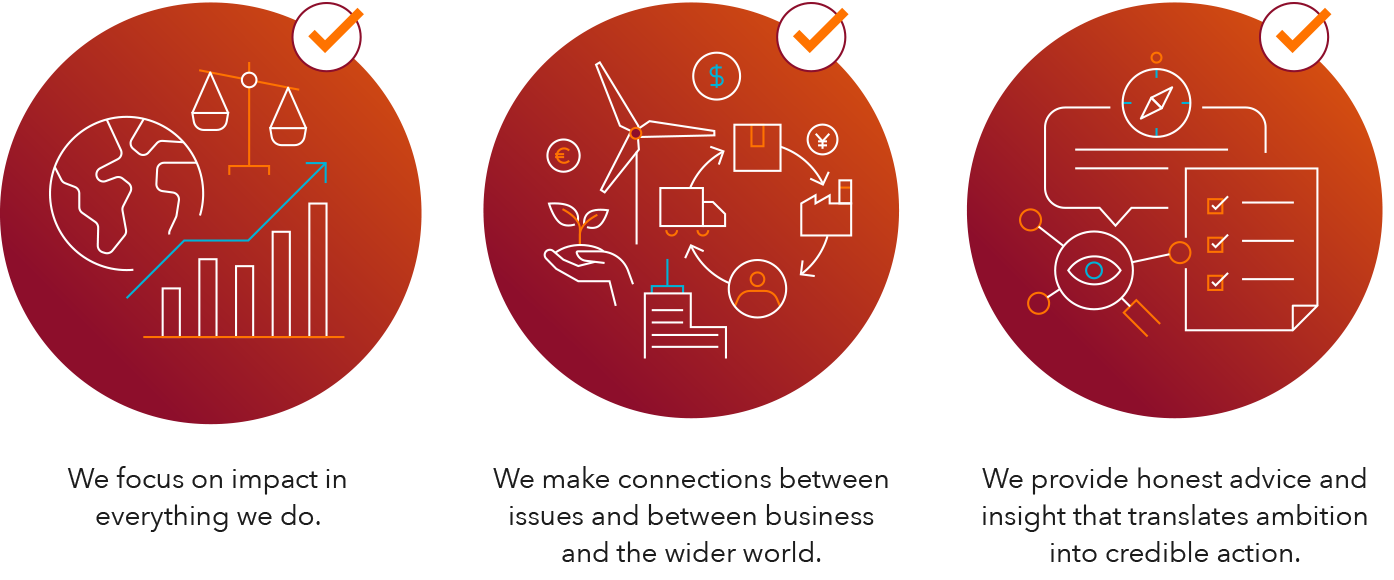
A graphic with three circles:
- We focus on impact in everything we do.
- We make connections between issues and between business and the wider world.
- We provide honest advice and insight that translates ambition into credible action.
Our Difference
BSR works with members and partners in pursuit of a world in which all people can thrive on a healthy planet.
Our work is enabled by long-term relationships with a growing member network of nearly 300 of the world’s most influential and dynamic companies. Together, we collaborate to create resilient, thriving enterprises, and shape an economy based on equity and sustainability. Our efforts are enriched by collaboration with a diverse network of partners and stakeholders from civil society, philanthropy and the public sector.
Illustrative Member List
This list includes many but not all of BSR’s current corporate members.
Roark Capital Management, LLC
Eisai Company, Ltd.

Securitas AB
Recruit Holdings Co., Ltd.

Bain Capital, LP
Norwegian Cruise Line Holdings Ltd
Societe des Produits Nestlé S.A.

Mattel, Inc.

Reliance Worldwide Corporation Limited
Asahi Group Holdings, Ltd.
FEMSA Servicios S.A. de C.V.

LuxExperience Group
Reports and Financials
BSR Reports
Audited Financials
Our People
Making the world a more just and sustainable place isn’t possible without a great diversity of people and minds. What makes BSR unique is the variety and the richness of the different people that we bring together.