The Challenge
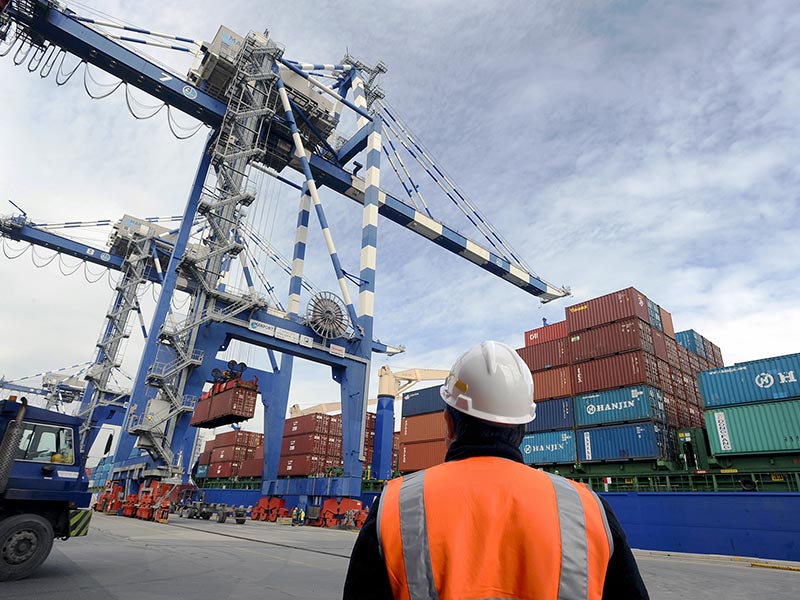
As the world’s largest container shipping company, Maersk Line transports more than 15 percent of all shipped containers. In an industry that transports more than a third of the value of global trade—and accounts for about 4 percent of the world’s carbon emissions—Maersk Line has a tremendous economic, social, and environmental footprint. Facing pressure to reduce the company’s environmental and social impacts, Maersk Line leaders viewed this challenge as an opportunity to offer customers a value proposition on sustainability that could not be matched by competitors. Company leaders asked BSR to help develop a “future-proofed” sustainability strategy.
Our Strategy
BSR and Maersk Line collaborated to build a comprehensive sustainability approach that supports the corporate strategy and responds to long-term trends. Our work fell into three phases:
- Internal Review and Current State
Through interviews with executive management, regional leaders, and sustainability professionals, BSR gathered details about Maersk Line’s corporate objectives, strategy, business model, and existing sustainability efforts. This work clarified company strengths and weaknesses and defined key drivers for the company’s sustainability performance. We discovered that Maersk Line lacked a comprehensive approach to working on and communicating about sustainability, which made it difficult for company managers to establish a business case for new programs.
- External Review and Future State
Next, we built a set of future trends such as “hypertransparency,” regulated carbon, and resource constraints that business leaders would need to consider in strategic planning for the next seven to 10 years. We then tested these trends with employees and management teams to ensure a global perspective and identify specific regional challenges. Together with consultations with the company’s major customers and key industry stakeholders, this input helped company leaders articulate the near-term changes in the business environment, including the direction of key customers’ expectations.
- Build Vision and Strategy
BSR helped Maersk Line define a strong sustainability vision supported by objectives such as reducing carbon-dioxide emissions by 25 percent by 2020 and striving for zero sulfur-dioxide emissions. This strategy will raise the bar for sustainability in the industry. BSR also helped Maersk Line develop objectives, strategies, and key performance indicators to guide the company’s future work in the core areas of environment, social responsibility, health and safety, security, and business ethics. In what is a first for this industry, Maersk Line integrated sustainability into its customer value proposition, underlining the idea that sustainability strengthens the company’s competitive edge and serves as a means of market differentiation.
Our Impact
BSR’s work has helped give Maersk Line a new, comprehensive direction for sustainability—and the company has reaped positive results from this course. In 2010, the management team declared that environmental sustainability would be one of the company’s top three future differentiators. In September 2010, company leaders announced that Maersk Line would switch to low-sulfur fuel when calling port in Hong Kong, thus contributing to an 80 to 95 percent reduction of local sulfur-dioxide emissions that have a damaging impact on port communities’ health. In part because of these efforts, in November 2010, the company received the European Business Award for Environmental Awareness for integrating sustainability into its business strategy and operations.
Resilient business strategies for a complex world.