Searching for:
Search results: 361 of 1263
Case Studies | Thursday July 13, 2023
Conducting a Climate Risk Assessment through Scenario Analysis
BSR worked with Mercer International Inc., a global producer of market pulp and solid wood products, to conduct a climate scenario analysis.
Case Studies | Thursday July 13, 2023
Conducting a Climate Risk Assessment through Scenario Analysis
Preview
Introduction
BSR worked with Mercer International Inc., a Nasdaq-listed global producer of market pulp and solid wood products, to conduct a climate scenario analysis. With a tailored set of three climate scenarios, BSR helped Mercer explore key climate-related risks and opportunities facing the company and identify strategic interventions to improve the overall resilience of the company’s strategy. With strong engagement from senior leaders throughout the process, this effort was not a “check-the-box” disclosure exercise—instead, it was a strong analysis of climate impacts to Mercer’s business strategy.
Background
Mercer is a global producer of market pulp and solid wood products. With mills and manufacturing facilities in North America and Germany, Mercer is strategically located next to strong softwood and hardwood suppliers. Softwood and hardwood pulp are utilized for tissue, specialty paper, packaging, and more. In addition to pulp, Mercer also produces dimensional lumber for construction as well as cross-laminated timber (CLT). CLT is an alternative building product used to replace steel and concrete, driving greenhouse gas (GHG) emissions reductions in building construction.
The Challenge
Given Mercer’s dependence on sustainable forests for pulp and timber production, the company must have a clear understanding of climate impacts. At the current level of warming, forests from which Mercer sources have already experienced climate-related events like disease, insect infestation, and increased wildfires. These, in turn, impacted the company’s operations, supply, and logistics. In 2021, an atmospheric river event in Canada affected Mercer’s transport and logistics of supply and delivery of its products to key markets. With these existing impacts on supply and logistics, as well as forecasted rise in demand for pulp and timber products, focusing on resilience and strategic interventions to key climate impacts is critical for Mercer's business.
Our climate scenario analysis approach helped facilitate that strategic thinking. After conducting Mercer’s first climate scenario analysis in 2020, Mercer was familiar with BSR's deep expertise in futures thinking and engaged BSR to help refresh and assess climate-related impacts on various business units across the globe. Mercer also understands the need to periodically reevaluate ever-changing climate risks, and it considers climate scenario analysis based on the latest science to be a crucial solution for companies and sectors highly exposed to climate change.
BSR’s Response
Our first step for this work was to understand Mercer's business strategy and market positioning in order to augment and tailor our off-the-shelf climate scenario narratives, originally developed in partnership with Bloomberg Philanthropies. The scenario set was built using the Network for Greening the Financial System (NGFS) base scenarios and projections.
BSR built out three in-depth scenario narratives: Current Policies, Net Zero 2050, and Delayed Transitions. This involved researching emerging trends and signals of change as well as integrating data projections from the NGFS climate scenario dataset. To tailor the scenarios, in collaboration with the Mercer team, BSR identified four critical themes of uncertainty for the company and conducted desktop research and analysis to learn how these themes could plausibly play out in each scenario. We also identified six critical transition data projections from the NGFS database and three key physical climate impact projections from the Climate Analytics portal that were relevant for Mercer’s main regions of supply and operation in Canada and Germany. With the full set of tailored scenarios, we began the internal stakeholder engagement process.
Our initial engagement consisted of small workshop sessions across critical business functions to identify a long list of climate-related risks and opportunities that Mercer might face in each future scenario. Through these working sessions, we engaged with 16 senior leaders across six functional areas, including operations, finance, forest management, sales, and logistics.
BSR collated the key risks and opportunities by scenario and identified thematic hotspots and overarching future trends that may present significant risks or opportunities to Mercer's business across the entire set of scenarios.
Our final workshop, the last step in our approach, brought back the senior leaders from the initial interviews. During the workshop, we started by validating the identified key risks and opportunities and then shifted quickly into exploring the hotspots in more detail. For each hotspot, BSR facilitated small group discussions to explore clear actions and strategic interventions that Mercer can perform across the organization to mitigate risks and seize the opportunities related to each hotspot. This final session encompassed actions to increase and enhance strategic resilience to these climate impacts.
Impact
BSR conducted a robust scenarios-based climate risk assessment to prepare Mercer for a TCFD-aligned climate risk disclosure. More importantly, BSR helped facilitate critical strategic conversations on the resilience of the overall business and growth strategy to key climate risks, and we equipped Mercer with a near-term roadmap that outlined key next steps and governance-related responsibilities to ensure successful management and mitigation of these risks.
"This in-depth assessment of Mercer's future resilience under all three climate change scenarios has enabled our senior leadership, across all key functional areas, to better understand the risk and opportunities of climate change and develop a more robust strategy that will incorporate these key learnings."
Bill Adams, VP, Sustainability and Innovation
After our work with Mercer, the company was able to produce a robust TCFD report and integrate resilience into its business strategy and planning processes.
Conclusion
As part of a wider set of activities in the business toolkit, climate scenario analysis is a powerful method for uncovering and assessing a company’s strategy against uncertain climate risks and emerging opportunities. By testing how to best respond to these uncertainties using actions that build resilience, companies can explore pathways for delivering successful business outcomes in the face of climate change.
"Undertaking a climate scenarios analysis was a strategic necessity for Mercer to ensure resilient operations and achieve sustainable growth. Proactively assessing and preparing for the potential effects of climate change helps businesses navigate the uncertain future. Specifically, it enables informed decision-making, fosters innovation, and helps build operations that can adapt, thrive, and contribute to a more sustainable world.”
Shahed Tootoonian, Director, Finance and Sustainability
Get in Touch
Interested in enhancing your company’s strategic resilience to climate impacts through climate scenario analysis? Please contact BSR’s Climate Team.
This case study was written by Nina Hatch and Ameer Azim.
Blog | Wednesday July 12, 2023
How Diversity, Equity, & Inclusion is Gaining Momentum in Asia-Pacific
Here are our top three reflections from our engagement with Asian Pacific companies on Diversity, Equity, and Inclusion so far.
Blog | Wednesday July 12, 2023
How Diversity, Equity, & Inclusion is Gaining Momentum in Asia-Pacific
Preview
In recent years, companies have been facing the evolving challenges of responding to structural and social inequities. As a result, Diversity, Equity, and Inclusion (DEI) approaches are increasingly used as a strategic tool to improve competitive advantage, enhance employee engagement, and create a more supportive and inclusive workplace that values differences. While much of the spotlight has been on the multitude of DEI initiatives in North America and Europe, there is a significant uptick in interest in what DEI means in Asia-Pacific (APAC).
Given the different levels of maturity and ambition of companies and the varying perspectives on DEI across regions, there is no global framework or a “one-size fits all” approach. Since COVID-19 and recent protests around structural racism in North America and Europe, the discourse around DEI has also gained more traction in APAC and has moved the needle to some extent on business awareness, action, and approaches.
Although DEI is becoming a priority for some companies in APAC, the majority is still moving at a relatively slower pace than their North American and European counterparts. This may be primarily due to different cultural and organizational dynamics as well as fewer compliance-related expectations.
At the BSR Asia offices, we have been proactively engaging with our member companies in APAC on understanding DEI priorities. Throughout our engagement, stakeholders often ask: Is DEI in APAC behind, or is it just different? Given our experience, we are leaning towards the latter question. Here are our top three reflections from our engagement with APAC companies on DEI so far:
1. DEI is a relatively nascent topic in APAC but is growing in momentum
The business case for companies demonstrating a clear and actionable commitment to DEI has been discussed at length—whether as a competitive advantage in attracting talent, or that diverse companies are more profitable, innovative, and more likely to exceed financial targets.
For APAC companies, DEI initiatives in APAC have focused on diverse representation and gender-related issues, such as increasing female leadership roles in the workplace. Efforts are often centered on “Diversity and Inclusion” but are now slowly including the concept of ‘Equity’—a pillar that is often overlooked. However, it is evident that the slower pace of change does not necessarily imply a lack of interest or willingness to ramp up efforts to address other dimensions of DEI.
2. Social Norms and Cultural Nuances Shape DEI Priorities
APAC is one of the most ethnically, culturally, and linguistically diverse regions in the world. Against this backdrop, it requires a more nuanced understanding of culturally appropriate DEI approaches. The current landscape varies by country, making the practice of DEI more complex. In contrast, DEI themes and issues of interest in North America and Europe more generally relate to historical and social dynamics, for example, around race, ethnicity, ability, and class.
The fundamental definitions and principles of DEI hold significance and relevance, albeit with a different lens. In APAC, there is an emphasis on collective rights and identities rather than individual rights which can influence how DEI is approached.
Gender inequality in the workplace also remains a key issue in many APAC countries, with women being underrepresented in leadership positions. For example, Japan and South Korea consistently rank lowest in terms of gender equity among leading economies and this gender gap is often a DEI priority in the region. On the topic of LGBTQIA+ rights, recent surveys show that there is more public acceptance of same sex relationships in Singapore and Thailand compared to a few years ago. As of July 2023, Nepal is also on track to be the second country in Asia to legalize same-sex marriage. On the other end of the spectrum, homosexual activity is criminalized by harsh penalties in Brunei.
Public attitudes around other DEI themes are also shifting. For example, in the aftermath of the COVID-19 pandemic, mental health and wellness has emerged as a crucial topic that was once considered taboo. As a result, an increasing number of companies throughout the region are now prioritizing this issue and engaging in more widespread discussions about it.
3. Legal and Regulatory Frameworks in APAC are Still Evolving
From a legal and regulatory perspective, recent developments have signaled marked progress for inclusion. Even in the absence of robust legislation on DEI disclosures, the business case and stakeholder expectations are still main drivers of DEI in APAC. Australia and New Zealand are at the forefront of gender equity in the region, especially following the introduction of new legislation regarding gender pay gap disclosure.
The DEI related legislative process may be facing a relatively slower uptake than usual in more conservative societies, and this could potentially be a barrier to progress. However, there have been recent developments which have signalled positive changes in the region. From a corporate governance perspective, Japan revised and added a clause of promoting diversity within its Corporate Governance Code in 2021, requiring companies to establish and disclose policies and goals on diversity. Japan has also recently introduced gender pay gap disclosures for companies. The Hong Kong Stock Exchange and Singapore Stock Exchange have also updated board diversity disclosure requirements for listed companies.
There seems to be a global shift in the understanding of DEI, however, there is no “one size fits all approach” for APAC and the conversations are always evolving. Though some companies have already taken steps forward by formalizing commitments to DEI, inquiry into how it may be adjusted to suit different contexts is ongoing. To determine appropriate approaches, engagement with our member companies and careful consideration of cultural and social norms will be necessary on a case-by-case basis, though certain challenges, opportunities, and principles may remain constant across the board.
For more information on how BSR works with companies in Asia Pacific on DEI, please get in touch.
Blog | Tuesday July 11, 2023
China’s New Drive for Sustainable Consumption
A push for sustainable lifestyles is changing markets in China, driven by policy and shifting consumer preferences. Businesses wanting to stay the course need to adapt - our China team shares how:
Blog | Tuesday July 11, 2023
China’s New Drive for Sustainable Consumption
Preview
A comprehensive drive to foster sustainable lifestyles is underway in Chinese markets, propelled by a range of policy incentives, targets, and environmental protection measures. This transformative shift has been catalyzed by the pandemic which heightened awareness of the crucial importance of sustainable choices in the face of disruption experienced by fast fashion and retail giants.
As global brands experience some challenges in the Chinese market, businesses looking to make their mark are compelled to go beyond the fast retail model, reconsidering everything from their supply chain to their core offering. At the same time, the market for second-hand goods is growing, alongside the use of recycled materials in products, bringing new opportunities as well as disruptive potential.
This shift is not merely a temporary trend: it is driven by a strong foundation of policy measures and infrastructure development. Alongside climate goals and emission reduction targets, the Circular Economy was promoted to a national priority for 2021-25 to support well-regulated growth in the secondhand market and develop recycling systems for waste materials across manufacturing, forestry, and agriculture. Comprehensive urban recycling systems are also delivering returns (literally): in Shanghai, recycling of domestic waste has reached 40%, with 98% of communities served.
At the same time, we are witnessing significant transformation in consumer behavior in China. This is fueled by a growing awareness of the environmental impact of our choices and facilitated by improved access to sustainable products and services, thanks in particular to the rapid growth of e-commerce platforms since the pandemic. For instance, consumers seeking closer connections with producers are now buying fruit and vegetables directly from thousands of farmers on their WeChat stores. Online resale and reuse platforms are also proliferating: popular ones include Xianyu, swap platform Ewu, recycling platform Aihuishou, and donation platform Ant Love—alongside the expansion of high street secondhand stores like Duozhuayu. This coincides with a growing preference for reusable products such as cups and bags.
It’s of little surprise that China is experiencing a flourishing ecosystem of sustainable start-ups. One driver is a strong preference for local and small-scale brands that provides unique and sustainable offerings, reflecting shifting consumer preferences away from mainstream fast retail models. Another is the Dual Circulation Strategy: a plan launched by the Chinese government in 2020 as the basis for its 14th Five-Year Plan to strengthen its economic power and domestic stability through balanced global and domestic markets with focus of increasing economic self-reliance across production, technology, rural development and consumer markets. Other recent government policies foster an environment conducive to entrepreneurship through regulatory and financial support for innovation, such as preferential tax policies for venture capital and special bonds for innovation in science and tech.
How Global Businesses Can Respond
Global businesses sourcing from and operating in China need to align their strategy and practices with rising consumer demand for innovative products and marketing approaches to match, which is emerging as a force for economic development against an uncertain backdrop. China is still recovering from intense zero-Covid measures, coupled with political leadership reforms. Geopolitical tensions continue to pose challenges, resulting in a fragile market characterized by reduced consumer confidence and production stability. However, international businesses and top personalities are beginning to revisit the Chinese market, emphasizing the importance of maintaining ties with China.
To stay the course, Chinese businesses are showing their capacity to integrate sustainable product solutions, from alternative materials to production techniques, to embrace shifting consumer preferences. EV battery company CATL has opened the world’s first zero-carbon factory in Yibin, while Longyuan Power is blending waste wind turbine blades into building materials. Businesses operating in China, including those exporting to global markets, need to match their pace in adapting and anticipate the broader implications of this new status quo that will reshape China’s consumer market over the next three to five years.
Failure to respond to the changing landscape exposes companies that stick to traditional models to loss of market share, missed opportunities for sustainable business, penalties for regulatory non-compliance and even reputational damage. Successful strategies will take a long-term view aligned with consumer aspirations to contribute to a sustainable future.
Actions for business:
-
Enhance collaboration to steer the market toward more sustainable offerings that meet consumer expectations, both throughout your supply chain and beyond it, through cross-sector initiatives, research partnerships and innovation accelerators.
-
Invest in innovations and initiatives that foster circularity, from textiles recycling to closed loops for nitrogen in agriculture. Look for opportunities to reintegrate all waste streams, including water and energy.
-
Integrate sustainable offerings across the product journey, from design and choice of materials through to retail channels. Design for longevity and respect consumers’ right to repair.
-
Increase supply chain transparency to meet the rising scrutiny of Chinese consumers and align with international standards.
-
Given the growing preference for local brands, work with local partners to better understand the dynamics of a rapidly changing and diverse market.
To understand more about how these trends in consumer preferences, regulation and innovation towards sustainable lifestyles are reshaping your sector and review your strategy to take advantage of emerging opportunities, contact BSR’s Director in Shanghai, Lin Wang.
Blog | Thursday July 6, 2023
Advancing a Just Transition Across Sectors
BSR, The B Team, and We Mean Business launched the Just Transition Resource Platform , which provides a step-by-step approach for companies across all sectors to advance a just transition.
Blog | Thursday July 6, 2023
Advancing a Just Transition Across Sectors
Preview
It is clear that we need to accelerate the transition to a net-zero economy to mitigate the worst impacts of climate change. At the same time, we need to ensure a just transition—one that is fair and inclusive in line with ILO’s definition of a just transition as “greening the economy in a way that is as fair and inclusive as possible to everyone concerned, creating decent work opportunities, and leaving no one behind.” Because a net-zero future requires a transformation of economies and societies, a just transition is relevant and essential for all sectors—not solely energy. Therefore, all businesses need to examine and address how climate change and climate solutions affect people across value chains.
BSR, The B Team, and We Mean Business launched the Just Transition Resource Platform, which provides a step-by-step approach for companies across all sectors to advance a just transition. Businesses can take Action, drive Ambition, pursue Advocacy, and maintain Accountability in their just transition efforts. The Platform aims to guide companies across these four pillars and compiles resources, frameworks, and recommendations from leading organizations.
Just Transition across Sectors
While the predominant focus has centered on the energy sector, a just transition transcends any single sector's boundaries. From agriculture to manufacturing, transportation to finance, every sector has a role to play in enabling a just transition. Several examples include:
-
As food, beverage, and agriculture companies decarbonize, farmers and producers along the value chain will need access to technology, training, and financing to integrate sustainable and regenerative farming practices and irrigation systems, and efforts need to be made to avoid leaving smallholder farmers and suppliers behind.
-
Footwear, apparel, and textile companies can promote a just transition by centering the voices of affected stakeholders, including groups like migrants and informal waste pickers, while also focusing on reskilling, redeployment, and decarbonization efforts through financial aid and training, including in research and development for circularity for fiber and textile producers and processors.
-
For mining, the increased demand for renewable energy transition minerals and the closure of coal mines and thermal power plants necessitates considerations such as reskilling and upskilling workers, redeployment of workers and the creation of new green jobs, rejuvenating mining-dependent communities following closures, and continuing to conduct human rights due diligence.
-
In construction, upskilling and reskilling of workers is essential for a just transition to evaluate and procure cleaner materials, develop sustainable building practices, and adopt circularity. Companies also need to ensure worker health and safety, for example, in relation to more heat-intensive outdoor working conditions.
-
For shipping, seafarers, port workers, and engineers will need adequate skills and training to accommodate and operate new technology systems as well as manage alternative fuels. Moreover, enabling a just transition will include supporting the redeployment of workers as shipyards become automated.
-
The financial sector plays an important role in enabling a just transition by providing capital investment, risk-sharing mechanisms, and insurance to address challenges such as the global inequitable distribution of climate and transition financing, and by deploying just transition measurement frameworks to assess companies' performance and guide investment flows.
How do companies advance and enable a just transition?
While a just transition is relevant for all sectors, the challenges and opportunities are unique to local operating contexts, and business models. However, many of the building blocks are the same. These include; understanding and addressing social implications; stakeholder engagement and social dialogue as a vehicle for decision-making; planning for the future workforce; ensuring human rights are respected; and the importance of leading by example and advocating for policies that enable a just transition.
For business, ensuring a just transition is essential to maintain viability and continuity in the transition to net zero. It is an opportunity to strategically prepare for and effectively handle the societal, operational, and reputational consequences that arise from business transformation as well as meeting the growing expectations of workers, communities, and investors.
Navigating a just transition
The Just Transition Resource Platform is designed to help companies understand what actions they need to take to address and enable a just transition within their company and sector, and to provide additional resources and guidance published by a range of leading organizations. Nonetheless, because advancing a just transition is new territory for many companies, we are eager to hear your perspective, efforts, and challenges:
-
What tools, guidance, or resources do you need?
-
What challenges are your company facing in advancing a just transition?
-
Can you share any learnings on what has worked well or where your company has faced challenges?
-
How else can the Just Transition Resource Platform best serve your company’s needs?
-
Would you like to collaborate within or across sectors to understand, develop solutions, or measure impacts related to ensuring a just transition for all?
Please contact us with your thoughts through this form, and we will do our best to help address these gaps and questions!
Advancing a net-zero transition that is fair, inclusive, and just for all can only be accomplished if we all contribute. This starts with all sectors considering how climate change and climate solutions affect people across their value chains.
Blog | Thursday June 29, 2023
Why Climate Transition Plans Must Support a Just Transition
Climate transition plans should describe measures to ensure a just and equitable progression from fossil fuels to renewables. Check out four key components companies should outline in their plans.
Blog | Thursday June 29, 2023
Why Climate Transition Plans Must Support a Just Transition
Preview
Climate transition action plans lay out the measures a business will take to reach net zero ambitions and facilitate their transition to a more sustainable and net-zero future. In addition, they should include climate objectives and goals and how they will be achieved, and outline protocols for governance and accountability, business and financial planning, implementation, organizational culture alignment, and engagement with stakeholders, value chains, industry, and policy. Transformative plans build resilient business strategies.
The Impact of a Net-Zero Transition on Workers
The transition to a net-zero economy and the ongoing impacts of climate change pose risks to workers and communities. As industries undergo the transformation necessary to reduce greenhouse gas emissions to achieve a net-zero future, workers face economic uncertainties and job displacements. As businesses switch to renewable energy and redesign products and services, workers will find their skills unaligned. For example, the IEA estimates that 5 million mostly well-paying jobs in the extractives sector will be lost by 2030, which will lead to near term shocks to communities and long-term structural impacts.
A transition to a net-zero future has the potential to harm local economies as company supply chains are moved to support low-carbon products and services. Local economies built around supporting the manufacture of high-carbon products, traditional industrial agriculture, and extractives operations face the potential for significant economic downturns.
Also, communities at the frontline of climate change will remain vulnerable to climate impacts such as extreme weather events. They will face challenges to recover and become resilient due to limited access to resources such as financing, insurance, healthcare, and clean energy.
How CTPs Can Address Worker Displacement and Build Resilience
Climate transition plans should describe measures to ensure a just and equitable transition from fossil fuels to renewables and help build community resilience to climate change along companies’ value chains to ensure that workers and frontline communities are not left behind in the path to a net-zero economy.
By incorporating just transition considerations, companies can enhance worker and community resilience, and minimize material risks across the value chain. A just transition is not only an ethical imperative but also a strategic business approach that can lead to long-term success, resilience, and shared prosperity.
Key Components of Climate Transition Plans That Support a Just Transition
1. Social Dialogue with Workers
Workers facing disruptions are adept at describing the challenges they face and what expectations they have from employers. The creation of a forum for social dialogue with workers will build respect and mutual understanding, which can lead to better long-term solutions. Climate transition plans should describe tools businesses are deploying to facilitate social dialogue with employees.
For example, Mercedes Benz created a “people plan” as part of its CTP, which has become an integral part of its sustainable business strategy. The plan describes how the company will invest in good working conditions, and provide continuing education for its employees. The people plan describes how internal conversations will be held with all departments to identify and pick up on new trends, share experiences and create secure jobs.
2. Co-creation of Solutions with Frontline Communities
Frontline communities understand the issues faced by cities and towns on the frontlines of climate change. They also understand what solutions are needed to minimize impacts and build resilience. Companies should engage in a collaborative process with communities to co-create solutions and take collective action. Climate transition plans should describe the strategies businesses are taking to co-create solutions with these communities.
For example, Microsoft is exploring models that link their carbon-free energy commitments with community-led clean energy projects, aiming to equitably distribute the benefits of the clean energy economy. Microsoft is partnering with organizations like Volt Energy Utility to establish new models, such as "equity PPAs," that not only bring renewable energy online but also create opportunities for frontline communities.
3. Deployment of Resources to Address Dislocations and Build Resilience
Beyond social dialogue and co-creation, business support of a just transition will require the expenditure of financial and capital resources. Climate transition plans should describe how resources will be deployed to support worker reskilling and retraining and to implement local solutions which promote community resilience.
4. Responsible Engagement in Public Policy to Support a Just Transition
Businesses cannot address these systemic problems alone. Global, national and sub-national policies are necessary scaffolds to motivate all parties to incorporate justice into required greenhouse gas emission reductions. BSR will describe how responsible policy engagement should be incorporated into climate transformation plans in an upcoming blog.
Climate transition plans must prioritize a just transition to ensure that workers and frontline communities are not left behind in the path to a net-zero economy. Incorporating a just transition perspective into climate transition plans is vital for ensuring an equitable and sustainable future.
By embracing shared prosperity, social protection, consultation, and collaboration, businesses can drive positive change while minimizing the negative effects of the transition. The development of an ambitious CTP which transparently declares the practical implementation strategies companies will take to address climate injustice and minimize worker displacement further supports their commitment to a just transition.
Blog | Wednesday June 28, 2023
Navigating Data Privacy in Post-Roe America
One year since the overturning of Roe v Wade, the policy landscape remains uncertain and active litigation in many states continues to cause confusion for providers and patients.
Blog | Wednesday June 28, 2023
Navigating Data Privacy in Post-Roe America
Preview
One year ago, the US Supreme Court overturned the landmark 1973 ruling which established constitutional protection for abortion. The overturning of Roe v Wade enabled state governments to impose new restrictions, bans, and trigger laws on abortion and reproductive rights, severely curtailing human rights including access to healthcare, access to information pertaining to family planning, and the right to privacy, among others.
A year later, the policy landscape surrounding abortion remains uncertain and subject to ongoing litigation.
Legislative Developments
The past year has seen abortion access curtailed across the nation. Since the overturning of Roe, 24 states have enacted full bans or significant restrictions on abortion access, and active litigation in many states continues to cause confusion for providers and patients. Today, 25 million women of childbearing age now live in states with bans or restrictions on abortion.
State-level regulations on abortion and reproductive healthcare do not stop with bans and restrictions. A handful of states are regulating services connected to reproductive rights as well: Texas has recently introduced bills which would ban credit card companies from processing abortion-related transactions and would require internet service providers to ban access to websites that provide abortion information or facilitate access to abortion.
There are ongoing counter efforts to codify access to abortion at the national level, and state initiatives to pass legal protections, however, abortion-related cases continue to be disputed at the federal level. In April, the US Supreme Court blocked a proposed restriction on the drug, Mifepristone (part of the two-drug regimen for medication abortion); nonetheless, this case continues to unfold. And in May, a bill known as the “My Body, My Data Act of 2023,” was introduced to the Senate. If passed, it would protect sensitive sexual and reproductive health data by establishing data minimization requirements and enshrining individuals’ right to access and delete their sensitive health data.
User Data and Abortion
Amid the regulatory turmoil, a variety of questions have arisen about the role of data—and the companies collecting data—in both amplifying and addressing risks.
The past year has posed unsettling questions about how data collected by companies may be used to infer rightsholders’ abortion and reproductive statuses and what happens when law enforcement agencies demand that this data is shared with them.
Early cases caught the public’s attention, including one example involving a Nebraskan woman who was arrested for helping her daughter access an abortion after Meta was legally required to hand over her Facebook Messenger communications to law enforcement. Since then, there has been growing concern about the types of data that can be used to incriminate abortion seekers and providers such as payment data, location data, and menstrual app data.
For example, Google has pledged that it will not store location history for visits to abortion centers; however, some believe that the company has struggled to fully implement this pledge in its entirety, claiming some inconsistency with sensitive location history data. The company is currently involved in a class action lawsuit for tracking data from healthcare providers’ websites, including Planned Parenthood.
However, it is not just large technology companies that face these risks — companies in ad-tech, financial services, retail, and consumer healthcare do too. Companies like fertility-tracking app, Flo Health, and analytics company, Kochava, have faced penalties from the Federal Trade Commission for selling sensitive reproductive health data and location data from reproductive healthcare clinics respectively.
One year after the overturning of Roe, one thing remains the same: the evolving nature of the political environment and state legislation creates a challenging environment for companies to navigate abortion and reproductive rights related issues responsibly; with real consequences for rightsholders seeking timely access to reproductive care.
BSR makes the following recommendations for companies collecting data (including, but not limited to technology companies) to safeguard the rights and privacy of abortion seekers and providers:
Recommendations
- Undertake human rights due diligence to identify risks to sexual and reproductive health that may be associated with the development or use of new or existing platforms, devices, products / product features. As part of their due diligence, companies should also consider state restrictions on reproductive rights or bans on abortion when deciding on the location of offices, data centers, or other assets that might give a state jurisdiction over the user data that the company holds.
- Apply best practice privacy principles, such as data minimization, purpose limitations, purpose-based data retention, and user transparency and control.
- Provide users with transparency about data practices, particularly for data pertaining to reproductive health. Increase the level of transparency users have on the types of data collected, how it is stored, how long it is stored, and with whom it is shared.
- Embed guidance and support on privacy into the product or platform to protect users seeking sexual and reproductive healthcare services. This may take the form of click through prompts about password security, how to set up multi-factor authentication, or ways to protect privacy when users search for information pertaining to sexual and reproductive healthcare services.
- Deploy end-to-end encryption on private messaging services.
- Set default privacy settings to the highest level of privacy protection. Privacy protections should be based on an opt-out model, not an opt-in model.
- Continue investing in efforts to ensure that policy commitments (e.g., “sensitive area” location data collection) are effectively implemented in practice.
- Apply human rights principles (such as the Global Network Initiative Principles and Implementation Guidelines) when responding to government or law enforcement demands for user data.
- Notify users when a government or law enforcement demand has been made for their data, when legally able to do so.
- Support legislation intended to protect the right to abortion and the privacy of abortion-related data, including federal level privacy protections.
For further information, including how BSR can support you with conducting human rights due diligence related to privacy and data risks and reproductive services, please contact the team.
Blog | Thursday June 22, 2023
How to Engage Suppliers on Scope 3 Reductions
Supplier engagement stands as a critical avenue for reaching net-zero. Here are some common actions businesses have taken to navigate relationships with suppliers and lower scope 3 emissions.
Blog | Thursday June 22, 2023
How to Engage Suppliers on Scope 3 Reductions
Preview
The science is clear: companies need to halve greenhouse gas (GHG) emissions by 2030 and reach net-zero by 2050 to avoid the worst impacts of climate change. For some years, companies have had the chance to commit to these targets via the Science Based Targets initiative (SBTi) and directly contribute to reaching the goals of The Paris Agreement. Thankfully, the number of commitments from business has risen exponentially.
Given that upstream scope 3 emissions on average are more than 11 times higher than a company’s operational emissions, supplier engagement stands as a critical avenue for reaching net zero. Supplier engagement represents relatively new territory for many companies. Many have yet to engage in difficult conversations with key suppliers to demand action, and best practice is in short supply.
BSR and the UN Global Compact Network Denmark made a ‘call for cases’ last year to gather good examples of how to engage suppliers in climate targets. The new report Supplier Engagement in Action: Examples from Denmark on Scope 3 Reductions is the result. It provides concrete examples and clear guidance in an effort to inspire and motivate other companies to take climate action with their suppliers.
The eight cases in the report prove that there is no “perfect recipe” for supplier engagement and scope 3 emissions reduction, and each company must create its own strategy.
There are, however, common actions from companies within the report:
- Integrate climate considerations into procurement: Procurement departments are on the ‘front line’ of scope 3 and need the education, tools, and business alignment to operationalize decarbonization into their everyday practices. TDC NET, a telecommunications provider, has created a specialized tool to determine the carbon intensity of sourced products and materials and puts supplier in its development program to support their decarbonization over time when lower-carbon alternatives are not available. Arla Foods, a dairy cooperative, has implemented a system where farmers will fetch higher prices for their products based on the climate and nature interventions they implement, such as land use, feed efficiency, soil biodiversity, and use of renewable energy.
- Top-down support and internal buy-in: Support from top management is necessary to ensure alignment between decarbonization and overall business goals, as well as necessary resources.
- Segmenting scope 3 emissions and suppliers: No company can tackle everything at once, so mapping the supply chain to locate hotspots, understand supplier maturity on climate, and identify possible abatement levers can help companies in taking tailored, manageable, and effective action on decarbonization.
- Continuous dialogue, cultural understanding, and supplier support: Companies may have a very diverse supplier base, so tailoring asks and solutions to specific geographies and offering materials in local languages can help bring suppliers along the journey more effectively.
- Tracking progress through best-available climate data: Effective climate action is underpinned by reliable climate data— the adage ‘you can’t manage what you don’t measure’ —so utilizing credible, third-party databases like CDP or collecting primary data can help to track and ensure progress over time.
- Partnerships for decarbonization challenges. Many challenges cannot be solved by any one company alone, making partnerships for decarbonization— such as R&D for lower-carbon products —a key component of decarbonization. For example, VELUX, a company that produces windows and related products, has identified its biggest GHG hotspots and co-developed a low-carbon solution using recycled aluminum to achieve reductions that were impossible if they acted alone.
We hope that these insights can help your company to advance your scope 3 strategy. In the decisive decade, we call on companies to take action, learn from their mistakes, and keep moving ahead on the journey to net zero.
Access to the full report: Supplier Engagement in Action: Examples from Denmark on Scope 3 Reductions
Blog | Thursday June 15, 2023
The US Supreme Court Ruling on Affirmative Action: A Business Response
The end of affirmative action poses a risk to long-term corporate economic success. We share seven key steps business can take to ensure progress toward a more diverse, equitable, and inclusive economy.
Blog | Thursday June 15, 2023
The US Supreme Court Ruling on Affirmative Action: A Business Response
Preview
It is expected that the US Supreme Court may issue a landmark decision that ends the practice of affirmative action this month. The ruling would effectively ban US colleges and universities from considering race as a factor in admissions decisions which, as illustrated by existing state-level bans of the practice, can reshape the demographics and diversity of campuses for generations.
More broadly, as research has shown, the consequences of a national ban on affirmative action are likely to ripple throughout the US economy as decades of efforts to increase social and economic participation by historically excluded populations are upended and schools, businesses, communities, and governments become more racially, and even ideologically, homogeneous.
For business leaders that care about hiring and retaining diverse and exceptional talent, developing and delivering innovative products and services, and attracting a diversified consumer base, the end of affirmative action should be seen as more than another philosophical or policy debate in the so-called “culture wars.” Indeed, business leaders should understand and respond to the end of affirmative action for what it is: a significant and material risk to long-term corporate economic success.
As such, bold and committed action is needed in the months and years ahead to ensure that progress toward a more diverse, equitable, and inclusive economy is not lost, nor business value diminished. Even as we wait to see the final ruling, there are seven key actions businesses can take:
Underscore Your Company’s Long-Term Commitment to Diversity
- Reiterate your company’s commitment to building and maintaining a diverse workforce and organization. According to recent public opinion polling, 69 percent of adults agree that a company should respond to issues surrounding race, including supporting schools and communities teaching about the impacts of slavery and racism. Raise awareness of your company’s commitment to operationalizing DEI initiatives, developing products and service offerings that meet the needs of diverse communities, and supporting broader racial equity and social justice efforts.
- Commit to corporate accountability initiatives that focus on racial equity and DEI in the workplace. Business leaders need to be regularly exposed to and equipped with educational resources and practical tools and can seek out opportunities to participate in current and emerging civil society and philanthropically supported efforts. Among others, these might include:
- Pilot new corporate standards tackling inequality from the Corporate Racial Equity Alliance, a partnership between PolicyLink, FSG, and JUST Capital. The standards will provide business leaders with clear goals to strive for, milestones along the path, and metrics to track in order to communicate progress in this work and earn greater trust. Piloting companies will receive individualized support from the Alliance and provide essential input to help shape the standards for the field.
- Join the Expanding Equity network supported by the W.K. Kellogg Foundation, which offers resources, as well as learning and networking opportunities, for business leaders focused on advancing racial equity, diversity, and inclusion (REDI) strategies in their organizations. Several resources are available now, and a robust learning platform with courses on REDI strategy development and related topics will roll out later this year.
- Assess your company’s hiring data to identify barriers to diverse talent acquisition and surface factors that may support the long-term hiring of diverse workers. This may include collaboration between human resources, communications, and legal teams to review job listings and ensure barriers and biases are eliminated. Companies may also evaluate their onboarding, performance review, and employee benefits policies and practices to understand where there may be opportunities to increase the retention of diverse workers.
Demystify Affirmative Action Impacts among Company Stakeholders and Bolster Good-Faith, Fact-Based Public, Policy, and Legal Discourse
- Support campaigns by industry groups and peers that inform how colleges and universities utilize affirmative action to enroll a diverse student body and highlight the direct and indirect impacts of the practice on your business. In the coming months, the broader narrative in the public around affirmative action is likely to be fueled by polarizing inaccuracies, misperceptions, and hyperbole. Business leaders should look to leverage their communications, policy, and other media infrastructure to elevate the discussion of affirmative action so that it is based on facts and the real, tangible ways in which the court’s ruling impacts your company and the broader economy.
- Establish guidelines for your state- and federal-based political giving that minimizes donating to candidates who spread misinformation about affirmative action practices and impacts. As we head into what is likely to be a divisive and controversial election cycle, corporations can play a direct role in minimizing the extent to which bad-faith actors negatively influence public and policy discourse around affirmative action practice and impacts and the long-term benefits of a diverse, inclusive, and equitable economy, more broadly. Whether individually or in alignment with industry peers and other valued stakeholders, business leaders should consider how their political giving can be tailored toward political candidates and leadership that champion good-faith ideas based on fact and the economy’s long-term interest in mind.
- Leverage philanthropic, community engagement, and corporate responsibility resources to foster the development of student admission approaches and strategies that support and safeguard diverse enrollment in higher education and at trade schools. Here, companies can collaborate with school leadership and educational associations to conduct regular engagement sessions or support research that informs admission officials’ understanding of potential admissions approaches and practices that can further support diverse talent development pipelines.
- Prepare for ongoing state- and federal-level engagement. Companies can ensure that their teams are equipped to monitor and support with amicus briefs to safeguard human resources initiatives, DEI programs, and other corporate diversity efforts at lower-level federal and state courts before they bubble up to the higher courts. Furthermore, given state-level policy already targeting DEI programs with an intent to send a chilling message, companies should expect copycat efforts in future legislative sessions.
As we saw with the fall of Roe v. Wade last year, the end of affirmative action is likely to encourage partisans and extremists to seek out a myriad of legal, policy, and media levers to create unrest across jurisdictions. The business community cannot afford to watch from the sidelines or be caught off-guard because of a lack of action or infrastructure to reinforce and protect long-term business strategy.
BSR’s Center for Business and Social Justice works with a network of civil society partners and experts in reproductive health to provide tangible guidance to business. All BSR members can contact the Center for specific inquiries.
Blog | Tuesday June 13, 2023
A Credible Future beyond Growth
A business that thrives within planetary boundaries will need to innovate to address the tension between traditional models and corporate sustainability goals .
Blog | Tuesday June 13, 2023
A Credible Future beyond Growth
Preview
On May 15-17, BSR attended the three-day Beyond Growth conference, a multi-stakeholder event hosted at the European Parliament in Brussels. The first edition of the conference in 2018 gathered a low number of attendees. In 2023, the conference hall in European Parliament was full, with over 2,500 in-person attendees and 7,000 participants overall, including the President of the European Commission, Ursula Von Der Leyen, and the President of the European Parliament, Roberta Metsola.
At a time when the world is facing a polycrisis, the conference sessions were inspiring, filled with a sense of urgency and a remarkable determination for change. There was a collective understanding that the social, environmental, political, and economic crises are interrelated and that tackling them requires transformational policies and concrete action that address its root causes, rather than its periphery. Speakers highlighted the limitations of the current economic model in our era and that the decoupling of economic activities from natural resources use won’t happen at the pace and scale which is needed for the world to thrive within planetary boundaries.
In her inaugural speech, Ursula von der Leyen set the stage by referring to the 1972 Limits to Growth report and delivered a powerful message: “A growth model centered on fossil fuels is simply obsolete” and that “economic growth is not an end in itself. Growth must not destroy its foundations, but instead, serve people and future generations.
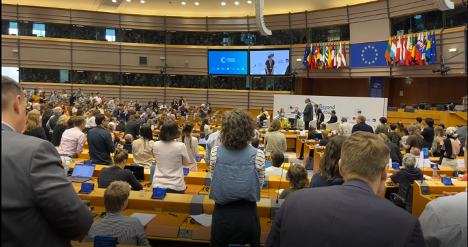
Key takeaways from the conference include:
- The current mainstream economic model based on growth contributes to environmental impacts, penalizes the poor and vulnerable, and fuels inequalities globally.
- We need different goals in 2023 and beyond. GDP growth is an indicator that is no longer fit for purpose and currently undermines social foundations and environmental limits. Our policies should rethink the place of growth as a means to an end, instead of a way of achieving a societal vision of prosperity, well-being, and care within planetary boundaries.
- Achieving this vision differs across geographies, activities, and time. The “post-growth” economy within planetary boundaries is a fair society, and the concept of sufficiency as defined by IPCC is central to this vision. It will have very different implications by sector (huge investments needed in some, and a reduction for others); geographies (recognizing that certain countries live well beyond the threshold of planetary boundaries, while others struggle to keep their citizens out of poverty); and time (with transition phases toward long-term vision).
- The alternative paradigm to our current economic model is not working. The main economic theory to reduce harm to the environment is environmental “decoupling.” Several studies prove that decoupling is not working fast enough, and the decoupling of economic activities from environmental indicators is not feasible. Speakers pointed to the fact that alternative models do not necessarily need to be created from scratch—they exist but are not regarded in the mainstream economy.
- We need to change the process, not just the goal. Vulnerable and marginalized communities have a limited voice in current decision-making structures. Giving such communities a place in the making of new policies and solutions is central to achieving a fairer and more sustainable society, and economy.
- The provision of credible and holistic alternatives is central to the transition. Working toward this vision is a transition—and such a transition should be accompanied. Policymakers have a fundamental role in shaping the right, credible policies that bring about a planned, co-created transition. For example, shared decision-making on the implications of the concept of sufficiency and on the right path forward is crucial.
- Civil society, academia, and business can advocate for change. While the conference showed a powerful flow of ideas and thinking from civil society and academia, EU policies are not fit for “beyond growth” thinking in Europe right now, and negative lobbying is impeding progress. All actors have a role to play to define and advocate for the right enabling policy environment to build a more just and sustainable world.
The conference covered a variety of subjects: reflections on fair wages and universal basic services to the just transition, the role of taxation as an instrument of social and environmental justice, the role of finance in a post-growth society, the impact of geopolitics of minerals in the green transition, the biophysical limits of our planet.
We left after three days inspired by questions, thoughts, and ideas and committed to exploring how these can help us advance the BSR vision of “a world in which all people can thrive on a healthy planet" in our work with business to create a just and sustainable world.
It is very clear that “the hard work” starts now for Europe, and time will tell whether European institutions will draw learnings from this vision to shape the right policies that go beyond growth for growth’s sake. Doing so requires urgent action, courage to push for structural change, and an expansion of social dialogue.
It is also very clear that, while the right enabling policies are crucial, we will need forward-looking and credible action from businesses to work toward a balanced society within planetary boundaries. A thriving business within planetary boundaries will need to innovate to address the tension between traditional models and corporate sustainability goals, and our BSR team is ready to work alongside our members to do so.
People
Angela Spiridis
Angela leads the operational performance for RISE, an initiative to support collaborative industry action at scale to advance gender quality in global garment, footwear, and home textiles supply chains. RISE’s mission is to empower women workers, embed gender equality in business practices, and catalyze systems change. Angela has spent her…
People
Angela Spiridis
Preview
Angela leads the operational performance for RISE, an initiative to support collaborative industry action at scale to advance gender quality in global garment, footwear, and home textiles supply chains. RISE’s mission is to empower women workers, embed gender equality in business practices, and catalyze systems change.
Angela has spent her career working for international NGOs focused on promoting gender equality, including for a leading sexual and reproductive health service provider. Angela has managed programs across the Asia and Africa regions and has lived and worked in Nigeria.
Angela holds an MBA from Toronto Metropolitan University, a Honours Bachelor of Commerce from McMaster University, and a PRINCE2 project management qualification. Angela speaks English and Greek.
Search Again?