Searching for:
Search results: 196 of 1216
Blog | Tuesday May 21, 2024
The EU AI Act: 11 Recommendations for Business
The protection of human rights weaves its way through many of the EU AI Act’s provisions. What actions should business prioritize as the act begins to take effect?
Blog | Tuesday May 21, 2024
The EU AI Act: 11 Recommendations for Business
Preview
This is the second of a two-part series from BSR’s Technology and Human Rights team on the latest developments around the European Union Artificial Intelligence Act and its implications for business.
With the EU’s Artificial Intelligence Act (the AI Act) soon to come into force, leaders around the world are asking themselves what it will mean for their business. The Act is broad in its scope, applying to a wide range of AI systems and companies at all parts of the AI value chain, from development to use. Therefore, it is crucial for any company that develops or uses AI to understand which requirements of the Act will be applicable. This is an exercise that many legal and compliance teams are already undertaking.
Where prioritization is needed, companies might want to look at the order in which provisions will come into force, focusing initially on ensuring there are no prohibited AI practices (since these rules will be in six months), then looking at requirements around general purpose AI models (twelve months), next AI systems that interact with people (two years), and finally high-risk AI systems (three years).
How a human rights-based approach to AI can help
As with other pieces of tech-related regulation stemming from the EU (such as the Digital Services Act), the protection of human rights (termed “fundamental rights” within the EU’s legal system) weaves its way throughout many of the AI Act’s provisions.
While there has been criticism from civil society that the legislation does not go far enough in, for example, prohibiting mass surveillance and facial recognition technologies, for companies developing and deploying AI systems in the future, an understanding of the potential adverse impacts on human rights of those systems is essential.
The most relevant provisions, which are particularly important for “high-risk” AI systems, are:
- Risk management systems: Companies will need to develop and implement risk management systems when high-risk AI systems are being developed, and these systems will need to include the identification and analysis of potential risks to human rights.
- Data and data governance: When developing high-risk AI systems that involve training models with data, companies will need to ensure that those models are validated and tested in line with appropriate data governance and management practices, which must include an examination of possible biases that are likely to adversely impact human rights.
- Transparency and provision of information to deployers: Companies that deploy high-risk AI systems must design them in such a way as to ensure that their operation is “sufficiently transparent to enable deployers to interpret the system’s output and use it appropriately”. This involves providing instructions for use that include, among other things, details of any potential adverse impacts on human rights.
- Human oversight: Companies will need to design and develop high-risk AI systems in such a way that they can be effectively overseen by a human. Such human oversight must aim at preventing or minimizing any risks to human rights that may emerge when the system is used as intended, or where it is “misused” in ways that are reasonably foreseeable (i.e. where it might be used in ways which weren’t intended).
- Human rights impact assessments: Before certain high-risk AI systems are deployed (primarily when systems are to be used by the public sector), deployers must undertake an assessment of the impact on human rights that the use of the system may produce. This assessment must include details of the individuals and groups likely to be affected, the specific risks of harm, and what measures are to be taken to mitigate those risks.
- Reporting serious incidents: Providers of high-risk AI systems placed on the EU market must report any “serious incident” to the market surveillance authorities of the member states where that incident occurred, and “serious incidents” include breaches of obligations under EU law intended to protect human rights.
The definition of “high-risk” means that some sectors are likely to be more impacted by these requirements of the AI Act than others, such as companies involved in the provision of key public services and infrastructure, or those in the financial services sector using AI to assess a person’s creditworthiness. But some “high-risk” AI systems may be relevant for companies’ internal uses of AI, regardless of sector, such as the use of AI-based emotion recognition technologies to determine an employee’s emotions (such as whether they are bored or unhappy), or the use of AI for recruitment purposes.
These different provisions all require companies to develop a strong understanding of the potential impacts that their development or use of AI may have on human rights, as well as to take steps to mitigate those impacts. As such, the AI Act has overlaps with other existing and upcoming regulations which require human rights due diligence. Companies will be well placed to meet these emerging regulatory requirements by taking a harmonized approach, grounded in human rights, and specifically the UN Guiding Principles on Business and Human Rights (UNGPs), across their business.
In addition to BSR’s support for companies to apply to the UNGPs, we’re developing a range of resources specially on the human rights impacts of AI, including guidance on responsible AI in the financial services, consumer, healthcare and retail sectors, as well as our upcoming sector-wide human rights assessment of generative AI.
Our key recommendations on what companies can do now are:
- Put together an inventory of the existing and planned AI use cases within your company.
- Undertake human rights due diligence of those existing and planned uses of AI to identify high risk areas.
- Ensure you have a clearly defined purpose for each use of AI and consider establishing use limitations.
- Establish a governance mechanism for the responsible use of AI within the company, such as internal cross-functional oversight committees, and/or an external advisory councils.
- Given many of AI’s risks, connected to privacy and data protection, ensure a high level of data protection within the company reviewing existing measures, policies and processes to ensure they meet the additional risks created by AI
- Test AI models for bias and externalities, to mitigate potential discriminatory impacts.
- Undertake adversarial testing and red teaming (exercises where the AI system is stress tested to discover how the system might be misused or lead to harmful outcomes).
- Provide transparency to users, internally and externally, about how the AI models and systems work.
- Integrate feedback through a reporting channel where potential misuse and abuse of AI systems can be reported.
- Engage in dialogue with other industry players in your sector.
- Engage with external stakeholders throughout the AI life cycle to help inform decisions around the development, sale and use of AI. External stakeholders could also be part of an external advisory council (see recommendation 4).
For more information on the AI Act or to discuss its implications for your business, members can contact our Tech and Human Rights team.
Audio | Wednesday May 15, 2024
Is the U.S. Ceding its Position as a Leader in Sustainability?
Aron Cramer, BSR President and CEO, chats with David Stearns about why the United States is at risk of marginalizing itself and its influence over the pace and trajectory of progress on sustainability, and what this means for business.
Audio | Wednesday May 15, 2024
Is the U.S. Ceding its Position as a Leader in Sustainability?
Preview
Aron Cramer, BSR President and CEO, chats with David Stearns about why the United States is at risk of marginalizing itself and its influence over the pace and trajectory of progress on sustainability, and what this means for business.
Case Studies | Wednesday May 15, 2024
Conducting a Double Materiality Assessment
BSR led a robust double materiality assessment to prepare Assurant, a global business services company, for its upcoming strategy refresh and mandatory disclosure obligations.
Case Studies | Wednesday May 15, 2024
Conducting a Double Materiality Assessment
Preview
Introduction
BSR worked with Assurant, a global business services company that supports, protects, and connects major consumer purchases, to conduct a global double materiality assessment aligned with leading reporting standards and frameworks. Assurant and BSR used the materiality assessment as an opportunity to improve the company's understanding of the double materiality process and facilitate discussions with senior business leaders around stakeholder priorities and strategic implications at a regional and global level. This project enabled Assurant to confirm its strategic priorities ahead of its sustainability strategy refresh and prepare for upcoming regulatory reporting requirements like the EU Corporate Sustainability Reporting Directive ("CSRD"), given the company's presence in Europe.
Background
Assurant is a leading global business services company that supports, protects, and connects major consumer purchases through two operating segments: Global Lifestyle and Global Housing. A Fortune 500 company with approximately 13,600 employees in 21 countries, Assurant partners with the world's leading brands to deliver innovative solutions through mobile device offerings, extended service contracts, vehicle protection services, renters’ insurance, lender-placed insurance products, and other specialty products.
The Challenge
Assurant recognized the need to refresh its materiality assessment using a double materiality approach, which considers how sustainability topics influence a company's enterprise value (“financial materiality") and how the company's activities related to sustainability topics affect the environment and society (“impact materiality"). In recent years, the sustainability field has been moving away from methods that are based on stakeholder perceptions and adopting methods based on impacts. CSRD's double materiality requirement has dramatically accelerated that shift. What was once considered a nice-to-have is now non-negotiable for many companies. Adopting the concept of double materiality clarifies that many sustainability topics may not impact enterprise value, but companies still need to address them because these topics impact the environment and society, including affected stakeholders. Assurant understood the strategic value of this opportunity and wanted a partner to work closely with them on a robust assessment aligned with best practices.
With over 30 years of experience in the sustainability and human rights field, and as an early adopter of double materiality, BSR has worked with 250 companies on materiality assessments. BSR's methodology pulls from best practices in the materiality and human rights fields to systematically identify, define, and prioritize a company's positive and negative impacts on enterprise value and the environment and society, by assessing the likelihood and severity of the impacts to occur. BSR's approach to double materiality and emphasis on authentic stakeholder engagement resonated with Assurant's desire for a strategic and thoughtful process instead of a solely compliance-focused exercise.
BSR’s Response
As a company headquartered in the US with operations in the EU that are subject to CSRD, Assurant wanted to ensure that its materiality assessment incorporated a European lens as well as focused European stakeholder engagement. BSR worked with Assurant to define an efficient approach that would result in a global view, while also providing sufficient regional nuance. At the beginning of the project, BSR developed a long list of relevant sustainability topics and descriptions of impacts on business and impacts on environment and society at global and regional levels using European Sustainability Reporting Standards (ESRS) guidance, other reporting frameworks, peer reviews, strategic documents, and prior materiality results. While a high-level materiality assessment based on stakeholder perceptions can uncover impacts to enterprise value, BSR's work with Assurant and other organizations has revealed that more in-depth research using various data sources is needed to meaningfully capture impacts on environment and society by the company or its industry.
As part of our process, we engaged 45 internal and external stakeholders to analyze perspectives and emerging expectations on key sustainability topics and actual or potential impacts, risks, and opportunities (IROs). For materiality assessments, it is critical that companies involve a wide range of stakeholders in the process of identifying and assessing IROs. Internal stakeholders should include leaders and employees across the organization, covering the regions in scope, and a company's various business lines. External stakeholders commonly include clients, partners, suppliers, industry groups, rights-holders, thought leaders, NGOs, and trade unions. Based on findings from the stakeholder interviews, we refined our definitions of the key impacts associated with each topic on enterprise value, environment, and society.
The topics were ranked based on impacts to enterprise value and impacts on environment and society following CSRD requirements and using a framework that was aligned with Assurant's ERM system. The results were plotted on global and European matrices, to call out the regional nuances. The matrices were accompanied by rationale for the topic placements and the key differences between the global and European results. BSR conducted two virtual interactive workshops with Assurant's European and global executive leadership teams to validate results and discuss strategic and reporting implications.
Impact
BSR conducted a robust double materiality assessment to prepare Assurant for its upcoming strategy refresh and mandatory disclosure obligations. The finalized materiality results clarified Assurant's highest priority topics and brought consistency between global and regional sustainability strategy and reporting. This process helped to broaden the organization's knowledge of sustainability topics, related impacts, risks, and opportunities, and led to an improved understanding of and alignment with the double materiality process, as defined by CSRD. The meaningful conversations with various stakeholder groups allowed Assurant to strengthen its relationships with key partners and identify future opportunities for collaboration. As a next step to this work, Assurant is translating the findings from its materiality assessment to develop goals, targets, and action plans for its highest priority topics.
We recognized the value of extensive stakeholder engagement as a key input for the assessment, offering meaningful dialogue with our senior leadership on priority matters and amongst several key clients on common sustainability focus areas. The BSR team effectively facilitated much of the key discussion throughout the assessment's stakeholder engagement and felt like an extension of our Sustainability Team.
- Michael Bellantis, VP of Sustainability, Assurant
Conclusion
A double materiality assessment should not be viewed as a mere tick-box exercise, but a valuable strategic endeavor that will serve as the foundation for a company's sustainability strategy and reporting. Not only does it position companies to adapt to upcoming and future disclosure regulations, it also leads to stronger internal and external stakeholder relationships and more resilient business strategies that focus on long-term value.
Get in Touch
Interested in learning more about BSR's approach to double materiality assessments? Please contact BSR's Business Transformation Team.
This case study was written by Megan Coffey and Beth Richmond.
Blog | Wednesday May 8, 2024
The United States Is At Risk of Marginalizing Itself on Sustainability: What Business Can Do
A coherent global approach to sustainability requires US involvement—and it won’t happen without businesses calling for ambition, cooperation, and engagement.
Blog | Wednesday May 8, 2024
The United States Is At Risk of Marginalizing Itself on Sustainability: What Business Can Do
Preview
This is the second of a two-part series on how developments in the United States are marginalizing its global leadership role, and creating unnecessary barriers to the achievement of a more just and sustainable global economy.
The lack of consistent American engagement and leadership on just and sustainable business is having far-reaching consequences. The picture we painted in the first installment of this two-part series includes inconsistent and changing regulations, opposing approaches in different US states, a decline in global cooperation, and increased geopolitical conflict that interferes with global trade. These developments are bad not only for sustainable business, but also bad for business in general.
With this in mind, what can business do? While many companies have gone quiet in the face of backlash and skepticism—mostly while maintaining commitments—that may not be the right influence strategy at a time when many forces are pulling the United States away from a more consistent and ambitious approach. American poet Robert Frost famously wrote that when facing a problem, “the best way out is always through,” and that applies here. To avoid further slippage of American leadership, it’s essential that companies go directly to one of the main sources of this erosion of ambition: the unfounded backlash against addressing important issues like climate action and the need for greater equity.
While many business leaders would prefer to avoid the political risk they see in calling for more decisive direction from the US, standing aside is riskier than engaging. A failure of American leadership and constancy will only magnify and deepen the many uncertainties facing companies due to multiple disruptions.
Put more positively, companies benefit from sustained American engagement in many ways: consistent and predictable rules to enable more stable planning; global cooperation to address shared challenges; ideally, respect for rule of law; support for financial support for the energy transition, and policies that promote the innovations and investments needed to shift the economy to a fairer and more sustainable pathway.
There is a strong business case for companies to call for American engagement in support of a more sustainable world. To be credible messengers, business also needs to look in the mirror: one of the reasons that support for sustainability in the US is waning is the fact that the public has lost faith in the global economy as a driver of shared prosperity. For the private sector to exert influence in a way society embraces, it has to go further in terms of action, credible communication, and willingness to engage in advocacy.
Action: One of the reasons why much of the general public, and many policymakers, are wary of the sustainable business agenda is the insufficient evidence of progress. It is high time to close the gap between commitment and delivery. Whether on Scope 3 climate goals, diversity objectives, labor conditions in global supply chains, or designing technologies with society’s best interests in mind, there are legitimate reasons why “ESG” has become a juicy target for political opponents. What’s more, there has been little effort to make economic equity and opportunity a strong enough part of the sustainability agenda. Closing the delivery gap is easier said than done, and is a prize in itself. Doing so is a predicate for the private sector to use its voice credibly and effectively.
Communication: Public officials’ commitment to sustainability is driven in part by tepid public support. And weak public support is due in large part to the disconnect between what sustainability advocates say and what the general public understands and feels to be true. We all know that business has not communicated effectively on sustainability, in some cases conveying grand messages on “corporate purpose” which are not sufficiently matched by actions at best, or which were never “real” to begin with at worst. Objectives also are often disconnected from the reality of peoples’ lives. The exciting innovation stories behind many sustainability initiatives is something that is either underplayed, or may not resonate with the average person. As a result, sustainability seems to be suffering from its own “vibecession,” with the progress taking place lost on people who feel vulnerable economically and nervous about the overall pace of change they are experiencing. Blaming the audience never works, however, so it is essential to make sustainability more real, and more compelling. This will have the echo effect of strengthening political support and pushing back on the backlash.
Advocacy: Business’ influence as an advocate for supportive public policy has been stilled over the past two years, as companies have faced blowback from some elected officials, and skepticism from the media, stakeholders, and even employees. While it may be true that new commitments were trumpeted too loudly in 2020-21, it also seems true that greenhushing has gone too far now. The business voice needs to be heard. What’s more the voice that needs to be heard is in sync with business interests as well as sustainability objectives. Companies have an interest in the rules-based global trade system, consistent regulatory frameworks, and a commitment to global cooperation to address shared global challenges. Business—if it shores up its credibility based on delivering against goals—can be a powerful voice that helps to ensure that the US remains committed to these objectives and actions. Without this, the private sector could see further slippage into a combative and volatile environment that furthers neither economic vitality nor sustainability progress.
Building an economy that works for all people is, by definition, a matter of universal concern. And while “Sustainability Americana” is not fit for purpose in today’s world, a coherent global approach to sustainability requires that America stay in the game. American leadership matters—and it won’t happen without businesses calling for ambition, cooperation, and engagement.
Reports | Monday May 6, 2024
The Elephant in the Sustainability Room
As companies progress at a slower pace than expected on energy efficiency and decarbonization, explore how business can address the tension between growth and sustainability targets.
Reports | Monday May 6, 2024
The Elephant in the Sustainability Room
Preview
After a decade of setting environmental commitments, the company's focus has shifted to delivery.
This implementation phase is proving challenging for many. Despite some progress, many companies find they are progressing at a slower pace than expected. While the lack of a supporting policy environment certainly contributes to these challenges, in many cases, they are also a result of business objectives that remain at odds with sustainability targets.
This foundational working paper builds on BSR’s Beyond Growth event series, and is the first in BSR’s ongoing contribution to critical business discussions to address this tension. It explores:
- The fundamental issues and barriers creating this tension
- How alternative economic models are an underexplored solution
- How can business address the tension between growth and sustainability targets, including through business model transformation
BSR is committed to exploring all paths to effectively deliver long-term sustainability goals, and will continue to contribute to this critical discussion with members.
Blog | Thursday May 2, 2024
Human Rights in Transport & Logistics
Human rights risks and impacts in the T&L sector have historically been overlooked. As these value chains come under increasing scrutiny, learn more about key steps to take.
Blog | Thursday May 2, 2024
Human Rights in Transport & Logistics
Preview
Most companies have focused initial human rights due diligence efforts on their own operations and supply chains feeding directly into their products and/or services. Transport & logistics (T&L) services, despite being critical to company operations and inherently risky for human rights, have been overlooked as part of companies’ ‘indirect’ or ‘operational’ supply chain. However, the changing regulatory context is increasingly requiring that companies look beyond these traditional areas of risk to consider, and prioritize, high-risk segments of their broader value chains. As they do, T&L services are expected to rise to their attention as an inherently high-risk sector for human rights, in every part of the world.
To help companies begin to understand these risks, BSR is pleased to release its updated primer on human rights in the transport and logistics sector. This primer draws on extensive work conducted by BSR with T&L companies and customers of such services. This work has confirmed the importance of conducting due diligence on these activities and emphasized the urgent need for collective action by customers and suppliers of T&L services to raise human rights standards across the value chain.
What Human Rights Risks?
Transport & logistics includes a wide range of activities, covering the actual transport of goods by various modes (air, rail, road, sea) and physical sites where goods are transferred (ports) or stored (warehouses), as well as many intermediary and ancillary services. T&L is a crucial link in the operation of the modern economy and global trade. Almost every company relies on T&L services in some manner, with a trend toward outsourcing of these activities to specialized third parties. Outsourcing has the unintended consequence of raising challenges to ensuring respect of human rights for workers, by both increasing the risks of exploitation and reducing the visibility and control over these risks. Indeed, many workers in T&L value chains—including seafarers, delivery drivers, and warehouse workers—face a serious lack of standards and protections.
A recent convergence of factors serves to exacerbate the human rights risks within transport & logistics:
- Fragmented supply chains reduce company leverage, put downward pressure on wages and make due diligence more difficult
- Cross-border operations means variable wages and other labor protections, and challenges to enforcing consistent standards;
- Labor shortages, which are forecasted to continue, increase the risks of labor exploitation;
- A mobile, and sometimes informal, workforce creates challenges for monitoring working conditions; and
- Ever growing consumer demand and delivery speeds pressure companies to maximize productivity at the expense of workers and labor standards.
Growing Scrutiny of Transport & Logistics Value Chains
The COVID-19 pandemic shone a spotlight on the difficult working conditions of many essential workers, including those keeping global trade and supply chains running. Reports about hundreds of thousands of seafarers being abandoned and unable to return home, delivery drivers lacking basic protections while struggling to meet surging demand, and warehouse workers facing widespread COVID outbreaks were all too common.
Emerging due diligence laws that require companies to conduct risk-based due diligence of their supply chains (such as the French Duty of Vigilance Law and German Supply Chain Act) are bringing to the attention of companies, as well as their investors and customers, that T&L activities present high risks of human rights violations and should be prioritized for prevention and mitigation measures.
- The first decision under the French Duty of Vigilance Law implicated a transport company – La Poste, France’s national parcel delivery provider. The decision found that La Poste had failed to comply with its duty of vigilance by not adequately identifying and addressing the human rights risks linked to their subcontractors. La Poste was ordered to improve its risk mapping and establish procedures to assess its subcontractors against the risks identified.
- The EU Corporate Sustainability Due Diligence Directive also explicitly extends due diligence obligations to “the activities of a company’s downstream business partners related to the distribution, transport and storage of the product, where the business partners carry out those activities for the company or on behalf of the company”.
There is little doubt that human rights risks linked to T&L are now on the radar of stakeholders and regulators and companies must begin to understand and address these risks more closely.
Recommended Actions
Key steps to begin to address human rights in your T&L value chain include:
- Map your T&L activities, including to what extent these activities are outsourced and subcontracted and where they take place.
- Review the fitness of your supplier risk management policies and processes are fit to detect human rights risks linked to T&L services.
- Review whether your contracts with T&L providers 1) set the right expectations on respecting human rights and 2) enable you to verify their workforce’s working conditions.
- Engage with workers in your T&L value chain directly or through trade unions and other organizations representing the interests of T&L workers.
- Identify opportunities to engage in collective or multi-stakeholder efforts to drive improved human rights conditions in this sector, acknowledging the limited leverage many single companies have over their T&L service providers.
BSR’s human rights team advises business from across sectors on due diligence, assessment, and management of risks. We are particularly interested in bringing together interested companies to further explore the potential for collective action on the risks and impacts in the T&L sector. Please get in touch with any questions or if you are interested in joining such a collective conversation.
Primers | Thursday May 2, 2024
10 Human Rights Priorities for the Transport and Logistics Sector
Based on interviews with member companies operating in the Transport and Logistics sector, BSR shares the 10 most relevant human rights impacts for such businesses.
Primers | Thursday May 2, 2024
10 Human Rights Priorities for the Transport and Logistics Sector
Preview
Human rights are inherent to all people, regardless of nationality, sex, national or ethnic origin, color, religion, language, or any other status. They are globally agreed upon standards of achievement for all people, covering a wide range of independent yet interconnected civil, political, economic, social, cultural, and environmental rights that serve as a ‘code of conduct’ for all human beings.
All companies can impact human rights either positively or negatively through their action or inactions. The key document speaking to these impacts is the UN Guiding Principles on Business and Human Rights (UNGPs), the authoritative global standard on business and human rights. Though technically "soft law," the UNGPs have been incorporated into the OECD Guidelines for Multinational Enterprises, ISO 26000, IFC Performance Standards, GRI, UN Sustainable Development Goals, and many other frameworks. They have also been endorsed by business and industry organizations representing thousands of companies, civil society organizations, NGOs, and member states of the United Nations.
As part of the corporate responsibility to respect human rights, the UNGPs require companies to actively identify and manage the negative human rights impacts that they may cause or to which they may contribute or are linked through their business relationships.
This primer identifies the 10 most relevant, urgent, and probable human rights impacts for businesses operating in the Transport & Logistics (T&L) sector. It is intended as a starting point and should be supplemented by robust internal human rights due diligence processes. The information here is gathered from BSR’s direct engagement with T&L companies and the companies that rely on them, as well as our 30 years of experience helping companies in all sectors manage their human rights risks.
T&L activities provide the backbone to the modern economy and global trade. Almost every company relies on T&L services to deliver its goods or services, and the trend has been toward the outsourcing of these activities to specialized transport actors. This reliance on outsourcing has given rise to challenges to ensure the respect for human rights for workers throughout the extended supply chain.
The T&L sector comprises a wide range of activities, along a value chain that includes various modes of transport of goods (by road, rail, air, and water); the physical transfer points (e.g., terminals, airports, rail stations) and warehouses where goods are stored, packaged, and sorted for ultimate delivery to end-customers; and the intermediaries (e.g. freight forwarders) that connect these different services. These activities rely on workers such as truck drivers and last-mile delivery workers, pilots, and seafarers, as well as logistics staff such as warehouse workers, ground crews, and dockworkers. They can also impact wider communities, particularly those located near ports, warehouses, or other transportation hubs or routes.
While each of the activities undertaken by T&L companies present unique human rights risks and challenges, this primer highlights the most common and significant risks across the T&L sector as a whole. The primer also offers opportunities for T&L, as a sector that is both global and local and employs tens of millions of workers around the world, to advance the realization of human rights.
Blog | Tuesday April 30, 2024
The United States is at Risk of Marginalizing Itself on Sustainability
Developments in the US are marginalizing American leadership globally and creating unnecessary barriers to achieving a more just and sustainable global economy.
Blog | Tuesday April 30, 2024
The United States is at Risk of Marginalizing Itself on Sustainability
Preview
This is the first of a two-part series on how developments in the United States are marginalizing the American leadership globally and creating unnecessary barriers to the achievement of a more just and sustainable global economy. Read the second blog here.
Over the first quarter of 2024, it is clear that the United States is at risk of marginalizing itself and its influence over the direction of the global economy, the urgent challenge of the energy transition, and the competitiveness of American enterprise. This presents an unnecessary risk not only to our collective well-being, but also to the effectiveness of American leadership.
While the Biden Administration and states like California and New York have continued to raise ambition and make smart public investments, several crosswinds threaten to interfere with the trajectory and consistency of these significant federal government actions.
America’s federal system is at the core of the issue. First, as is well known by now, many states and cities have pushed back—vigorously—on the rise of “ESG,” taking aim not only at the terminology, but also on the very concept that investors and businesses should consider the impact of topics like climate or DEI, even when they are plainly relevant to their businesses. The pushback of a loose coalition of state attorneys general has resulted in legal and political challenges to action on climate and diversity in particular. This so-called backlash has begun to have an impact not only on what companies say, but also what they do.
Second, the uber-litigious nature of American political culture means that rules like the SEC’s recent climate disclosure rule, as well as California’s rules, are being challenged in the courts, which could change or delay implementation. Indeed, the SEC’s climate disclosure rule was delayed and watered down in anticipation of significant legal challenge, and has now been paused by the SEC itself due to legal challenges. The end result is uncertainty, delay, and misalignment of US rules with the rest of the world.
Finally, and has been the case for nearly a decade, the continued presence of Donald Trump on the American political scene, enabled by a fractured media environment in which some outlets traffic in mis- and disinformation, is also having an effect. Project 2025, considered the stalking horse for a second Trump presidency’s policy initiatives, takes direct aim at sustainable business and investing through multiple means, from politicizing the civil service to reversing many Biden administration regulations, and pension funds’ right to consider ESG factors. (The Inflation Reduction Act, however, which is enshrined in law, would likely be spared).
All this threatens to put the United States out of step with the direction of travel in most of the rest of the world, not least its usual allies and partners. Trade, global cooperation, consistent global rules, and political stability are all at risk.
- Trade: During my recent visit to Singapore and Japan, the focus on a trade-based agenda stood in sharp contrast to the focus on domestic manufacturing in the US, and protectionist sentiments that are, for example, putting Nippon Steel’s acquisition of US Steel at risk. The feeling in much of Asia is that the US has abandoned the open trading system that has generated rising living standards across Asia, ever since it disavowed the Trans-Pacific Partnership in 2016. This is not to say that there are not legitimate reasons why the US has soured on the Washington Consensus, despite its provenance. But the fact that is too often lost on Americans is that the world is ready, willing, and able to get on with the trade agenda, whether or not the US is an eager participant, let alone a leader, and certainly diminishes its role as a central actor on the world stage. Even more, a Trump return to power, especially if it is accompanied by major tariffs, would not only see the US pull back further from open trade, it also would threaten to create a massive disruption and possible trade war. This is deeply concerning to most of the world. All is not lost, however, as witnessed by the announcement this month of a Climate and Trade Task Force by the Biden Administration.
- Global cooperation: The growing strains of isolation in the US may undermine the US role in negotiating international agreements well beyond trade, including on climate, nature and human rights. There is little doubt that a second Trump term would again turn the US away from multilateralism, this time potentially with even greater impacts. Given the immense significance of COP30 in 2025, where the next round of national climate commitments are due, progress will be hindered by a lack of American engagement. If the world’s largest economy is not working to build international cooperation, the world will find other ways to muddle forward, with the US lamentably lagging behind, forfeiting its leadership status.
- Consistent sustainability regulations: Every business is counting on the slow but steady march towards more harmonized sustainability regulations, with reporting and disclosure being especially important. As we noted in our commentary on the SEC rule released last month, the US now looks out of step with an otherwise growing global consensus. The reasons are understandable, and linked to the backlash and federal system noted above. The unfortunate result, however, is inconsistency that hinders a smoothly running financial system. The US is now playing catch up—most global companies will end up following the rules being adopted in most other markets—and losing the ability to shape how markets operate.
- Emboldening populists: The last point is more about the direction of global politics. The US risks reinforcing the drive towards a populist nationalism that fosters protectionist economics and xenophobic, authoritarian politics. The US is at risk of landing on the side of those who wish to build walls when cooperation is needed; who turn their eyes away from the climate crisis instead of embracing an ambitious national project to fight it, and build the American economy of the future, and who promote raw power politics instead of respect for rule of law and transparency, which history tells us is necessary for genuine and shared human progress. This is an historic shift away from the US’s posture for most of the 80 years since the end of World War II.
This is of obvious and crucial importance to the entire world. But what is equally true is that this is also of central importance to the well-being, position, and prosperity of the United States and its citizens.
Business wants to make sure the system of global trade continues, for obvious reasons. Business can make the case, but currently it is seen as a flawed messenger by much of the American public. It can make the case for an American public that has lost faith that US leadership globally is worthwhile. The path forward? Business can be effective, though only if it fully embraces a version of global trade that rests on decisive action on climate and nature, respect for all peoples, and rule of law and human rights.
We will turn our attention to how business can and should respond in our next installment.
Blog | Monday April 29, 2024
CSDDD: A Pragmatic Approach to Managing Human Rights and Environmental Impacts
Learn more about CSDDD’s risk-based due diligence approach, as well as three provisions of the Directive that merit particular attention from companies.
Blog | Monday April 29, 2024
CSDDD: A Pragmatic Approach to Managing Human Rights and Environmental Impacts
Preview
After several years of negotiation, the EU Parliament has formally approved the Corporate Sustainability Due Diligence Directive (CSDDD), which will be formally adopted shortly. Companies in scope have until 2027 at the earliest to comply with its provisions.
CSDDD comes against a backdrop of growing societal inequality intensifying conflict, and worsening environmental degradation with devastating consequences for people whose lives depend on natural resources. Together with the Corporate Sustainability Reporting Directive (CSRD), this is the most comprehensive and ambitious attempt to consolidate and harmonize businesses’ responsibility for their impacts on people and the planet.
Although the Directive will apply only to very large companies (including non-EU companies generating over 450m in turnover in the EU), its impact will extend across global supply chains. Companies in scope—an estimated 5,500 in the EU alone—will have to inspect their operations and their direct and indirect business partners to identify, assess, and address human rights and environmental harms connected to their activities. By adopting the concept of risk-based “due diligence”, in line with the OECD Guidelines for Multinational Enterprises and the UN Guiding Principles on Business and Human Rights, CSDDD promises to help companies respect internationally recognized human rights and achieve environmental goals.
The six-step due diligence approach set out in the OECD Guidelines is reflected across the CSDDD:
- Integrating due diligence into policies and risk management systems (Article 7).
- Identifying and assessing actual or potential adverse impacts, prioritizing potential and actual adverse impacts based on severity and likelihood (Articles 8 and 9).
- Preventing and mitigating potential adverse impacts, and bringing actual adverse impacts to an end (and minimizing their extent) (Articles 10 and 11).
- Monitoring the effectiveness of due diligence actions (Article 15).
- Publicly communicating on due diligence (Article 16).
- Providing remediation for actual adverse impacts (Article 12).
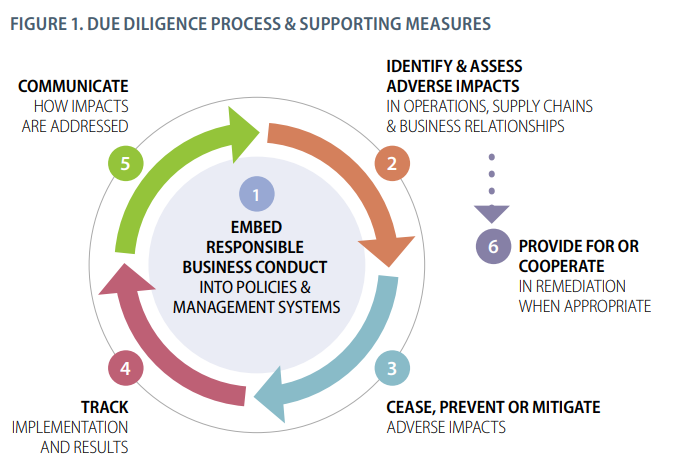
Source: OECD Due Diligence Guidance for Responsible Business Conduct
In practice, companies of all sectors are connected to a wide range of adverse impacts through their own operations and business relationships. Recognizing that companies may not be able to address all these impacts simultaneously, CSDDD allows them to prioritize action based on the severity and likelihood of impacts on affected people and environments.
This pragmatism extends to how companies will be held accountable. Where a company causes or contributes to (‘jointly causes’) harm, they must remediate the harm and may be liable for damages. A company that is linked but didn’t directly cause or contribute to the harm can build and use its influence to prevent or mitigate the harm but is not required to remediate and is not subject to damages. However, since addressing actual impacts involves remediation, businesses should use their influence to enable it.
The CSDDD will require a step-change in business practices
From our experience working with companies to implement due diligence in line with international standards, a few provisions of the CSDDD stand out as meriting particular attention from companies.
1) Full supply chain is in scope
Due diligence is not limited to direct tier 1 suppliers. Companies must take a risk-based approach to managing impacts across their full supply chain. This means mapping and testing the effectiveness of supplier risk management systems to identify “general areas where adverse impacts are most likely and most severe” (Article 8) and investing resources to deepen assessments of those areas. If the most severe or likely impacts are connected to raw materials extraction, then that is where further attention is required.
Recognizing the challenges in addressing impacts far down in supply chains, CSDDD recognizes multi-stakeholder and industry initiatives as tools for increasing leverage to identify and address impacts. However, companies must monitor the effectiveness of initiatives to ensure they fulfil their obligations.
2) Meaningful engagement with affected stakeholders is necessary
Meaningful stakeholder consultation is required throughout the due diligence life cycle. Stakeholders include workers and other people affected by business—and their legitimate representatives (including trade unions, civil society organizations and human rights defenders)—as well as national human rights and environmental institutions and civil society organizations working on environmental protection.
To ensure genuine interaction and dialogue, companies must provide consulted stakeholders with comprehensive information, plan ongoing consultations, address barriers to engagement, and ensure stakeholders are free from retaliation and retribution.
This approach will require a significant shift in how companies structure and conduct engagement. It will involve building or deepening relationships and identifying opportunities for continuous engagement at each step of due diligence—while addressing the increased burden this may place on civil society, trade unions, and others representing affected people and the environment. Companies will need to be more transparent with affected stakeholders, reduce power imbalances, and engage in good faith with critical voices who raise concerns.
3) Environmental due diligence and the intersection with human rights
Historically, in the environmental field, the term due diligence has had a distinct meaning from that of sustainability due diligence: referring to technical, scientific site-specific evaluations of environmental conditions and impacts. More recently, leading environmental frameworks used by companies, such as the Science Based Target for Nature framework, have been based on similar processes—of identification, prioritization, action, and monitoring—to the due diligence approach in CSDDD. Moving forward, articulating how a company assesses and prioritizes its environmental impacts using the lens of severity and likelihood—and integrating meaningful stakeholder engagement—will require concerted efforts and innovation.
The CSDDD also requires companies to address the impacts of environmental degradation on human rights, including the rights to health, food, and clean water and sanitation. This requires bridging environmental and human rights teams—who operate largely in siloes today—to identify and more effectively manage these interconnected impacts.
In this new era of sustainability regulation, the CSDDD is a gamechanger. But delivering on its ambition will require clear commitment, robust governance, and sufficient resources from companies, including truly cross-functional efforts. BSR looks forward to supporting companies in stepping up to this challenge, through continued analysis and promotion of best practices.
Blog | Thursday April 25, 2024
The EU AI Act: What It Means for Your Business
With the EU’s Artificial Intelligence Act soon to come into force, explore key features of the Act and who will be affected.
Blog | Thursday April 25, 2024
The EU AI Act: What It Means for Your Business
Preview
The Artificial Intelligence Act (or “AI Act”) is a new piece of legislation that will regulate the development, deployment, and use of AI within the EU, but will impact businesses well beyond its borders. Its overall objectives are to ensure a well-functioning internal market for AI systems within the EU, as well as to provide a high level of protection of health, safety, human rights, and environmental protection.
The AI Act is ambitious, not only in the sense that it is the world’s first major piece of AI-related regulation, but also in its scope. The definition of “AI system” (in Article 3) is “a machine-based system designed to operate with varying levels of autonomy, that may exhibit adaptiveness after deployment and that, for explicit or implicit objectives, infers, from the input it receives, how to generate outputs such as predictions, content, recommendations, or decisions that can influence physical or virtual environments.
Defining a Risk-based Approach
Within that broad scope, however, the approach taken is a risk-based one, with different rules and requirements depending on the level and nature of the risk with the AI Act categorizing five types:
- Prohibited AI practices: The AI Act designates and prohibits a number of AI practices deemed to be particularly harmful, such as deceptive techniques that influence behavior resulting in harm, or which exploit people’s vulnerabilities. These prohibitions will come into force in six months.
- High-risk AI systems: The AI Act designates other types of AI systems as “high-risk”. Examples include biometrics and the use of AI in a critical infrastructure, education and vocational training, employment, essential private and public services, law enforcement, and the administration of justice. For these, the Act sets out a number of requirements relating to their development, include establishing risk management systems, maintaining technical documentation, and ensuring accuracy and robustness, as well as human oversight. The Act also includes rules relating to placing these systems onto the EU market, putting them into service, and using them, such as establishing quality management systems, documentation-keeping, cooperating with national authorities, and complying with conformity assessments. These requirements will come into force in three years.
- General purpose AI models (including large language models): The AI Act creates a number of requirements specific to general purpose AI models, such as maintaining technical documentation, providing instructions on safe use, and ensuring that copyright law is respected. These requirements will come into force in twelve months.
- AI systems requiring transparency: The AI Act’s focus on AI systems that are intended to interact directly with natural persons will require providers to ensure that people are aware that they are interacting with AI. In addition, deployers of AI systems that create “deep fakes” or that generate or manipulate text for general information purposes must disclose that the content is artificially generated or manipulated. These requirements will come into force in two years.
- Low risk AI systems: While the AI Act does not impose any requirements on AI systems that don’t fall into the above categories, it does require the drawing up of voluntary codes of conduct for these lower-risk systems.
The AI Act also contains measures intended to support AI innovation, start-ups, and SMEs, including through AI regulatory sandboxes. It will be implemented and enforced both at an EU-wide level (including through the AI Office, a new body being developed within the European Commission, empowered to develop codes of practice, guidance, and take infringement action) and designated national authorities in each EU member state. A range of potential fines and sanctions will be available (under Article 99), with the most serious breaches (non-compliance with the prohibited AI practices) punishable by fines of up to 35 million or seven percent of a company’s total worldwide annual turnover for the preceding financial year.
Who will the AI Act affect?
The legislation sets out different requirements for different types of companies in the AI lifecycle:
- Companies placing on the market or putting into service AI systems or placing on the market general-purpose AI models in the EU (“providers”);
- Companies that deploy AI systems and have their place of establishment or are located within the EU (“deployers”);
- Companies, whether providers or deployers of AI systems, where the output produced by an AI system is used in the EU;
- Importers and distributors of AI systems; and
- Product manufacturers placing on the market or putting into service an AI system together with their product and under their own name or trademark.
As such, the requirements are not limited to companies developing AI technology, but any company using AI systems or their outputs in the EU, meaning that the AI Act will be important for a wide range of companies of all sectors using AI (whether that use is specific to a particular sector, such as AI-based creditworthiness assessments for financial service companies, or general uses such as using AI for recruitment decisions).
Finally, it does not matter whether providers or deployers are established or located in the EU or outside, meaning that the requirements will be relevant for companies across the world where the AI system or general purpose AI model is placed into the EU market, or where its outputs are used in the EU.
With the AI Act now coming into force, understanding its requirements will be important for any company developing or using AI. The legal framework is novel and complex, but broad both in scope and in the range of companies to whom it will apply, both inside and outside of the EU. By understanding the Act's classifications of risk levels, and your company’s role within the AI lifecycle (provider, deployer, etc.), you can ensure compliance. Our next blog post will delve into how to take a human rights-based approach to address some of the risks posed by AI which the AI Act seeks to mitigate. For more information on the AI Act or to discuss its implications for your business, feel free to contact our Tech and Human Rights team.