Searching for:
Search results: 226 of 1205
Reports | Monday January 15, 2024
Action for Sustainable Derivatives: Annual Update on Progress, 2023
Explore ASD’s progress on its approach to action, deepening engagement with supply chain players, and scaling impact on the ground.
Reports | Monday January 15, 2024
Action for Sustainable Derivatives: Annual Update on Progress, 2023
Preview
The latest update from Action for Sustainable Derivatives (ASD), an industry-led collaboration aimed at achieving sustainable production and sourcing of palm oil derivatives, discusses its progress in 2023. This includes strengthening ASD’s approach to action through more proactive grievance monitoring and management, deepening engagement with supply chain players, and scaling impact on-the-ground.
Highlights include:
- Collective transparency for 1,100,000 tons of palm-based materials, representing 11% of the global palm-based oleochemicals market, including 47.5% transparency to plantation level.
- Proactive monitoring of deforestation grievances through a year-long pilot of Nusantara Atlas satellite monitoring tool, and working towards an understanding of % deforestation-free volumes.
- Trader engagement to discuss possibilities for stronger supply chain control mechanisms
- Demonstrated positive impact on-the-ground after a full year of collective support to the Kaleka Mosaik Initiative and continued progress with the ASD Respect in Palm pilot program.
Learn more about ASD's impact.
Blog | Wednesday January 10, 2024
CEO Outlook: Seven Pivotal Questions Shaping Sustainable Business in 2024
BSR President and CEO Aron Cramer poses seven questions for business that will define the scale of progress in the year ahead.
Blog | Wednesday January 10, 2024
CEO Outlook: Seven Pivotal Questions Shaping Sustainable Business in 2024
Preview
The multiple shocks and surprises affecting our world in the 2020s can easily lead us to think that we don’t know what’s coming next. It would be folly—and senseless—to diminish the impacts of a global pandemic, geopolitical conflict, and social upheaval.
And yet, as world-shaking as these disruptions are, the underlying questions at the heart of the role of business in society remain very clear. Our collective challenge is focused on three fundamental goals: accelerating the shift to an inclusive clean energy economy, ensuring that revolutionary new technologies are designed and deployed in service of society, and creating more equitable societies and economies.
These were all core questions in 2023 and they will continue to be for the foreseeable future. And they will be BSR’s focus in 2024. As we work with our 300+ member companies globally to support their ability to transform in service of these goals, we will be focusing our insights, advice, and collaborations on these areas.
While 2024 is in many ways a continuation of underlying changes that continue to reshape our world, the new year does present some unique questions. How we respond to them will shape not only how this year plays out, but also our lives for many years to come.
Here are the seven questions that will define how much progress is made in the year ahead.
1. What impact could the 2024 global elections have on just and sustainable business, and what can companies do about it?
Nearly two-thirds of the world’s population is living in countries with elections in 2024: more than any other year in human history. These elections are, in one way, a triumph for democracies that emerged and proved resilient in the 20th century. But many people are fearful of change, facing dislocation, and are on the receiving end of misinformation. This fertile ground for populist backlash risks undermining progress on climate action, diverse and equitable societies, and the international cooperation needed for truly shared prosperity. So, while this year will understandably have a significant focus on politics, the spate of elections is very much a business issue. The outcomes of these elections will help determine not only traditional policy questions, but also the degree to which the rule of law is respected, whether international cooperation on climate and other shared challenges is possible, and the degree of support for global trade. Companies therefore should stand up for free and fair elections, and the protection of democratic processes. This role is not natural or comfortable for many business leaders. The stakes, however, are too great for businesses to stand aside.
2. Will the COP28 agreement mark a real transition?
The fierce debate over whether the COP 28 agreement was sufficient is, to some degree, beside the point. The more salient question today is: will nations, businesses, and investors breathe life into the agreement, or render it a dead letter? Investments, innovation, and collaboration are continuing, but not at the pace that’s needed to achieve the rapid transformation required to limit global warming. The just transition is now firmly on the agenda, but too few companies have comprehensive approaches needed to ensure the transition is equitable and fair for all people. The legal considerations that come along with new reporting and disclosure requirements threaten to focus attention on delivering the data rather than delivering clean energy at scale. As we enter 2024, it is not so much a course correction we need, but rather redoubling efforts, without which the emissions reductions needed by 2030 won’t materialize.
3. Are DEI commitments flagging?
There is substantial evidence that the post-2020 efforts to strengthen diversity, particularly in the US, are fading. Data suggest that companies have pulled back on DEI staffing, and the backlash against such efforts, including legal challenges in the US, is accelerating a pullback. But the need for continued progress in the effort to achieve more inclusive companies, workplaces, and communities, remains as compelling as ever. Representation on Boards and in senior management continues to lag behind the overall workforce. Income inequality continues and is partly to blame for the populist movements that have limited public commitments to progress on other key issues like climate and nature. In fact, the business case for DEI remains as strong as ever, not least given the changing nature of the workforce and consumer base. History also teaches us that there will be more moments of reckoning when companies will face pressure to explain their follow-through on prior commitments. Boards and senior management need to send clear signals that they embrace and are ready to develop the diverse workforces of the future, and this remains crucial despite legal challenges.
4. Can we ensure that emerging technology is developed responsibly and sustainably?
The arrival of generative AI was bookended by the emergence of ChatGPT at the beginning of the year and the OpenAI drama at its close. As Winston Churchill said in a very different context, this is only “the end of the beginning” of complicated debates over new technologies and their social impacts. My advice is to believe neither the techno-utopians nor the doomsayers: AI will deliver both great opportunities while presenting us with profound questions and dilemmas, and they will both deepen as the technology advances. And more questions, on other technological innovations, are coming fast: the first approved treatment based on CRISPR gene editing technology also arrived, albeit with less fanfare, in 2023, and biotech will present new and complicated dilemmas. The existing mishmash of efforts to set guidelines will only confuse matters. Setting the rules of the road for the key actors involved will require both smart and flexible regulation, ideally synchronized between jurisdictions, as well as self-restraint on the part of business. Here again, business is going to need to get engaged—appropriately—in promoting regulatory frameworks with sufficient flexibility to enable innovation to flourish.
5. Will new regulations turn sustainability into a compliance exercise?
As we have written over the past year, the rise of regulatory requirements is a game changer for every business. This is undeniably a beneficial development. There are many reasons to believe that performance and transparency will increase on a wide range of topics: climate and nature, reporting and disclosure, human rights, and corporate governance primary among them. We also see a number of unintended consequences that deserve ongoing attention. We hear from many companies that resources are being dedicated to compliance rather than performance. Businesses are busy preparing for the EU’s Corporate Sustainability Reporting Directive (CSRD); that makes sense currently but should not crowd out ongoing ambition and innovation. The valuable caution in avoiding greenwashing claims is also being applied to tamp down ambition, both in communication and goal setting. There is also a growing focus on what can be quantified and verified, which applies well in some cases (measuring emissions) and misses the point on others (positive social impact). Compliance is of course non-negotiable, but no company ever complied to innovation, ambition, and excellence, and sustainability has to find a way to achieve all of the above.
6. How is the role of the Chief Sustainability Officer (CSO) changing?
In our discussions with Chief Sustainability Officers, it is also clear that the role of CSOs and their teams is at a crossroads. There is no doubt that the increased boardroom presence of the CSO is a major step forward. This advance should not come at the expense of the change agent role that CSOs can uniquely play. They should look to the future, and not focus too much on quantifying past performance. CSOs must also learn to see across interconnected issues, not serve merely as technical engineers in specific domains. And, finally, they must understand and deliver qualitative benefits, and not focus only on things that can be measured and verified with precision: the best and highest role the CSO can play is not as a compliance officer. Maintaining the essence—and even the soul—of the role is crucial in 2024.
7. How will business juggle so much interlocking change?
The final question could be dismissed as a process question, but it is crucial. The reality is that business leaders are juggling an immense number of profound questions. Business models, the very nature of work, technologies, environmental challenges, and societal expectations continue to intensify and change. That will only accelerate this year and in the years ahead. This is why principled leadership, strong governance, and clear vision have never been more important. The to-do list for business is replete with items that present both transformative opportunities and so-called “wicked questions.” The impulse to say “not my problem” won’t work. Today’s leaders will be judged by how well they embrace change, make sense of it for their colleagues and stakeholders, and stay true to principle, while continuing to focus on long-term value creation that brings shared societal benefits and respects natural resource boundaries.
These questions are interesting to debate. But more than that, they represent a priority list for every business. In the year ahead, we will be advocating and acting to achieve real progress on each of these questions, and tracking how well business, business leaders, investors, and the entire enabling community meets these challenges. So, while 2024 will undoubtedly deliver unexpected questions and challenges, we know in advance what the ultimate test of our actions will be at year end.
For more from Aron and Sustainable Business in 2024, check out the episode in our BSR Insights Audio Series:
Blog | Thursday December 21, 2023
Three Business Initiatives That Advance Climate Justice
Climate justice acknowledges that climate change has disproportionate impacts on communities and exacerbates underlying existing systemic inequities. The following are noteworthy climate justice interventions by businesses.
Blog | Thursday December 21, 2023
Three Business Initiatives That Advance Climate Justice
Preview
Climate justice acknowledges that climate change has disproportionate impacts on communities and exacerbates underlying existing systemic inequities. While climate injustices exist worldwide, they often are more acute in less economically developed countries.
While the term may be new, businesses are starting to proactively advance climate justice efforts. Business action includes building community resilience to physical climate impacts such as severe flooding or wildfires; ensuring workers, suppliers, and communities have access to affordable low-carbon, climate-resilient products and services; safeguarding human rights in the clean energy value chain as economies transition to net zero; and enabling a just transition for workers and communities that have been dependent on fossil fuel development for decades.
In India and the Philippines, climate injustices disproportionately impact women and children, and major issues can range from extreme weather and flooding to land rights and land conflicts to lack of access and opportunities in the “green” transition. In addition, India and the Philippines are coastal countries with significant levels of income disparity and inequality. Businesses in these two countries are addressing climate justice via resilience building, community education initiatives, and climate adaptation.
The following are noteworthy climate justice interventions by businesses that include efforts to improve access to healthcare in remote communities at risk from climate change, reskill workers in the energy transition toward a net-zero future, and build resilience among local communities to adapt to climate risk.
1) Improving access to healthcare in remote communities at risk from climate change
In the pursuit of a climate-resilient future, it is vital that vulnerable communities have equitable access to products and services. To address this, Metro Pacific Investment Corporation (MPIC), an investment management and holding company, improved critical access to healthcare for under-served and remote communities. As the Philippines continues to confront increased climate impacts from more frequent and extreme weather events, this digital health access can prove crucial as an increasing number of remote communities face additional barriers to reaching health professionals.
Climate change is threatening Filipinos health and wellbeing, and rural areas face a shortage of healthcare services. MPIC developed a digital healthcare application called "mWell." In remote, mountainous regions and numerous low-lying coastal areas, many Filipinos are exposed to rising temperatures and more extreme weather events. The app provides a platform for patients to consult virtually with doctors, specialists, and mind health experts; receive e-presecriptions and medicine deliver; and more. It is used regularly, and among the users are those in remote areas, including indigenous people who are typically required to travel for one day to reach hospitals.
The application partnered with a multi-channel payment platform, to provide a more accessible payment option for those without credit or debit cards. MPIC also deployed mWell OnTheGo, a portable mobile digital clinic for remote communities that includes foldable solar panels, a power station, pocket Wi-Fi, and a preloaded tablet or mobile phone that enables patients living in areas without electricity to access medical support.
2) Reskilling workers in the energy transition toward a net-zero future
A just transition to a net-zero economy aims to ensure that workers in industries that have been heavily dependent on fossil fuels have access to reskilling, upskilling, and other green jobs as economies transition to clean energy. As businesses create and execute their climate transition plans, it is imperative to provide support for historically underrepresented groups, like women, youth, and other marginalized communities.
To support workers in the Indian green jobs movement, Mahindra Susten, the clean-tech subsidiary of the Mahindra Group, narrowed in on knowledge and skills development as a foundational component to ensure rural and economically disadvantaged communities can participate more fairly in India’s growing green economy.
Recognizing a knowledge and skills gap in the installation and maintenance of solar power plants among the workforce, Mahindra Susten established the "Centre of Excellence" skilling initiative in 2016. As renewable power installations continue to rapidly expand in India, which has historically relied heavily on domestically produced coal to power its growth and modernization, reskilling, and upskilling energy sector workers, especially those with limited access to educational and economic opportunities, is essential to support a just energy transition. Located in Karjat, Maharashtra, the Centre for Excellence equips workers in remote and socio-economically disadvantaged communities with the skills necessary for employment in the renewable energy sector through physical training sessions with practical assignments, case studies, and lectures. The skilling program is open to anyone, but specifically targets candidates from rural and economically disadvantaged areas, particularly women and youth in these communities who are underrepresented at the Skilling Centre.
The Centre benefits from contributions by various teams, leveraging their understanding of the local context, external expertise on required skills and training, and circular feedback loops for program development and improvement. Program graduates have support to find employment opportunities. To date, the Skilling Centre has trained over 10,000 individuals in semi-trade skills and 4,500 technicians in full-trade skills.
3) Building resilience among local communities to adapt to climate risk
The physical impacts of climate change, such as floods, heatwaves, and droughts, disproportionately affect communities that have limited resources to prepare and rebound. The lack of proper infrastructure and financing for disaster preparedness and response expose communities to higher climate risk. Farming communities and the agriculture supply chain are particularly vulnerable to physical climate impacts as both are heavily reliant on favorable weather conditions and climate for quality crop yields; this ties their livelihoods closely to external factors often outside of their control.
To support rural farming communities in India, ITC Limited’s Agri Business division, India’s second largest exporter of agri-products, supports local communities in building resilience to the increasing severity and frequency of droughts and flash floods. Improved watershed management practices have led to the improved quality and quantity of crops, which allow local farmers to have more stable and resilient livelihoods.
ITC Limited’s Agri Business Division, established the Watershed Development Programme to promote equitable water access for rural farming communities. Small-scale farmers in India, dependent on rainfall from monsoons, are facing unstable weather conditions, poor soil, inadequate infrastructure, and water scarcity, making them disproportionately affected by climate change impacts. The Programme improves farmers’ access to water resources for irrigation and enhances soil fertility, mitigating the impact of volatile weather conditions on farmers and allowing farmers to cultivate more than one crop per year with better quantity and quality, leading to higher incomes and improved livelihoods.
ITC, in partnership with non-governmental organizations, create Water User Groups in farming communities that prioritize the inclusion of disadvantaged community members such as poor farmers and women. These Groups facilitate equitable benefit and resource distribution; share improved agricultural practices; and are trained on watershed management techniques, financing, and decision-making. ITC collaborates with farming communities and communities near ITC’s factories on program development and implementation. Mandatory financial contributions from the community based on economic status ensure community ownership and long-term Programme benefits.
In the Pune and Chhindwara districts in Maharashtra, groundwater replenishment efforts as part of the Watershed Programme led to increased vegetation, soil organic carbon levels, and productivity of major crops. The Programme, spanning 45 districts in 16 states in India, has created water harvesting structures, improving soil health in 1.39 million acres of farmland, and created 3,900 Water User Groups in local communities, benefitting 409,000 households.
The examples explored three key areas in which companies can advance climate justice. Businesses can begin to act on climate justice by ensuring human rights, equity, inclusion, and justice are integrated into climate strategies and transition plans. Businesses need to work closely with communities to identify the communities’ needs and collaboratively determine interventions that address climate injustices. Sharing examples of business action is essential for collective learning and to scale efforts to advance climate justice.
People
Akram Bara
Akram works with RISE on the financial and operational aspects of the implementation of initiatives supporting collaborative industry action at scale to advance gender equality in global garment, footwear and home textiles supply chains. Prior to BSR, Akram worked in operations, managing a program to finance the Agricultural sector’s climate…
People
Akram Bara
Preview
Akram works with RISE on the financial and operational aspects of the implementation of initiatives supporting collaborative industry action at scale to advance gender equality in global garment, footwear and home textiles supply chains.
Prior to BSR, Akram worked in operations, managing a program to finance the Agricultural sector’s climate transition. Previously, he worked in the development and management of international sustainability projects in Italy.
Akram holds a MSc in Sustainable Development from three esteemed universities—Padova in Italy, Leuven in Belgium, and Paris 1 in France, and a BA in Accounting from the American University in Cairo, with a semester at American University, Washington DC.
Blog | Thursday December 14, 2023
COP28 Marks Important Steps Forward: Now the Real Work Begins
COP28 ended with an agreement by all nations to transition away from fossil fuels in energy systems. While this is an important step forward, is it enough?
Blog | Thursday December 14, 2023
COP28 Marks Important Steps Forward: Now the Real Work Begins
Preview
After lengthy and spirited negotiations, COP28 closed with an important signal: an agreement by all the world’s nations to, amongst other things, “transition away from fossil fuels in energy systems, in a just, orderly and equitable manner, accelerating action in this critical decade, to achieve net zero by 2050 in keeping with the science.”
This is an important, albeit imperfect, step forward, but the question remains: is it enough? In a world awash with hot takes, we don’t—and can’t—yet know. The ultimate success of this COP depends entirely on what happens next, and whether these words, which are not binding, are embraced fully by governments, businesses, investors, and all of us.
This COP produced the first response to the Global Stocktake as required under the Paris Agreement, and it is summarized this way: “Despite progress, global greenhouse gas emissions trajectories are not yet in line with the temperature goal of the Paris Agreement, and there is a rapidly narrowing window for raising ambition and implementing existing commitments in order to achieve it.”
There are certainly important steps forward in the outcome. First and foremost, this is the first time a COP has agreed to a shift—however worded—away from fossil fuels. The science tells us that this comes too late. In the context of the COP process, however, this marks a meaningful step forward, even if it is not as definitive as many called for, which is imperative in the face of rising temperatures.
There are four other significant steps put forward in the final statement:
- Just transition is firmly on the agenda: Both in the final text and in the Loss and Damage fund that was made operational, the question of equity is no longer on the sidelines. The question is now how to implement and fund the just transition.
- Tripling renewable energy capacity and doubling energy efficiency by the end of the decade: twin objectives that should unleash innovation and investment to build a resilient, inclusive, clean energy economy.
- Methane reduction commitments from the oil and gas sector, which included national oil companies for the first time, as well as food and agriculture companies. These steps have the potential to reduce warming by 0.2°C.
- Adaptation is now more firmly on the agenda. While large gaps in implementation and financing adaptation remain, it is now clear that governments, and businesses, should step up their work on building climate resilience.
What does this all add up to? The agreement is not a mandate: the COP system is not set up to create binding outcomes. But the words on the pages of COP decisions carry weight, and it has achieved several things that will catalyze change.
To start, this COP, for the first time, sends a clear signal that the shift to a clean energy economy must and will come. For businesses and investors, this is an unequivocal message to transition energy systems away from fossil fuels, and the need to plan to make it happen. Second, this also raises the stakes for governments, who are due to submit a new round of Nationally Determined Contributions (NDCs) by COP30 in 2025. Any NDC that fails to take account of the transition away from fossil fuels in a timely way aligned with science will not be deemed credible. Third, this agreement demonstrates positive momentum. On almost all the key items, there is higher ambition than what we saw in Glasgow at COP26. It is hard to agree that this is sufficient, but it indicates that there is a global commitment to make progress further and faster.
That is the glass half-full assessment. There is also much to be desired in the agreement.
The language on tackling fossil fuel subsidies remains notably weak and offers governments that don’t want to reduce or eliminate them a pretty wide-open door. We haven’t seen funds needed to achieve the stated objectives on Loss and Damage or Adaptation, and the world has already shown that it is not ready to honor past commitments on climate finance. The language on coal does not appear to be a meaningful improvement commensurate with the harmful impact of coal-generated power, which continues to increase in some countries. The text also leaves the door wide open on “transition fuels.” Many of the other elements of the final agreement will need to be pushed further: not only at COPs, but even more importantly, in the “real economy” the rest of the year.
Aside from the negotiations, the immense set of activities at COP provides room for cautious optimism. The business community continues to show up in greater numbers, and while that alone does not achieve impact, we see a seriousness of purpose, commitments to invest and innovate, and a focus on turning commitments into action that continues to increase every year. Coming out of COP28, our key message for business is to plan the energy transition for your company in line with science, gear up adaptation and nature efforts, and ensure justice and equity are central to your approach. The private sector also needs to wrestle with the fact that climate goals and business models that depend on endless growth are likely incompatible.
For BSR, we were proud to work at this COP to advance business action on core questions including Just Transition, Climate and Health Equity, Scope 3 emissions, Beyond Growth, Nature, Corporate Governance and Climate, Reporting and Disclosure, and other matters. Many of our 300+ member companies showed up at COP and showed up well.
Ultimately, this may be the most positive outcome that was realistic in a process that demands consensus amongst nearly 200 nation-states, who have wildly different circumstances, resources, and interests. While the agreement does not represent the ambition many had hoped for, there is something for everyone. The real question is whether it will be enough for all of us collectively. That depends not on the text, but on what we do with it.
Blog | Thursday December 14, 2023
How Businesses Can Address the Water Scarcity Crisis
BSR’s Anna Iles talks to Tim Smedley, author of The Last Drop: Solving the World’s Water Crisis, about policies and practices to address water scarcity and the risks impacting current water management systems.
Blog | Thursday December 14, 2023
How Businesses Can Address the Water Scarcity Crisis
Preview
New guidance from the Taskforce for Nature-related Financial Disclosure and the Science Based Targets Network (SBTN) is bringing an increased focus on the materiality of freshwater. Interventions to make water use sustainable bring difficult trade-offs for businesses and communities. Will economies need to reach a crisis point to galvanize support for interventions? Or can ambitious solutions and collaborations redress the balance in time?
BSR’s Anna Iles talks to Tim Smedley, who traveled the world researching water scarcity, for his new book The Last Drop: Solving the World’s Water Crisis. Additionally, the Nature team provides key actions businesses can take to identify and address their impacts and dependencies on water and to understand their water-related risks.
Currently, 17 companies are piloting a methodology by the SBTN to set science-based freshwater targets. Why should businesses pay attention?
Water scarcity is knocking on the door of a lot of countries that aren’t expecting it. The World Resources Institute published a list of 25 countries facing extremely high water stress, and Belgium came higher than Syria. It’s not that Belgium doesn’t get enough rain: it doesn’t capture it when it falls. Like The Netherlands, it was designed on the drainage principle of sending all the water out to sea as fast as possible to avoid flooding, and that worked very well for a time. But now, as rainfall patterns change, they need to hold on to some of it.
Then there’s groundwater depletion. Unsustainable water use means aquifers dry out. In the US, aquifers supplying 90% of the nation’s water are being depleted. Meanwhile, one of its largest reservoirs, Lake Powell, is losing a cubic kilometer of water a year to evaporation, while its inflow is decreasing, due to less reliable snow caps. Mega dams and reservoirs will soon be stranded assets.
Are you saying the main driver of water risk is mismanagement—particularly in light of our changing weather patterns?
That’s right. A warmer climate causes more water to evaporate, from water bodies (including major reservoirs) and the soil. The air holds more moisture, and so the rain falls more heavily—and causes floods because it hits dry earth. Droughts have increased, which makes water management harder everywhere.
But much of the problem was man-made already. Many mega dams have past their 50 year intended timeframes. While pollution makes all these things harder, from soil run-off and microplastics to forever chemicals and human sewage. Polluted water is just as bad as no water.
The US Federal Government has stepped in to restrict water usage. Is more stringent legislation needed?
Legislation works for sustainability, but it doesn't necessarily work for people.
In Australia, the Government has been buying water back from farmers for the past decade to keep the River Murray flowing. In 2010 it no longer reached the sea due to over-abstraction: now it does. It’s a very successful policy but also hugely unpopular because it’s taking water from farmers. So we need to start having more honest conversations politically about the true value of water.
This raises the question of trade-offs between the private sector’s water demand and that of natural systems and communities. Analysts say tech giants’ water use is growing by 20-35% due to AI research and development. What is the way forward?
Water use for technology is set to increase and should certainly factor into business plans. You need water to cool servers and energy plants alike: French energy supplier EDF is forced to shut or scale down nuclear plants almost every summer due to water shortage. We need to invest in alternatives, like air cooling.
More sustainably, we need to harvest rainwater, and recycle greywater, from toilet to tap. There are off-grid solutions too: a company in Arizona is making ‘hydropanels’ that use solar thermal to draw water from moisture in the air. If it works in the desert air of Arizona, it can work anywhere.
Another way forward is public-private partnerships around watersheds, such as the Nature Conservancy’s Water Funds. It’s not currently the private sector's legal responsibility to maintain water, even if they depend upon it. Partnerships like these bring in private sector funding to update common infrastructure, and then public authorities maintain it afterward.
I also see impacts from sustainability standards like the Better Cotton Initiative and the Alliance for Water Stewardship, plus the leadership of big buyers. For instance, a major clothing brand recently announced it’s targeting a 40% reduction in water use among its suppliers. If you can’t deliver on that, you’re out. Buyers have huge influence.
Such policies have big implications for suppliers and their livelihoods.
Yes, there are clear Just Transition implications here. But current practices affect livelihoods too. The global crop system is currently based on moving from one region to the next. As one dries out, you start growing in another. There are huge Saudi-owned or invested farms in Arizona now, but Arizona also has dwindling groundwater reserves. The water will run out, and the investors will move on. The question is, how do you plan for a future without agribusiness dollars?
Are there solutions that work both for people and for natural systems?
Yes, there are—including indigenous practices. Peru—which currently grows the majority of the world’s out-of-season asparagus in the arid Ica region—is reviving a traditional irrigation method, part of a water-centric worldview called “Poza”. They flood fields such that it trickles into the aquifer below in a kind of closed-loop model.
In mainstream agriculture, no-till (effectively not ploughing) works on a similar principle. This mimics a natural system by enabling water to seep down into the ground and work its way back into streams and rivers. No-till approaches are much less costly and more effective than building reservoirs—and benefit farmers by decreasing fuel and labor costs.
A similar approach is Managed Aquifer Recharge, where you pump water back down into aquifers.
What’s the most important solution in your view?
Without a doubt, nature-based restoration and, where appropriate, rewilding. We are 100% reliant on our natural water cycle. One clear example is our approach to flood control. By moving away from grey infrastructure and restoring floodplains and wetlands, we get co-benefits from flood mitigation to carbon in the soil, groundwater recharge and water purification. Where I live, in the UK, they’re reintroducing beavers after 400 years: it turns out they’ll restore water courses for us.
We need to remember where water comes from. We thought we could decouple ourselves from natural systems. That was always hubris. We are fully reliant on natural systems.
Actions for Business
BSR supports businesses to develop positive relationships with land, freshwater, and marine systems in both their operations and value chains. We help companies to identify and address their impacts and dependencies on water and to understand their water-related risks, and how these intersect with climate change. Here are some key recommendations:
1) Understand your impacts and dependencies
-
Using a double materiality approach, assess your nature impacts and dependencies, including freshwater, and understand your reliance and impacts on freshwater quality and quantity. This should be done in alignment with the Taskforce for Nature-related Financial Disclosure and the Science-Based Targets for Nature, and consider all significant pollutants, from microplastics to chemicals.
-
Conduct a water risk analysis for the company and its supply chain, collecting quantitative primary and secondary data and appropriately including impacts for communities and ecosystems in the analysis.
-
Prioritize locations in your supply chain based on gathered data, incorporating stakeholder perspectives to ensure an equitable lens is applied to location identification.
-
Ensure you consider freshwater ecosystems as an important landscape in nature-related work.
-
Apply foresight techniques to understand how a changing water cycle might impact supply chains.
-
Monitor emerging policy and recommendations, such as the EU’s proposed Blue Deal.
2) Invest in shared nature-based solutions
-
Map identified risks to science-based interventions to employ the correct solutions in the right landscapes (e.g., do not try a ‘one size fits all’ approach).
-
Explore and invest in nature-based solutions (NbS) for long-term supply chain resilience, taking advantage of win-wins towards net-zero goals.
-
Explore the ramifications of proposed solutions for all stakeholders.
-
Develop and engage in watershed and watercourse-based collaborations to find shared solutions for restoration and conservation.
-
Adopt a human rights, environmental justice and community co-creation approach to water management.
3) Reduce water use across your value chain.
-
Build awareness of embedded water, through water consumption labels and price restructuring.
-
Consider water sources, differentiating between groundwater reserves and recycled greywater.
-
Invest in waterless technologies and reduce water use within your value chain. This includes developing products and manufacturing systems with minimal to no water dependency.
-
Develop and utilize circular water systems within production and manufacturing facilities throughout the value chain.
-
Consider divesting from business lines or activities that are overly reliant or disproportionately utilizing freshwater and freshwater ecosystems.
For more information on how to develop ambitious nature-based strategies and solutions toward your sustainability objectives, contact BSR’s Nature team.
Reports | Tuesday December 12, 2023
Advancing the SDGs Through Collaboration
Drawing on BSR’s expertise in incubating, designing, and facilitating collaborative initiatives, this report explores how business-led multi-stakeholder collaboration can help to advance the SDGs.
Reports | Tuesday December 12, 2023
Advancing the SDGs Through Collaboration
Preview
The 17 Sustainable Development Goals (SDGs) were adopted by the United Nations as a global call to action and a universal roadmap to end global poverty, protect the planet, and deliver a future in which no one would be left behind. Halfway through, progress on the 2030 Agenda is weak, and socioeconomic inequality continues to grow. Business-led multi-stakeholder collaborations play a critical role in bridging these gaps, from addressing growing socioeconomic inequality to tackling the devastating impacts of climate change.
Drawing on BSR’s expertise in incubating, designing, and facilitating collaborative initiatives, this report explores how business-led multi-stakeholder collaboration can help to advance the SDGs and contribute to five key dimensions of poverty, including poverty reduction, human rights, gender equality, climate and environment, and peace and conflict. The report leverages concrete examples of collaborative initiatives incubated through the CoLab SDGs program, a strategic partnership with the Swedish International Development Cooperation Agency (Sida) that aims to increase the private sector’s contribution to achieving the 2030 agenda and illustrate how these impacts play out in practical terms. Finally, the report outlines initial key learnings from the CoLab SDGs program.
Case Studies | Tuesday December 12, 2023
Developing Best Practices for Human Rights Due Diligence in Technology Sales Channels
BSR worked with Hewlett Packard Enterprise (HPE) and another BSR member company to develop a set of best practices and recommendations for how to ensure human rights due diligence (HRDD) is conducted across sales channels.
Case Studies | Tuesday December 12, 2023
Developing Best Practices for Human Rights Due Diligence in Technology Sales Channels
Preview
Introduction
BSR worked with Hewlett Packard Enterprise (HPE) and another BSR member company to develop a set of best practices and recommendations for addressing one of the toughest human rights challenges in the technology sector: how to ensure human rights due diligence (HRDD) is conducted across sales channels. The project illustrated the value of multiple companies pooling resources and coming together to work with BSR to address a common challenge.
Background
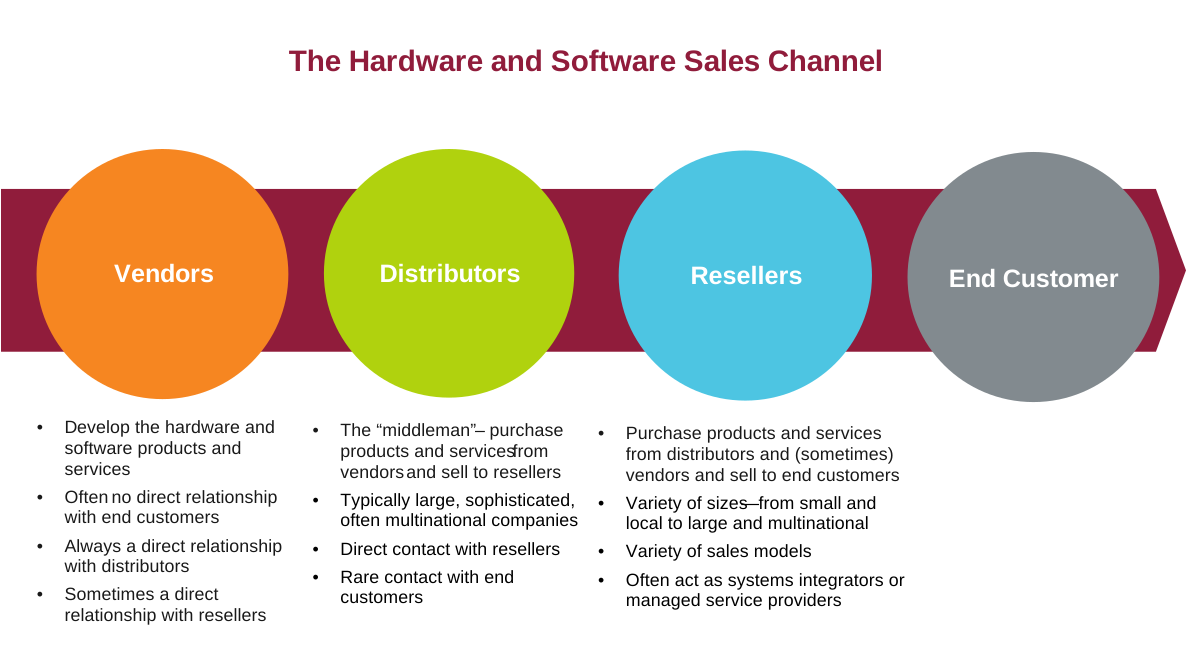
Leading hardware and software companies, including HPE, have taken steps to identify and mitigate risk that customers could use their products and services in ways that adversely impact human rights. However, once products and services are sold, these companies often lack visibility or control over how they are used. Many companies in the technology sector rely on third-party sales partners that distribute, integrate, or resell their products and services to end users. This presents challenges for companies due to limited visibility into channel partner sales and relatively immature human rights practices throughout their sales channels.
Challenges
There are several challenges to effective HRDD across sales channels in the technology sector. Sales channels involve a large volume and variety of partners, parts of the sales partner market lack stability, there is a long chain of entities before a product reaches the end customer, sales often involve a mix of products and services from different vendors, sales and legal compliance teams tend to lack expertise in ethics or human rights, there are significant financial and performance pressures in sales, and there are a variety of different sales models. HPE asked BSR to develop guidance that could address these challenges due to our history of working on industry-wide human rights issues and trust facilitated by our membership model, which enables companies to feel comfortable working collaboratively together.
BSR's Response
BSR conducted interviews with sales channel and legal compliance leads at both HPE and another BSR member company, as well as several of their common sales partners that act as distributors and resellers, to develop an understanding of how sales channels operate, the roles of each actor, their current approach to conducting HRDD of sales and the challenges they face. BSR utilized the insights gained from these interviews combined with our knowledge of how to effectively implement HRDD inside companies to develop a set of detailed best practices.
BSR also utilized interview insights to develop tailored guidance for each company based on these industry best practices.
Impact
By coming together to work with BSR to help address a common challenge, these peer companies were able to help create much needed industry-wide guidance on one of the most complex and unsolved human rights challenges in the technology sector. The guidance contains recommendations specifically for vendors, distributors, and resellers based on the leverage (the ability of a company to address a human rights impact according to the UNGPs) and constraints of their position in the sales channel, as well as recommendations for all companies in the sales channel. These include collaboration across the sales channel to develop and share best practices and create feedback loops, exploring lessons learned from the supply chain context, identifying highest risk use cases with the potential to involve severe human rights violations that require heightened due diligence, and continuing to advance downstream human rights due diligence including processes for flagging, assessing, and mitigating high-risk sales opportunities. Engaging with a variety of companies across technology sector sales channels in the development and publication of this guidance has raised greater awareness of the need for broader cross-sector collaboration to put the recommendations into practice.
HPE utilized BSR's tailored recommendations to engage and promote HRDD across its sales channel, including raising internal awareness of the issues and how to address them as well as building needed buy-in across the companies to take effective action.
Conclusion
Against a backdrop of expanding scrutiny on the downstream human rights impacts of technology sales and use from stakeholders and regulators, now is a key moment in time for tech companies to address human rights due diligence gaps in their sales channels. Because technology sector companies have similar sales channel structures and often similar sales partners, this is ultimately an industry-wide issue that will require collaboration and coordination beyond the boundaries of any single company. The development of best practices for HRDD in technology sales channels lays the foundation for this collaboration, which BSR hopes to expand in the future.
Get in Touch
This case study was written by Lindsey Andersen. If your team is also interested in support on assessing and addressing the human rights impacts associated with your company’s products and services, or if you'd like to work with other companies to address a common challenge, please reach out to us to learn how we can help.
Blog | Thursday December 7, 2023
Tech Against Trafficking Summit: Leveraging Technology to Eradicate Forced Labor
Meta and BSR hosted the second Tech Against Trafficking (TAT) Summit. Bringing together over 140 global anti-trafficking leaders, the summit focused specifically on the nexus between technology, forced labor and labor trafficking.
Blog | Thursday December 7, 2023
Tech Against Trafficking Summit: Leveraging Technology to Eradicate Forced Labor
Preview
On November 15-16, Meta and BSR hosted the second Tech Against Trafficking (TAT) Summit in New York. Building on the success of the first TAT Summit that took place in 2022, this year the summit focused specifically on the nexus between technology, forced labor and labor trafficking.
Over 140 global leaders across the anti-trafficking field, including business, civil society, academia, government, and survivors, came together to discuss how technology can be better leveraged to eradicate forced labor and labor trafficking, and how we can prevent the misuse of technology to facilitate these crimes.
Expert panels discussed the state of the field in technology and forced labor, highlighting successful cases as well as gaps in the field. Deep dive panels looked at how forced labor is manifesting online (e.g., through recruitment and cyber scams) and in global supply chains; how emerging technologies such as generative AI are shifting the landscape, and how specific solutions such as worker voice applications can be leveraged in ways that lead to meaningful impact. On the second day of the summit, panelists explored how a stronger data ecosystem can be created for labor rights, what good public policy on forced labor looks like, and what businesses can do to disrupt the financial footprint of forced labor.
Initial outputs from the TAT Accelerator were presented at the summit as concrete examples of how technological innovation can be leveraged by anti-trafficking organizations to help eradicate forced labor and labor trafficking. Polaris and the Issara Institute, the two participants of the TAT Accelerator Program in 2023, described how they are using mobile apps, worker voice solutions, data analytics, and generative AI to serve vulnerable workers around the world.
“The Tech Against Trafficking Summit is an invaluable opportunity for experts, industry, lawmakers, and survivors to come together and combine their efforts to tackle human trafficking both online and offline. At Meta, we rely on our partnerships with experts dedicated to this space to understand the latest trends in labor exploitation, so we can continue to adapt and strengthen our protections."
Antigone Davis, VP and Global Head of Safety at Meta
Based on the discussion that took place at the summit, TAT provides five key recommendations for the anti-trafficking community:
-
We must prioritize the experiences and expertise of survivors. Survivor perspectives must be incorporated into the design, implementation, and evaluation of anti-trafficking technology solutions. Businesses should hire survivors and ensure that a diverse set of individuals with lived experiences are consulted in designing programs and developing technology solutions, including those with different subject matter expertise.
“How do we build effective data-driven tech solutions to address human trafficking? The simplest answer is to listen to survivors. Just like accessibility design, tech tools built ethically, with and for trafficking survivors will benefit all of us. Otherwise, we risk copy/pasting the very same problems we wish to solve.”
Sabra Boyd, Trafficking Prevention Consultant and Writer with Lived Experience
-
Data sharing is key; standardization and privacy challenges should urgently be addressed. The anti-trafficking field needs to create a stronger data ecosystem where actors across different sectors can share information related to forced labor and labor exploitation. Data needs to be standardized and privacy-preserving mechanisms must be employed to ensure the safety of workers and survivors. Addressing these pre-requisites can help avoid redundancy, and spend less time on data collection and more on data analysis and response.
-
Industry actors should work together to prevent, identify, and address labor trafficking threats on their platforms. Online platforms are being misused in increasingly complex ways to facilitate labor trafficking. To prevent these risks, companies across the tech industry and beyond (e.g., financial services companies) should work together to share information related to threats and work together to address them.
-
Stronger collaboration and know-how transfer are needed between buyers and suppliers. Buyers should engage with suppliers as solution partners to cascade human rights due diligence along the value chain, supporting capacity building and continuous improvement, particularly for SMEs. The use of tech solutions should not be limited to buyers and data must flow both ways (not only from suppliers to buyers) to address forced labor in a meaningful way.
“Google remains invested in TAT and the Global Business Coalition Against Trafficking (GBCAT) because the coalition’s focus areas and its commitment to getting the right work done. GBCAT facilitates business collaboration and supports capacity building of smaller business and suppliers, providing practical guidance on identifying and addressing modern slavery risks.”
Shubha Chandra, Human Rights Compliance Lead, Google
-
Cross-sector collaboration is essential for capacity building and better policies. Businesses should partner with governments to help close the technology knowledge gap in government, and to support the development of effective forced labor regulations locally and globally. On the other hand, policymakers have a critical role to play to incentivize data sharing and corporate transparency.
“Combatting something as complex and global as forced labor takes collaboration with all stakeholders. Amazon remains committed to our collaboration with TAT as a critical organization for identifying and supporting solutions. This is the second year that TAT has been able to bring together survivors, policy makers, tech innovators and companies as well as civil society to talk about how we can create solutions together to address this growing challenge.”
Leigh Anne DeWine, Director, Social Responsibility, Amazon
Collaboration and partnerships are crucial if we want to create meaningful reduction in forced labor. TAT will continue to serve as a platform for cross-sector collaboration in the fight against human trafficking, facilitating honest dialogue about the role of technology, its benefits, and shortcomings.
In 2024, TAT is planning to:
-
Continue to advance the use of technology by anti-trafficking organizations through its Accelerator Program;
-
Explore practical solutions to strengthen the supply chain labor rights data ecosystem;
-
Facilitate industry collaboration to prevent the misuse of technology to facilitate human trafficking;
-
Work with survivor leaders to ensure that these efforts serve the best interest of vulnerable groups.
Earlier this year TAT joined forces with the Global Business Coalition Against Human Trafficking (GBCAT), an industry collaboration that brings together companies across sectors to combat human trafficking in company operations and supply chains. TAT and GBCAT are actively recruiting new members. Contact us to find out how to get involved.
Case Studies | Thursday December 7, 2023
Updating Scotiabank’s Human Rights Strategy
BSR worked with the Bank of Nova Scotia (Scotiabank) to refresh its Human Rights Assessment (HRA) and update its Human Rights Statement.
Case Studies | Thursday December 7, 2023
Updating Scotiabank’s Human Rights Strategy
Preview
Introduction
BSR worked with The Bank of Nova Scotia (Scotiabank) to refresh its Human Rights Assessment (HRA) and update its Human Rights Statement. This work served as a foundation to develop a forward-looking and actionable human rights strategy to navigate emerging, existing, and potential human rights challenges and opportunities.
As a member of BSR and its Human Rights Working Group, Scotiabank’s ongoing partnership with BSR enabled the Bank to advance its commitment to respect human rights in its own operations and across its value chain.
Background
Scotiabank offers a broad range of advice, products, and services, including personal and commercial banking, wealth management and private banking, corporate and investment banking, and capital markets. Scotiabank's team of almost 90,000 employees serves more than 25 million customers across its global footprint.
As a financial services provider, Scotiabank recognizes its obligations and responsibilities to respect the human rights of its employees, customers, and individuals and communities affected by its operations, business relationships, products, and services. Aligning Scotiabank’s activities with the framework established by the UN Guiding Principles on Business and Human Rights (UNGPs) continues to be a growing priority for the Bank. As part of this work, and in the face of increasing global regulatory and stakeholder pressures, Scotiabank sought BSR’s human rights and financial services expertise to work toward the following goals:
- Update Scotiabank’s Human Rights Statement to reflect global trends and stakeholder expectations.
- Improve awareness of the Bank's human rights commitments internally and externally.
- Identify the Bank’s most salient human rights issues and provide recommendations to address and mitigate them.
- Establish a systematic process to assess the effectiveness of actions taken to address human rights issues.
- Increase transparency on Scotiabank’s human rights disclosures to align with growing stakeholder expectations.
- Strive to embed the UNGPs into Scotiabank’s global operations and value chain.
The Challenge
Under the UNGPs, companies, such as Scotiabank, have the responsibility to respect human rights within their own operations and value chain, including the consideration of human rights issues through business relationships, products, and services.
Banks play an important role in our global economy. However, there are multiple ways in which the sector is exposed to salient and significant human rights issues through its operations, supply chains, and business relationships. With increasing stakeholder expectations and greater regulatory requirements on human rights, financial institutions must develop proactive and strategic approaches to identify, address, and mitigate their exposure to key human rights issues in all facets of their business, including but not limited to corporate and retail lending, asset management, and investment banking.
Building on BSR’s first HRA for the Bank in 2016, which informed a four-year strategy and was done in partnership with the Danish Institute for Human Rights, Scotiabank chose to refresh its assessment and strategy to validate and update its salient human rights issues and continue to proactively manage human rights risks and impacts.
BSR’s Approach
In 2020-2021, the Bank commissioned BSR for a second time to conduct a comprehensive HRA to help Scotiabank advance its commitment to prevent and address adverse human rights risks and impacts and improve policies and due diligence processes. The HRA included interviews with more than 50 internal and external stakeholders, an extensive review of internal and publicly available materials, an analysis of regulatory developments, and a human rights salience assessment. Drawing on findings and international human rights standards, BSR identified Scotiabank’s most salient human rights issues across the Bank’s operations or business relationships, products, and services (e.g., lending and investment activity).
Using a proprietary salience assessment tool tailored to Scotiabank’s operations and value chain, BSR analyzed and prioritized relevant human rights risks and impacts based on criteria in the UNGPs, resulting in a priority list of 13 salient human rights issues for Scotiabank to monitor and manage as part of its renewed human rights strategy.
BSR then developed tailored recommendations on the order in which Scotiabank should address their most salient issues and highlighted areas that should be prioritized, including issues that the Bank is directly linked to via business relationships (e.g., clients and suppliers). BSR proposed areas for further action, including updating the Bank’s Human Rights Statement, reviewing existing mechanisms for identifying grievances and providing access to remedy, and exploring additional regional and issue-based actions.
Building on the findings from the HRA, BSR worked with Scotiabank to refresh its human rights strategy, which included incorporating an updated vision statement, integrating the identified salient issues, developing goals for each issue, and identifying issue owners. After developing a strategic framework, BSR facilitated 10 action planning workshops with internal representatives of key functions/departments to gather insights on the current management approach, present best practice examples, and develop strategic recommendations for each prioritized human rights issue.
Concurrently, BSR also assisted Scotiabank in updating its Human Rights Statement, reviewing it against UNGP expectations, benchmarking against peer companies, and providing recommendations based on identified gaps.
Impact and Implementation
Upon completion of the project, Scotiabank had an updated Human Rights Statement with stronger alignment to the UNGPs and corporate human rights criteria and a refreshed human rights strategy that addressed the Bank's most salient issues. Through BSR’s facilitated collaboration with key stakeholders (e.g., employees, NGOs, investors), Scotiabank was able to deepen its understanding of human rights issues, which contributed to building the capacity of internal functions, (e.g., Human Resources, Risk, Legal, Data Ethics) on the UNGPs, findings from the HRA, and best practices in the banking industry. This workstream helped to outline ownership and governance-related responsibilities across relevant teams to contribute to the implementation of the recommendations from the HRA and management and mitigation of Scotiabank's most salient human rights issues.
“At Scotiabank, respect for human rights is fundamental to the way we do business and core to our values. Our refreshed human rights strategy, and the BSR-facilitated workshops that led to its creation, helped us reengage internal stakeholders in meaningful and updated dialogue aligning on clear priorities to advance our human rights commitments.”
Maria Saros, Vice President and Global Head, Social Impact
Conclusion
In light of the shifting regulatory environment and stakeholder pressures globally, Scotiabank and other financial institutions are increasingly recognizing the need and strategic value of developing a comprehensive approach to human rights.
Robust human rights policies and HRAs are the building blocks of an effective human rights approach, providing financial institutions with a framework and systematic due diligence tools to assess and address human rights risks and impacts associated with their operations, business relationships, products, and services and meet their responsibilities to respect human rights under the UNGPs. Equally as important, the UNGPs and emerging regulations expect financial institutions to act on HRA findings with achievable timelines, track performance and assess the effectiveness of their actions, communicate how they are mitigating and managing their identified salient human rights issues, and provide access to remedy when harm occurs.
By adopting a strategic approach to respecting human rights, financial institutions can proactively adapt to address human rights risks and impacts and leverage opportunities within their business strategy and risk management systems to meet expectations from key stakeholders, align with the UNGPs, and manage key reputational, financial, and legal risks.
“Our human rights commitments guide our business governance and management and have wide-ranging impacts across the organization. Our Human Rights Assessment and our updated Human Rights Strategy have helped us proactively formalize a new roadmap for Scotiabank to strategically address and mitigate salient human rights impacts throughout our value chain.”
Meigan Terry, Senior Vice President and Chief Sustainability, Social Impact and Communications Officer
Get in Touch
This case study was written by Megan Coffey and Kindra Mohr. For more information on how BSR works with financial institutions to advance human rights in operations, investment portfolios, and value chains, please contact our human rights and financial services teams.