Searching for:
Search results: 706 of 1188
Blog | Tuesday April 14, 2020
Wings of Change: A Scenario Realized
As we move through and beyond the COVID-19 pandemic, Merck’s Cathryn Gunther offers her thoughts on consequential gifts that might materialize from the crisis, and the role companies can play in making them a reality.
Blog | Tuesday April 14, 2020
Wings of Change: A Scenario Realized
Preview

Cathryn E. Gunther
AVP Global Population Health
Merck & Co., Inc.
“Wings of Change” was the title of a pandemic-based future scenario that I coauthored in 2008 when working for a strategic consultancy firm. Scenario planning is a disciplined method for imagining plausible future states in which companies envision what it will take to "future-proof" their business model, remain relevant, and ensure sustainability amidst a range of alternative environments. It is a tool for strategic thinking.
I recently reread the scenario narrative with some trepidation. Even though the imaginary killer virus was a bird flu of the H1N1 type (not a coronavirus), the scenario was eerily comparable to our current state of the SARS-CoV-2 pandemic. “Wings of Change” was an imaginative future state that came to life—and came into our lives.
As dramatic and honestly—scary—as that scenario was to research and write, the resulting national health care system that rose up from the fictional pandemic was forever changed for the better. The virus was a catalyst for reformation of a health care ecosystem that vigorously focused on health promotion, health prevention, and the reframing of community health. Local and public health care was reimagined. Health—not sickness—was prioritized, and accountability for a healthy society was shared widely. Health and health care were "socialized." Not through a single-payer model, but literally through the mobilization and collaborations of citizens, businesses, public and private health care providers and through a lightning-speed step change in health analytics, artificial intelligence, and technologies. In "Wings of Change," the fictional pandemic was a catalyst for sustained improvements in health and health outcomes.
As we move through and beyond this real-world, global—and human—experience, we will be left with heartbreaking stories of untimely and widespread deaths, massively disrupted lives and economies, and selfless heroic acts of humanity. Coming out of the fog of disruption and renewal will also come gifts. Yes, gifts.
As a health care strategist, business executive, and advocate for well-being, I’d like to share my views of three consequential gifts that will materialize from this pandemic and the role that companies can play in amplifying the value of those gifts to society.
Gift #1: A Vital Appreciation of Mental Health
People will have experienced physical and social isolation in ways that were unimaginable just weeks prior to the pandemic. Anxiety, depression, loneliness, and sustained worry over the virus and the personal and economic consequences to families and businesses may linger for some time. For those with underlying mental health conditions, fragile emotional health, or individuals who struggle to cope with change, the recovery period will be especially difficult. Since everyone will be impacted by this shared experience, the stigma of mental health will be muted.
This vulnerable period presents an opportunity for employers to establish greater parity between physical health and mental health for employees. Companies can implement policies and practices that support healthy bodies and minds. Organizations can create a culture that leverages our shared experience to reduce the stigma associated with mental health by providing and promoting resources, tools, and programs.
When studying which illnesses impact productivity and performance the most, mental illness is at or near the top for most employers. At Merck, mental and emotional health are strategic priorities in support of our workforce. By sharing personal stories of how people—especially leaders—were affected by the pandemic, others will be comforted to come forward for help. Companies can embrace a holistic "total worker" view and acknowledge that there is no health without mental health. Leaders and grassroots efforts can hasten the elevation of mental health as a key component of well-being. The aftermath of the pandemic will mandate heightened awareness of, attention to, and action on employee mental and emotional wellness. Mental health can come out of the corporate closet for good, and businesses can lead the way.
Mental health can come out of the corporate closet for good, and businesses can lead the way.
Gift #2: The Value of Vaccination
The SARS-CoV-2 pandemic is a harsh reminder that immunity through vaccination is one of the most effective measures we can take to protect our societies and economies from disease outbreaks. We are seeing a public outcry for new treatments and new vaccines effective against the novel coronavirus. Companies are coming together in unprecedented ways to research and test vaccines and treatments against COVID-19. Decades of evidence indisputably demonstrate that vaccines serve a critical public health need. We know that vaccines save countless lives. It can be argued that on a population health scale, vaccines are the greatest achievement of medical science. Belief in the power of immunization will be renewed.
Employers are uniquely positioned to encourage and promote appropriate vaccination of their workforce. Through health education and promotion, health fairs, vaccine clinics, benefits coverage and by leadership example, companies can boost understanding of, access to, and confidence in vaccination. With over 100 million workers in the U.S., employers have the capacity to increase immunization by supporting vaccination and protecting employees, dependents, and communities from preventable diseases.
Employers that have invested in building a culture of well-being through integrated policies, programs, and environmental cues reap the benefits of a healthier workforce.
Gift #3: The Benefits of Health and Well-Being
A person’s baseline health is an important determinant of their clinical outcome with COVID-19. For example, we know that smoking can impact pulmonary function. Smoking increases the risk of chronic diseases that place COVID-19 patients at higher risk. Individuals with high cholesterol, uncontrolled hypertension, poorly controlled diabetes, and certain immunocompromised conditions have increased risk of poor outcomes. Staying healthy is a good starting point for fighting the virus.
Employers that have invested in building a culture of well-being through integrated policies, programs, and environmental cues reap the benefits of a healthier workforce. Merck is committed to this by making the healthy choice the easy choice and by ensuring that health and safety is considered in every aspect of daily life at work. Evidence shows that employers with a benchmark culture of health can reduce health care spending, improve employee engagement, boost productivity, prevent injuries, and improve overall corporate performance. Employers are well-positioned to help stem the tide of chronic conditions that cripple our societies by advocating and creating health within their workforce. After all, good health is smart business.
It is hard to envision the silver lining of a pandemic. As we turn the corner and look to the future, employers can incorporate health into their return-to-work efforts. Companies have retooled manufacturing processes from cars to respirators, from evening gowns to masks, and from beer to hand sanitizer. They, too, can retool their employee health efforts. Businesses can carry forward the gifts that improve mental health support and services. Businesses can fuel the broader use of vaccines to protect workers, families, and society. Businesses can drive improvements in the health and well-being of their workforce. These are just a few of the gifts that will arise out of this public health crisis.
This real-world version of “Wings of Change” presents an opportunity for a step-change in how the private sector supports health promotion, health prevention, and health protection. Companies have the power to catalyze enduring change towards health and wellness, create a competitive advantage, and amplify their social responsibility.
This is part of a series of guest blogs by BSR member companies, offering their insights as they continue their work in sustainability while managing the immediate economic and social impacts of the COVID-19 pandemic.
Blog | Friday April 10, 2020
COVID-19 and Our Future World
BSR and Polecat analyze the top ESG issues and sectors arising in global discourse about COVID-19 over the last fortnight.
Blog | Friday April 10, 2020
COVID-19 and Our Future World
Preview
BSR has partnered with Polecat since 2017 to deliver real-time corporate reputation and ESG intelligence from global online and social media discourse.
Yasmin Crowther, Polecat's VP of Strategic Insight, collaborated with Charlotte Bancilhon, Associate Director, BSR, to analyze the top ESG Issues and Sectors arising in global discourse about COVID-19 over the last fortnight. This blog post draws on the key findings:
- Procurement of medical supplies is the top online media topic, followed by concern for impacted workforces and labor practices. Public opinion on social media indicates high expectations of businesses to play a positive role in the COVID-19 response, including to protect employees, provide fair benefits, and pay taxes.
- Social media is also focused on potential healthcare solutions, but pays acute attention to issues of diversity and inclusion, with strong responses to the stigmatization of ethnic minorities and characterization of COVID-19 as "the Chinese virus."
- The industrial sector receives most online scrutiny for the economic impacts of COVID-19 as well as for the ways in which business models are pivoting to provide solutions. Firms across sectors are making investments to support communities—from access to IT to ensuring food security and emergency relief.
- Conversations about climate change have not been hampered by COVID-19 but reframed. The depth and scale of the current pandemic is being compared to the climate crisis, with a renewed focus on building resilient communities and businesses.
- There is a new focus on biodiversity with growing attention to how wildlife carries infectious diseases and the risks of destroying natural habitats which force animals into ever closer proximity with humans.

Coronavirus coverage across leading ESG Topics and Sectors for the two weeks to 8 March 2020
The main headline in the Financial Times this weekend read: "Global economy set for sharpest reversal since Great Depression." Although businesses are not all equal in face of the crisis, it is clear from our review of online and social media discourse that businesses are being scrutinized for how they are considering the welfare of their employees, communities, and partners before profits. A recent survey found that 90 percent of respondents expect businesses to partner with governments and relief agencies to address challenges, while long-standing debates on climate and stakeholder capitalism are being powerfully reframed. There is an unprecedented opportunity for businesses to show leadership and purpose:
Response to Medical Imperatives
We are glimpsing what is possible when urgent social need comes first—when the imperatives are the procurement of ventilators, face masks, vaccines, and testing kits. Around the world, auto manufacturers like Ford, GM, Fiat, and Nissan are collaborating with healthcare specialists to deliver tens of thousands of medical ventilators in a matter of months. The pharma sector is investing billions to co-fund vaccine research and clinical testing, and some of the world’s best-known beauty brands and beverage companies, like Estee Lauder, LVMH, L’Oréal, and Pernod Ricard, are turning their facilities to the production of hand sanitizer for frontline medical staff. Meanwhile, the fashion industry, from luxury brands to small- and medium-sized enterprises (SMEs), are making facemasks, and household names like Unilever are donating hundreds of millions of dollars of soap, sanitizer, bleach, and food to support health organizations globally.
Support for Communities
After the medical imperatives, come the community concerns of ensuring care for vulnerable people in their homes; that we all have enough food and that we have the digital infrastructure – the networks, connectivity and data—vital to working from home and maintaining contact with family and friends whom we may not see for months. Food companies like Mondelez are donating tens of millions in financial aid and in-kind support to community partners advancing critical food stability and emergency relief. Retailers are setting aside dedicated time every day for the elderly to shop and providing free home deliveries for the most vulnerable. Tech companies are lifting data caps and promising not to cut off supplies if payments are overdue or missed.
Flexible work forces
At the same time as businesses strive to pivot to the realities of a world in lockdown, the longer-term consequences will reshape work life within many sectors. Employees around the world are being asked to adapt to working from home or being furloughed. A recent ILO report found that more than 4 out of 5 people (81 percent) in the global workforce of 3.3 billion are currently affected by full or partial workplace closures. But while some sectors, such as airlines, are registering massive layoffs, others, such as retail, are hiring. Around 40 percent of the world’s passenger jet fleet is now in storage, with firms like Air New Zealand reporting an expected contraction of at least 30 percent over the next year, as its revenue falls from just under US$6bn to US$500m. In the U.K., laid-off airline cabin crew with first aid training are being pursued by the NHS to work in support of nurses and doctors in hospitals across the country. It is hard not to wonder if the experience will compel a permanent change in career as the perceived value of frontline workers is set to soar, with UK political conversation on the need for better pay already igniting. Meanwhile in the U.S., the reduction in emergency departments and routine hospital programs to cope with COVID-19 means some frontline staff are actually getting pay cuts.
Science at the Center
Perhaps most powerfully, coronavirus has put expert opinion and scientific fact center stage. We do not want or need the opinion of literati—we care mainly for the epidemiologists, virologists, and medics who tell it as it is. Twitter has redefined its definition of harm to address content that "goes directly against guidance from authoritative sources of global and local public health information" and is removing tweets that spread dangerous misinformation about COVID-19. Facebook is investing an additional US$100 million in local journalism to support reporting on the pandemic.
Climate Change at the Fore
There is much that is positive, but what does it all bode for how we think about the future more widely? Many articles use the lens of climate change to consider future possibilities—balancing the immediate enforced environmental benefits of cleaner air and birdsong with longer-term choices. As The New York Times writes:
The efforts to revive economic activity — the stimulus plans, bailouts and back-to-work programs being developed now — will help determine the shape of our economies and our lives for the foreseeable future, and they will have effects on carbon emissions that reverberate across the planet for thousands of years.
In an interview with New Scientist, Greta Thunberg said:
If one virus can wipe out the entire economy in a matter of weeks and shut down societies, then that is proof that our societies are not very resilient. It also shows that once we are in an emergency, we can act and we can change our behaviour very quickly.
Reframing of Biodiversity and Disease
Conversations about climate change and biodiversity haven’t been killed by COVID-19, but they are being reframed. Tigers with COVID-19 make the front page, along with wide-ranging discourse about potential threats to and from other animals. Inger Andersen, head of the UN Environment Programme, has cautioned on the proximity of wild animals to humans as a cause of disease—with 75 percent of all emerging infectious diseases coming from wildlife. Her message is that failing to look after the planet is a failure to look after ourselves: global warming and the destruction of habitats for farming, mining and housing all drive wildlife into contact with people in ways that increase risk of cross-infection. Aaron Bernstein of the Harvard School of Public Health has said:
The separation of health and environmental policy is a dangerous delusion. Our health entirely depends on the climate and the other organisms we share the planet with.
The emerging imperative is for more joined-up thinking and fewer artificial silos, for business strategies to go beyond just cutting greenhouse gas (GHG) emissions to the delivery of resilience in the face of a global crisis.
The Battle for Hearts and Minds
The political message to societies in lockdown is that we are "all in it together"—that our individual sacrifices are essential for the greater good and to safeguard the vulnerable. On social media, there are strong reactions to behaviors that undermine diversity and inclusion, particularly when it comes to stigmatizing minorities and characterising COVID-19 as "the Chinese virus." Online, the emphasis is largely that "we are all in it together." We are, but there is also an abyss being observed between the experiences of haves and have-nots. Social isolation in a roomy home with a garden is very different from lockdown in a high-rise block, let alone the difference between established and emerging economies. COVID-19 is shining an unforgiving light on how we are all the same and also how lives are so different and that we turn our backs on one another at our collective peril.
Our Post-COVID-19 World
The tension that seems to be strongly in play when it comes to imagining a world after COVID-19 is whether the impetus to collaborate and put science and society first endures or whether more protectionist and nationalist policies assert themselves. Conversations to build back better are emerging, as demonstrated by the group of French parliamentarians who have launched a national consultation to prepare “the day and the world after” COVID-19 under the hashtag #LeJourdAprès, in reference to the Hollywood hit The Day After Tomorrow. BSR is inviting member companies to engage in thinking ahead to build a different future.
Already, multiple corporate conversations are trying to scope the future landscape, with speculation that flexible working and reliance on digitization will not spring back to the status quo—that the future has somehow been rapidly accelerated—and that new priority and investment will need to go towards ensuring more inclusive and resilient economic strategies if we are not to bear the cost of more damaged societies.
As Arundhati Roy wrote in the Financial Times over the weekend:
The Pandemic is a portal. We can choose to walk through it with our dead ideas. Or we can walk lightly, ready to imagine another world.
This blog was written and produced in collaboration between Polecat and BSR.
Blog | Thursday April 9, 2020
Three Ways Businesses Can Protect LGBTIQ+ Rights in the Face of COVID-19
COVID-19 will take an increased toll on those groups who were marginalized, vulnerable, and excluded before the pandemic hit, including lesbian, gay, bisexual, transgender, intersex, and queer (LGBTIQ+) people. For LGBTIQ+ people who have experienced a lifetime of discrimination, especially in places with deep poverty, tenuous healthcare delivery systems, and…
Blog | Thursday April 9, 2020
Three Ways Businesses Can Protect LGBTIQ+ Rights in the Face of COVID-19
Preview
• The coronavirus will hit marginalized groups, including LGBTIQ+ people, hardest.
• The private sector must take collective action to cushion the blow.
• Businesses can consider three strategies when trying to ensure inclusion.
The COVID-19 pandemic has disrupted life as we know it on a scale never seen before. One inescapable point in this crisis is that it will take an increased toll on those groups who were marginalized, vulnerable, and excluded before the pandemic hit, including lesbian, gay, bisexual, transgender, intersex, and queer (LGBTIQ+) people. For LGBTIQ+ people who have experienced a lifetime of discrimination, especially in places with deep poverty, tenuous healthcare delivery systems, and fragile government infrastructure, the sober truth is that this global emergency presents immediate unimaginable challenges.
For example, as highlighted in a recent Openly article, in India transgender people are at heightened risk of poverty and ill health because they already exist on the margins of society. The UN Independent Expert on Sexual Orientation and Gender Identity recently wrote in an open letter about the impact of COVID-19:
“Homeless persons, among whom LGBTIQ+ persons are many, face exacerbated exposure to contagion.…Many LGBTIQ+ youth will now be forced to [isolate] within hostile environments with unsupportive family members or co-habitants.”
Ultimately, as OutRight Action International notes, in too many places—simply because of who they are and who they love—LGBTIQ+ people will have less access to healthcare, will be hard hit by unemployment and food scarcity, will see their already-thin margins disappear, and without life-saving interventions will fall sick and die.
For these reasons, OutRight has launched a COVID-19 Global LGBTIQ+ Emergency Fund to support queer organizations on the frontlines of the pandemic in all regions outside of North America and western Europe. The fund will distribute grants to grassroots LGBTIQ+ organizations that are addressing a range of community needs, including provision of emergency food and/or shelter, access to safe and competent healthcare, safety and security, financial stability, and other unforeseen negative impacts brought about by the pandemic. Fund participants benefit from our coordination, vetting, and distribution of money to capable local organizations in markets where they do business. This is but one example of how the private sector can link up with civil society to respond to the pandemic when systems and government fail or are insufficient.
As COVID-19 strengthens its indiscriminate grip, those of us in the business and social sectors are being asked hourly what more the private sector can do to effectively ensure that those most at risk are not left behind. Our answer: take collective action to address the immediate needs of those affected by COVID-19, while staying focused on and committed to long-held values that prioritize inclusion and equity.
In this regard, purpose-driven leadership has never been more critical. As each company and civil society organization addresses urgent needs in unique and important ways—from building hospitals and tech platforms to manufacturing medical equipment and delivering food to homebound older people—important trends are emerging with regard to the need for, and power of, collective action. Never before has the old adage “there is power in numbers” rung truer.
When the Partnership for Global LGBTIQ+ Equality (PGLE), a global leadership platform to accelerate LGBTIQ+ inclusion in collaboration with the World Economic Forum and BSR, was launched in January 2019 at the Forum's Annual Meeting, we could not have predicted that in only one year its raison d'etre—tackling discrimination in all its forms to ensure that the universal basic human rights of LGBTIQ+ people are acknowledged and upheld—would be a matter of life and death for hundreds of thousands that comprise our global community.
Today more than ever, the business community has an opportunity, in fact a responsibility, to demonstrate leadership. But it can’t do it alone. While the past decade has seen important progress in LGBTIQ+ inclusion in some parts of the world, in most countries, protection against discrimination based on sexual orientation and gender identity is inadequate at best.
Unless we act, discrimination, unequal access, and the denial of universal human rights will only compound the poverty and dislocation that LGBTIQ+ people face around the world and render long-term social and economic progress out of reach.
Three years ago, the Office of the United Nations High Commissioner for Human Rights, in collaboration with the Institute for Human Rights and Business, developed the UN Standards of Conduct for Business to support the business community in tackling discrimination against lesbian, gay, bi, trans, intersex, and queer people. These standards provide five concrete steps that companies can take to align their policies and practices with international standards on human rights of LGBTIQ+ people.
To date, nearly 300 companies have stood up in support of human rights and equality for LGBTIQ+ individuals by expressing support for the UN Standards. If your company has not stood up for the universal human rights of LGBTIQ+ people, now is the time to do so by adding your name to the list of companies supporting the UN Standards.
The pandemic will undoubtedly present a range of new challenges to democracy and human rights. It is undeniable that repressive regimes will use the pandemic in ways that serve their own myopic political interests at the expense of basic freedoms and people’s lives. Unless we act, discrimination, unequal access, and the denial of universal human rights will only compound the poverty and dislocation that LGBTIQ+ people face around the world and render long-term social and economic progress out of reach.
Our community and its allies cannot afford to stand idle, and we must not allow backsliding on hard-won LGBTIQ+ rights. We must accelerate our quest for inclusion, together. In addition to expressing public support for the UN standards, here are three strategies to guide our collective response:
- Apply a human rights lens to decision-making. Source accurate information when making data-informed decisions, ensure that those decisions are guided by application of a human rights lens and the UN Standards of Conduct for Business, and make sure responses prioritize the immediate and long-term recovery needs of the most vulnerable. In developing individual, sector-wide, and cross-sectoral actions, ensure that all affected stakeholders inform a coordinated, global strategy. Identify local stakeholders and global organizations with deep roots in local communities where you operate to understand their vulnerabilities and how your decisions impact them.
- Amplify your core values. Content is key in times of emergency. Now more than ever, people will need constant reminders that fear of the Other is the enemy and that inclusion remains the highest priority. Leverage all communications platforms to remind stakeholders that inclusion is a value that should underpin our response—and that inclusion means everyone. Dispel stigmatizing messages that harm vulnerable communities by countering them publicly.
- Prioritize collective action and share what you learn. It is critical that those in positions of authority around the world understand that none of us are too distracted to uphold basic universal human rights for all or that we are not too preoccupied to hold violators accountable. Through joint public statements or silent diplomacy, make your position known. Help others avoid mistakes and scale successful approaches, including innovative ones. Raise awareness of best practices and assist others in applying them. Now is the time for a big tent approach.
Months and years from now, when we look back on this time, we will be measured by our capacity to lead with purpose, kindness and compassion, and our ability to mobilize together to respond to the needs of our most vulnerable members of society. The time for bold action is now. Let us not fall short or fail to do absolutely everything we can.
First published on the World Economic Forum website.
The Partnership for Global LGBTIQ+ Equality (PGLE) is a collaboration between the World Economic Forum, the UN Office of the High Commissioner for Human Rights, and BSR.
Blog | Wednesday April 8, 2020
Resilient Business Strategies: The Road to Recovery Based on Sustainability Principles
In the wake of COVID-19, we are calling for business to “meet the moment and build the future.” In doing so, resilient business strategies will be fundamentally important to business success as well as economic and social recovery.
Blog | Wednesday April 8, 2020
Resilient Business Strategies: The Road to Recovery Based on Sustainability Principles
Preview
Resilience is having its moment, as the world reels from the massive health and economic impact of the coronavirus. The concept has suddenly gone from overlooked buzzword to urgent objective.
In fact, the importance of resilience was understood even before this pandemic. Speaking at Wharton earlier this year, before the impact of the coronavirus was widely felt, Mohammed el-Erian, chief economic advisor at Allianz and former CEO of PIMCO, said: “The world in which you’re living in is fluid, unpredictable, less stable. The dramatic shift...is part of a bigger reality that speaks to continuing fluidity, more unthinkables becoming reality, and trickier decision-making challenges.”
Resilience, he said, was the objective to aim for in such an environment.
In early 2018, we wrote that “integrating sustainability into business” was no longer fit for purpose. Instead, we advised that resilient business strategies should be the objective for every business and that topics and processes traditionally understood as being part of the sustainability agenda were a central part of that vision.
The era of stand-alone sustainability strategies, with subsequent integration of sustainability into company strategy, needs to end; the creation of resilient business strategies that take sustainability as their foundation needs to begin.
In the wake of the pandemic, we are calling for business to “meet the moment and build the future.” In doing so, resilient business strategies will be fundamentally important to business success as well as economic and social recovery.
The road to resilience relies heavily on sustainability principles, and the following will be even more important coming out of this crisis than they were coming in:
- Apply Futures Thinking: It is impossible to create a resilient business without understanding the range of possible futures a company might face. The contrast in outcomes between South Korea (which conducted a pandemic scenario exercise last fall) and the U.S. vividly illustrates how acting quickly and decisively can mean the difference between manageable disruption on one hand and a health and economic cataclysm on the other. BSR created its Sustainable Futures Lab to strengthen our efforts and help our member companies understand the intersection of various possible futures and fundamentally important sustainability challenges, from climate to circular economy. Organizations that take seriously and develop plans anticipating a variety of potential scenarios are far better prepared to act quickly and decisively when “normal” shifts overnight. This principle has been enshrined in the Task Force on Climate-Related Financial Disclosures (TCFD), and its value extends far beyond climate. Understanding and preparing for a range of scenarios has value on multiple topics and provides an essential “stress test” for business strategy.
- Rethink Economic Value and Optimization: Our measures of economic value do both business and society a disservice. We will produce more resilient companies and economies through three main steps. First, it is time to relegate the concept of “externalities” to the dustbin of history and embrace measurement of so-called intangible assets—social capital, natural capital, human capital, reputation—more fully. Second, we need to abandon optimization as the default approach to decision-making. We have removed slack in everything, from supply chains to public health systems to airline schedules; and we are now living with the harsh reality of why that can be self-defeating. Strategic efficiency is a core value of business; relentless optimization of everything is not. Finally, this crisis should lead to changes in capital markets that sound the death knell for short-term shareholder value in favor of long-term value creation for all stakeholders.
Business cannot thrive in a society that is failing....The pandemic is an extreme test for the social safety net, but we know that there were significant stresses before it hit.
- Embrace Diverse Perspectives: Groupthink is no way to achieve resilience. Resilience starts in the boardroom, and that will happen only if diversity—including of experience and perspective—is present to deliver the lateral thinking which strengthens an organization’s ability to identify and prepare for shocks to the business. External advisory boards, which are often freer to forecast and consider the unexpected, are another tool that can help ensure that companies identify and prepare for change. Decision-making is also strengthened by more systematic listening to stakeholders, employees, and customers, who will challenge inflexible mindsets to the benefit of the decision makers.
- Redefine the Social Contract: Many have said—correctly—that business cannot thrive in a society that is failing. Today, the social contract has proven inadequate in many countries in no small part because public services have not been resourced properly: the social and work arrangements present when our current social contract were developed are no longer in place, and new challenges—namely the transition to a digital, net-zero carbon economy—need to be tackled. The pandemic is an extreme test for the social safety net, but we know that there were significant stresses before it hit. We were already well aware of the need to redefine the future of work, address the needs of contingent and other workers previously seen as “disposable,” improve skill development, and to address educational needs in a modern context. Business, as we articulated in this discussion paper BSR developed last year, has both key assets and responsibilities to bring to this essential challenge, working in partnership with government, civil society, and others.
There is little doubt that business and other sectors will make significant changes to their objectives, processes, thinking, and measurement of value as the economy—and public health—recover. The core of business, including strategy, capital allocation, public policies and market rules, and employee relations will be remade in the wake of the crisis. Investors will want to know whether a company can prove to be resilient. No business strategy can possibly succeed if it doesn’t take account of the impacts of the climate crisis, supply chains subject to rapid disruption, and fast-changing political environments. The year 2020 has proved that resilience will be how every business strategy, CEO, and Board will be judged.
The world is learning a painful lesson about the damage that can come from a lack of resilience. Epochal events on the scale of the pandemic always bring structural changes in their wake. If we prioritize resilience, we can not only meet the moment, but also build a better future.
Blog | Monday April 6, 2020
How Sustainability Teams Can Meet the Moment
It’s still too early to know the full human and economic impact of the COVID-19 pandemic. But eventually, we will need to begin to ponder the question: how will we rebuild once the crisis has passed? What can sustainability teams in companies expect?
Blog | Monday April 6, 2020
How Sustainability Teams Can Meet the Moment
Preview
It’s still too early to know the full human and economic impact of the COVID-19 pandemic, and our attention today is rightfully on caring for the sick, protecting the vulnerable, and preventing the disease’s continued spread.
The global business community is responding to the pandemic in real time, providing support for their staff, their suppliers, their contractors, their customers, and their communities. As an example, Just Capital is tracking responses from U.S. businesses.
But eventually, we will need to begin to ponder the question: how will we rebuild once the crisis has passed? And how can we rebuild in a way that enables our systems to be more resilient, and just, in the future? We have learned not only that change is necessary, but that it is possible, and this will have an impact on every aspect of society: from global supply chains to community health programs to the very nature of work, policy, education, and everything in between.
The questions that I’m getting from BSR member companies today fall in between what’s the best immediate response and how do we drive systemic change. What do I do right now? How do I maintain my company’s commitment to our sustainability priorities? Will I lose executive attention or budget? How do I maintain momentum in such a volatile environment?
There is certainly no one-size-fits-all answer to these questions. That said, I have found that times of crises don’t change as much as they reveal the state of sustainability inside a business. For companies in which sustainability was already sidelined or was created mainly for public relations purposes without much real business integration, we can expect to see those commitments waver.
But for companies which are focused on material sustainability issues—those issues are only going to be more relevant moving forward. This is the time to pull out that materiality matrix—remember the specific ways that certain issues directly impact your business success and focus your efforts there. If you have integrated sustainability well, the case for a resilient strategy is being made for you. Today’s crisis is the pandemic, but tomorrow’s may be due to climate change, and sustainability teams can drive that connection and the strategies needed to prepare companies to succeed.
Stakeholder expectations for businesses don’t disappear when things get hard—and stakeholders will remember which companies step up in times of crises and which don’t.
Crises also breed innovation and emphasize the need for collaboration. Sustainability teams benefit from both. So, if you were struggling to get your company to pursue an industry solution or to completely change how a certain process is done, now is your time. Sustainability professionals will be leading experts inside their businesses to help navigate unexpected challenges and to drive the important changes needed in our global systems.
Our 2018 report Redefining Sustainable Business: Management for a Rapidly Changing World stated that the sustainability function should reimagine its role in four key ways that seem even more true today.

- Value Creators: Identify opportunities to create business value and play a catalytic role in generating such opportunities.
- Change Agents: Enhance and leverage organizational change and influence skills
- Coalition Builders: Seek traction in the areas where the company has the most advanced and innovative thinking and adopt a more structured way of thinking about sustainability’s place in the organization.
- Futurists: Identify long-term sustainability factors that drive risk and generate value; engage with the uncertainty, complexity, and volatility of how consumers, policy makers, and other key stakeholders respond to these long-term sustainability factors.
Sustainability functions would be well-served to think about these four roles and to more formally and informally embed them inside their organizational structures.
Finally, stakeholder expectations for businesses don’t disappear when things get hard—and stakeholders will remember which companies step up in times of crises and which don’t.
And the parallels to a previous crisis are also becoming all too clear. I still have investors or NGOs bring up examples of which banks handled the 2008 financial crisis in a way that reinforced their ethics and integrity and which did not. We’ve already seen NGOs call for companies to be responsible for the impacts in their extended value chains, such as for displaced garment workers. Employees at Amazon and GE have already walked out, either to protest how employees are treated or to demand that their company become part of the solution by making ventilators.
The year 2020 began with increasing expectations from investors about sustainability and long-term value, and in a time of general market volatility, it will be even more obvious to investors, customers, and employees which companies are well-positioned for the long-term. This is the role of the sustainability team, and this is your moment.
Reports | Thursday April 2, 2020
Climate Action in the Value Chain: Reducing Scope 3 Emissions and Achieving Science-Based Targets
The only way for companies to achieve ambitious greenhouse gas emissions reductions targets is to go beyond direct company operations and tackle value chain (Scope 3) emissions.
Reports | Thursday April 2, 2020
Climate Action in the Value Chain: Reducing Scope 3 Emissions and Achieving Science-Based Targets
Preview
Business has a vital role to play in the effort to limit global warming to 1.5°C in line with the Paris Agreement targets—and ambition is rising. To date, over 800 companies have committed to setting science-based targets (SBTs) to reduce their greenhouse gas (GHG) emissions in line with climate science.
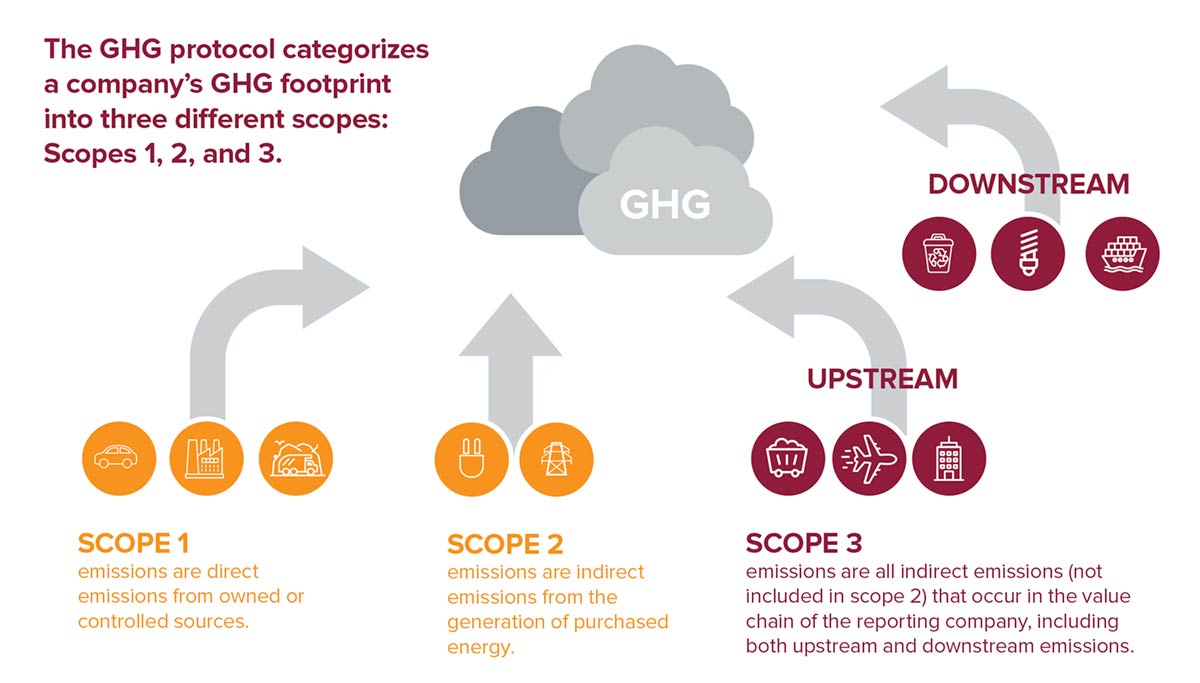
The following is to be read by screen readers for accessibility of the infographic above; it will be hidden once the report is published.
The GHG (Greenhouse Gas) protocol categorizes a company's GHG footprint into three different scopes: Scope 1, 2, and 3
Scope 1 emissions are direct emissions from owned or controlled sources.
Scope 2 emissions are indirect emissions from generation of purchased energy.
Scope 3 emissions are all indirect emissions (not included in Scope 2) that occur in the value chain of the reporting company, including both upstream and downstream emmissions.
Achieving such goals requires companies to identify their most significant emissions reduction leverages, including those found throughout their value chains. Most companies pursuing science-based targets have a good understanding of their Scope 1 emissions, generated by their own operations, as well as their Scope 2 emissions, generated from the energy sources that power their operations. Yet according to CDP, a company’s supply chain emissions are on average 5.5 times larger than its Scope 1 and 2 emissions. While some companies have begun piloting projects to reduce Scope 3 emissions, action in this area remains fragmented and limited.
A new approach for tackling Scope 3 emissions is needed. In this paper, BSR presents our three-step approach that can serve as a roadmap for business, providing a way into the topic for companies at the beginning of their journey and guidance for companies already taking action to scale their efforts. We recommend business to take the following approach:
- Map the value chain to locate the greatest GHG reduction potential. To do so, companies can adopt a “reverse sourcing” approach—rather than moving down the value chain by first engaging Tier 1 Suppliers, companies need to assess their entire value chain to identify where the most potential for emissions reductions lies.
- Demonstrate emission reductions through pilot projects. Pilot projects allow companies to determine the best structure for a project and to demonstrate the opportunity to achieve GHG reductions at scale in the value chain. Pilots will provide learnings that set the company up for large scale deployment and greater industry collaboration.
- Scale up and engage value chain partners and peers. To effectively achieve their Scope 3 targets, businesses will need to widen the scope of collaboration with value chain players and peers and ensure that the right internal processes, such as procurement and marketing, are in place to shift the value chain.
Blog | Wednesday April 1, 2020
The Urgency of a New Social Contract
Last year, BSR launched an effort calling for a modernized social contract for the 21st century. We’re now inviting all our member companies and partners interested in seizing this moment to modernize the social contract to get in touch and co-create a plan of action.
Blog | Wednesday April 1, 2020
The Urgency of a New Social Contract
Preview
The COVID-19 crisis makes one thing abundantly clear: the social contract between government, business, employees, and people is not working as it should.
At the BSR Conference 2019, we initiated a dialogue with BSR member companies, the first step in our effort to modernize the social contract for the 21st century. Download our discussion paper, The Business Role in Creating a 21st Century Social Contract, and get in touch with us to provide feedback.
In the United States, the crisis we are experiencing has laid bare the failure of the current social contract in many ways: the lack of access to healthcare owing to the tying of health insurance to paid employment; the extreme vulnerability of gig-economy workers to a sudden downturn of business; and for many workers, the absence of paid sick leave, inadequate childcare, and insufficient unemployment insurance.
The social contract was not fit for purpose before the COVID-19 pandemic struck, but these and many other shortcomings have now been revealed in the most human, tragic, and devastating ways.
During this public health and economic emergency, the attention of business and government is understandably on near-term priorities, like maintaining employment, providing sick leave for those who need it, helping with short-term financial needs, and supporting the immediate needs of our healthcare system.
But let’s not kid ourselves. These are not sustainable solutions.
In due course, we will need to turn our attention to modernizing our social contract for the 21st century—a social contract that allows the overall economy to thrive by enabling everyone to participate in, and benefit from, economic activity.
The social contract was not fit for purpose before the COVID-19 pandemic struck, but these and many other shortcomings have now been revealed in the most human, tragic, and devastating ways.
But what does “modernizing the social contract” mean in practice?
- It means recognizing the fundamental changes in work, technology, demographics and family structures that have occurred since our current models were developed.
- It means a radical overhaul of the social safety net, including pensions, unemployment insurance and sick leave.
- It means investment in families, including parental and elder care leave, childcare, and annual leave.
- It means improved conditions for workers, including predictable schedules, portable benefits, living wages, and flexible working arrangements that benefit businesses and workers alike.
- It means creating fair tax policies, addressing inequity, enhancing the status of women in the workplace, and providing opportunities for historically marginalized communities.
And it means investing in our workforce by providing access to education and skills development and enabling people to thrive as automation and the transition to a low-carbon economy take hold.
Crucially, it also means taking these steps in ways that enable business innovation to flourish.
The response of many companies to the crisis has been excellent in the near term. Numerous businesses are rising to the occasion by preserving employment, supporting their workers and communities, and calling for government to reinforce the social safety net when it most badly needed.
But more is needed. At BSR, we want to make sure we build for the future beyond this extraordinary moment, to create and realize a new vision for the shared interests of government, business, employees, and people. We want to make sure that we “build back better” by activating today’s intense focus on the failings of our current social contract and turning it into a movement for long-term change.
Critically important to achieving this ambition is the fact that the many private and public sector innovations across different social and economic issues and institutions will provide experiments grounded in reality, not theory, and can be built upon to envision, design, and implement new social and economic structures, policies, and programs.
The social contract is not going to be (and should not be) modernized by business alone. It requires a common effort that brings together companies, government at all levels, worker representatives, and civil society organizations.
Last year, BSR launched an effort calling for a modernized social contract for the 21st century, and prior to the COVID-19 pandemic, we had plans to engage our member companies during 2020 to advance this effort. However, now is the time to accelerate and increase our ambition.
For this reason, we’re inviting all our member companies and partners interested in seizing this moment to modernize the social contract to get in touch and co-create a plan of action.
There are several additional steps that businesses can and should take to remake the social contract once the current crisis passes.
- Call for wage levels that enable working families to support themselves and that also create a level playing field so that all businesses can compete fairly.
- Promote portable benefits systems that allow labor market flexibility alongside stability and security for workers.
- Reinforce pension systems that recognize and are prepared for longer life spans, the decline of defined benefit pensions, and more frequent job changes.
- Family leave policies that recognize a more diverse set of family structures and the need for both childcare and elder care.
- Skill development that delivers a thriving economy and access to livelihoods for people who will work longer and need to develop new capabilities as the economy changes.
- Ensure that the new social contract reflects new factors: the transition to a net zero carbon economy, the need to manage data safely, and the diversity imperative.
These steps would undoubtedly benefit from a common vision of modern social contracts and a united business voice conveying that vision. We hope that the six principles for 21st-century social contracts that we highlighted earlier can act as a starting point.
Moreover, the social contract is not going to be (and should not be) modernized by business alone. It requires a common effort that brings together companies, government at all levels, worker representatives, and civil society organizations.
Times of crisis are very often seen in retrospect as the flowering of innovations that lead to human flourishing in ways we could not have imagined. We are living through an epic historical moment. Let us hope that when history looks back on 2020, the story is one of resilience in the moment and creativity for a better future.
Blog | Tuesday March 31, 2020
Meet the Moment. Build the Future.
As the health and economic impacts of the coronavirus pandemic continue to spread, we at BSR are working hard to continue supporting our member companies around the world. Our approach at BSR can be summed up in six words: Meet the Moment. Build the Future.
Blog | Tuesday March 31, 2020
Meet the Moment. Build the Future.
Preview
As the health and economic impacts of the coronavirus pandemic continue to spread, we at BSR are working hard to continue supporting our member companies around the world, along with our many other partners, as you navigate this extraordinary and unprecedented time and contribute to our collective well-being.
From speaking with many of you, we know how challenging it is to manage effectively during this difficult and uncertain period, which poses significant impacts on your businesses, employees, and supply chains. Many of us are also coping with the stress of health impacts on ourselves, our families, and our communities.
This remarkable moment calls on all of us to bring our very best. We are quite literally writing history through countless acts and decisions we make every day.
Our approach at BSR can be summed up in six words: Meet the Moment. Build the Future.
Here’s what we mean by this.
Meet the Moment
It is essential for all of us to adapt sustainability activities to address the profound short-term needs faced by companies, employees, and communities in these challenging times. From speaking with many of you over the past few weeks, we know that you are facing new, unprecedented questions. How do I ensure that we continue with our commitments when our business is in such difficulty, with budgets under intense pressure? What is the right thing to do to support our employees, and those who are employed in our supply chains? How is the economic crisis impacting traditionally marginalized groups, and how can we respond to that? Can we reorient manufacturing to deliver on health care needs? Should we publish our sustainability report at a time when doing so might appear tone deaf?
We have been proud to see so many of you take action to protect employment, help generate badly needed medical equipment, provide capital, and support essential public policy steps to address the health and economic impacts of this pandemic. We are here to help you think through how to respond, to build partnerships, and to amplify your efforts.
Build the Future
As challenging as the day-to-day is right now, this is also a time to think ahead to building a fundamentally different future. For business, this means more emphasis on resilient business strategies, something which we have been discussing with many of you, and is now much more than an abstract concept. Sustainability questions can and should be a core element of such strategies. We also see the rising importance of ensuring societal resilience. This is why business has a strong interest in remaking the social contract to meet 21st-century needs, ensuring economic vitality, stability, and security. We know also that the next challenge to resilience could come from environmental challenges that risk creating serious social disruption and economic loss. The future may not seem relevant right now, but if this episode teaches us anything, it is that change can come more quickly and powerfully than we might think.
BSR’s Efforts
We are here to help you both meet the moment and begin to think about how to build a different future. We know that the pandemic is having a profound impact on your business. We also know that sustainability can be one of the core elements of navigating this crisis while also bolstering your position once the crisis passes. To help you achieve these goals, we are re-orienting some of our activities to help you meet these extraordinary circumstances, while also staying focused on longer-term objectives that remain extremely important, and indeed, could be seen as even more important.
- Communications: We will be producing a series of blogs and webinars to help you understand and discuss the impacts of the pandemic on sustainable business, both overall, and on specific issues like human rights, women’s empowerment, and the impact on ESG investing. In addition, our industry teams are bringing member companies together to share challenges and best practices within their sectors.
- Collaboration: We have shifted many of our collaborative initiatives to virtual formats, and the initial signs are that these are delivering on group objectives well, in some cases with even more participation as virtual models take hold. We are also speaking with many of you on how we can generate new collaborations that meet the moment, whether staying focused on climate action despite turbulent times or designing more resilient supply chains that will be needed once the crisis subsides, and we welcome your inputs on other matters we can help you navigate with peers. We also remain mobilized to support you one-on-one via advisory work.
- 21st-Century Social Contracts: We are accelerating our work on 21st-century social contracts. We welcome your engagement on this crucial issue, and will have content coming in the next two weeks on how business can not only meet short-term needs, but also contribute to more resilient social contracts that enable economic vitality, as well as economic mobility and security in a fast-changing world.
- Emerging Issues/Scenarios: To help you stay focused on the future, we are launching the first in a series of emerging issues briefs in June. This will be delivered by our Sustainable Futures Lab and will be based in part on a virtual salon in late April.
This crisis will pass. Our world, our businesses, and our economies will not look the same in the post-pandemic environment. But our values and objectives will not only endure, they will provide the very basis for seeing us through the crisis. They will also serve as the foundation for structural changes that produce more resilience, more economic fairness, and an ongoing commitment to preserve natural resources.
And these values will guide us as we meet this moment and build the future—together.
Blog | Monday March 30, 2020
COVID-19: A Rapid Human Rights Due Diligence Tool for Companies
The severity of the COVID-19 pandemic has reached such a level of imminent threat to public health that restrictions on certain human rights, such as limiting freedom of movement, appear to be justified. But this begs a critically important question: what are the key human rights principles for companies to…
Blog | Monday March 30, 2020
COVID-19: A Rapid Human Rights Due Diligence Tool for Companies
Preview
The critical role of business during the time of COVID-19 is clear for everyone to see. Whether it is providing access to accurate information, continuing to pay hourly waged staff, or ensuring continuity of emergency supplies, companies are central to our collective response.
It also seems clear that this role won’t just continue, but it will intensify and become more difficult over time. Companies are going to run low on income, operate with reduced human capacity, and face increasing pressure from governments to assist with emergency COVID-19 efforts.
The severity of the COVID-19 pandemic has reached such a level of imminent threat to public health that restrictions on certain human rights, such as limiting freedom of movement, appear to be justified. A lot has been written about human rights and the role of governments during this time of emergency, such as this analysis from Human Rights Watch on the application of human rights law and this appeal from leading UN human rights experts for states not to abuse emergency measures to suppress human rights.
But this begs a critically important question: what are the key human rights principles for companies to uphold during this public emergency?
While noting that public health may be invoked as grounds for limiting certain human rights, such measures should only be specifically aimed at preventing disease or providing care.
The UN Guiding Principles on Business and Human Rights (UNGPs) expect companies to identify and assess actual or potential adverse human rights impacts and to take appropriate action to address them. Under normal circumstances, companies have weeks, months, or even years to complete this due diligence; not so in the age of COVID-19, when decisions are being made by the hour.
Using the UNGPs and the various human rights principles, standards, and methodologies upon which the UNGPs were built, BSR had previously developed a rapid human rights due diligence tool to help with this rapid decision-making challenge. We’re making this tool publicly available today.
The range of human rights issues at stake today is huge:
- Under what circumstances might a company share personal data with others—such as governments, public health agencies, researchers, or civil society organizations—to support public health efforts?
- In what circumstances—such as the provision of essential products and services—should employees be required to continue working for the public good even though it may adversely impact their own health and safety?
- How should companies act if governments abuse their emergency powers by limiting human rights by more or for longer than is necessary?
The BSR tool guides companies through human rights due diligence in situations when very little time is available. The tool also makes specific reference to the Siracusa Principles, adopted by the UN Economic and Social Council in 1984, which describe limitations on the restriction on human rights that governments may apply for reasons of public health or national emergency.
While noting that public health may be invoked as grounds for limiting certain human rights, such measures should only be specifically aimed at preventing disease or providing care. The Siracusa Principles set out very important guardrails, such as being undertaken in accordance with law, being directed towards a legitimate aim, being proportionate to that aim, being strictly necessary, using no more restrictive means than are required for the achievement of the purpose of the limitation, and being of limited duration.
BSR member companies are welcome to get in touch with Jenny Vaughan for further guidance on this dynamic situation and assistance using this tool and tailoring it to your unique needs.
Blog | Tuesday March 24, 2020
So, Your Sourcing and Manufacturing Footprint Is Changing: Six Sustainability Considerations
As the exodus of manufacturing in China continued and accelerated, both manufacturing groups and global buyers sought opportunities to re-globalize their value chains. Here are six sustainability considerations to help your company create Globalization 2.0 plans which can help achieve long-term success.
Blog | Tuesday March 24, 2020
So, Your Sourcing and Manufacturing Footprint Is Changing: Six Sustainability Considerations
Preview
2019 continued the existing movement of supply chains out of China. This movement was driven in part by rising wage rates in China, a Chinese focus on reducing pollution, and the government policy to export low value-added manufacturing processes, and it was further exacerbated by trade tensions. As the exodus of manufacturing continued and accelerated, both manufacturing groups and global buyers sought opportunities to re-globalize their value chains. This Globalization 2.0 trend will continue over the coming decade.
Now, 2020 brings us COVID-19. The impacts of consolidated risks in global supply chains are thrown into even sharper relief. Consequently, risk mitigation and the need to build resilience into global supply chains are going to accelerate the re-globalization of these supply chains.
This means markets which already are sourcing platforms (e.g., Vietnam) are going to be seeing considerable growth, while more nascent markets, from Myanmar to Uzbekistan, will be increasingly on the map. It also means suppliers and buyers will be encountering new challenges in new markets as they set up shop.
Here are six sustainability considerations to help your company create Globalization 2.0 plans which can help achieve long-term success.
-
Understand your own intent. It may seem obvious, but it’s still worth stating: your starting point should be understanding the business intent behind a supply-base diversification strategy. Pricing, delivery, quality, mechanization, de-carbonization, proximity and access to markets, resilience in key component manufacturing, risk diversification, and alignment with strategic partners may be all part of the business purpose and should provide context for the subsequent due diligence.
-
Look broadly at the sustainability and human rights risks of a country. The tools you used to qualify a factory in the early 2000s are not enough anymore. A factory audit isn’t sufficient and you should be aware of the broader environmental, social, and governance risks of the country in which you/your supply chain will be operating. Understand and map the relevant country risks—from pollution, natural disasters, and labor and employment standards to graft and corruption. These are just a few risk areas—these will vary by country and certainly should be integrated into risk frameworks and due diligence processes. Understanding (and engaging) key stakeholders with relevant knowledge can help you understand these risk areas. Surprises are not excusable.
-
Understand your (potential) partner(s). Ask the right questions in order to understand exactly who you are doing business with and to determine your risk exposure. Who are the beneficial owners of the partner? What is the land/industrial zone permitting and history? What are the current relationships and reputation of that partner, based on past history (if any) in the sourcing country? Does this supply chain partner share your values and will they be a trusted partner in navigating the (inevitably) changing environment and the next crisis?
-
Do your supplier due diligence. Ensure a high-quality assessment of actual working conditions, management attitudes, and factory systems. Auditable information (fact gathering) on all the traditional compliance issues is important and a solid assessment of environmental (e.g., waste, energy, etc.), social (e.g., employee welfare, health and safety, human rights) and governance issues (e.g., grievance systems, anti-corruption, community engagement and transparency) is important. So too is the social dialogue inside the factory (industrial dialogue, communication systems, harassment issues) and the investment of the supplier in human capital (from hiring to training). Robustness of management systems and the qualifications of the actual leaders underlie the resilience of your partner(s).
-
Plan (and budget) for developing supplier resilience. How well is the supplier positioned to work through the key risk factors inherent in the country? Is the supplier making the investments which will enable resilience through critical times? Investments in grievance and dispute resolution systems, worker engagement, supervisor skills, and internal dialogue help mitigate risks during times of labor strife. Internal controls and strong external community relations enable resilience during times of changing external governance. Preparation and planning integrated into disaster risk reduction plans are important for preparing for weather, health, or other possible risk scenarios.
-
Plan (and budget) for buyer impact. What scenarios are you planning for: disasters, carbon prices, labor shortages, industrial action, rapid market expansion? How well-prepared will you, as the buyer, be in terms of expectations for local transparency and community needs? What opportunities are there for collaborative industry approaches or public-private partnerships? How might these create value for you or your supply chain? Plan for your own opportunities and needs in terms of people, resources, transparency, and stakeholder engagement.
In short, think beyond compliance, understand the “total cost of ownership” of your supply chain plans, and know that your partners are aligned with your vision, values, and goals. Build resilience and plan for the next disruption. As Globalization 2.0 continues and supply chains diversify in new locations, let’s learn from the experience of the past three decades. Companies should continue to try to holistically understand and mitigate risk while finding collaborative opportunities for impact. At BSR, we know these actions work and can help build more equitable and resilient supply chains.