Searching for:
Search results: 931 of 1245
Blog | Thursday September 20, 2018
How Businesses Are Collaborating for the Sustainable Development Goals
For meaningful progress toward the SDGs, we need actors across entire value chains to take collective action on the issues that threaten business growth and social development.
Blog | Thursday September 20, 2018
How Businesses Are Collaborating for the Sustainable Development Goals
Preview
The Sustainable Development Goals (SDGs) provide both a stimulus and a framework for corporate sustainability efforts: This is reflected in the 2018 BSR/Globescan State of Sustainable Business Survey, where more than 70 percent of business leaders surveyed said that they are using the SDGs as their strategic north star in setting sustainability targets.
However, it has become increasingly obvious that to tackle systemic challenges like climate change, rising inequality, and exploitation of non-renewable resources, companies and other stakeholders need to work together. Businesses are increasingly creating and joining collaborative and multi-stakeholder initiatives to do this—which is aligned with SDG 17, to revitalize global partnership for sustainable development.
The trend toward private-sector led collaboration is encouraging—but it must accelerate, deepen, and broaden. For meaningful progress toward the SDGs, we need actors across entire value chains to pull together quickly and take collective action on the issues that threaten business growth and social development.
In our recent report on Private-Sector Collaboration for Sustainable Development, BSR investigated what motivates companies to join collaborations and what makes them successful. We found that collaborations are most effective at engaging and retaining corporate participants when they resolve an issue that is seen as critical to business continuity. In other words, we found that private-sector partnerships are most impactful when they are both good for society and good for business.
We also learned through the BSR/GlobeScan survey which specific SDGs companies are focusing on in their sustainability efforts. Climate action (SDG 13), decent work and economic growth (SDG 8), responsible consumption and production (SDG 12), and gender equality (SDG 5) topped the list.

In anticipation of Global Goals Week next week, we are sharing five examples of how private-sector collaborative initiatives are contributing to three of these four most-referenced SDGs—while simultaneously helping their participants create more resilient businesses.
- HERproject (SDG 5) unites over 50 brands—along with their suppliers, local NGOs, and international partners—to empower women in global supply chains with knowledge and skills related to health, financial inclusion, and gender equality. Over the past decade, HERproject has reached more than 800,000 women in 14 countries, with outcomes including increased use of family planning products and better financial practices. These outcomes in turn ensure a more productive and resilient workforce, leading to positive business outcomes for factories and farms around the world.
- The Global Impact Sourcing Coalition (GISC) (SDG 8) is a collaboration between leading companies to build more inclusive global supply chains through advancing wide-scale adoption of Impact Sourcing—a business practice where a company prioritizes suppliers that intentionally hire and provide career development opportunities to people who otherwise have limited prospects for formal employment. In 2018, GISC launched an Impact Sourcing Challenge, calling on its members to hire 100,000 impact workers by the end of 2020. Thirteen companies have already taken up the challenge: These inclusive employers benefit from the skills and talents of a more diverse set of employees and from building stronger relationships with clients, employees, and the communities in which they operate.
- The Maritime Anti-Corruption Network (MACN) (SDG 8) is a global business network of over 100 companies working toward the vision of a maritime industry free of corruption. In 2014, MACN members used the anonymous MACN reporting system to highlight a systemic issue with demands for payment for unclean grain holds in some Argentine ports. This included cases of extortion, where officials would not provide clearance to ships in good condition without a “facilitation payment”. After building a coalition of local and global stakeholders, MACN pursued a collective action in Argentina, which resulted last year in the successful adoption of a new regulatory framework for dry bulk shipping. The new framework increases the integrity and transparency of dry-bulk vessel inspections to the benefit of frontline crew, shipping companies, and the Argentine economy.
- Clean Cargo (SDGs 8, 13) brings together major brands, cargo carriers, and freight forwarders to reduce the environmental impacts of global goods transportation and promote responsible shipping. The Clean Cargo Methodology for carbon dioxide emissions calculations and benchmarking has become the global standard in the ocean container shipping sector, collecting data from 85 percent of container shipping. The data show that since 2009, Clean Cargo members have cut their carbon dioxide emissions by 35 percent per TEU-km. Clean Cargo is stepping up its collective efforts to innovate and drive change, aligning with the new target of the International Maritime Organization to halve shipping emissions by 2050.
- The Future of Internet Power (SDG 13) aims to increase the use of renewable energy to power the internet through collaboration with companies, power providers, developers, utilities, and policymakers. The group currently focuses on data centers, which account for more than two percent of total energy use in the United States. Together, members developed and launched the Corporate Colocation and Cloud Buyers’ Principles, six criteria that customers expect their data center service providers to meet. The Principles’ 18 signatories also commit to prioritizing providers who meet their criteria, thereby incentivizing increased investment in renewable energy solutions.
As these examples demonstrate, when business leverages its collective reach, expertise, and power, it can have impact beyond what one company could accomplish alone. What’s more, working together toward the SDGs contributes to an environment in which business can continue to thrive.
For more information on BSR’s wide range of collaborative initiatives and how to get involved, please contact us.
Blog | Tuesday September 18, 2018
The State—and Future—of Sustainable Business in 2018
The 10th annual BSR and GlobeScan State of Sustainable Business 2018 Survey provides insight into how business leaders are responding to a rapidly changing world.
Blog | Tuesday September 18, 2018
The State—and Future—of Sustainable Business in 2018
Preview
The past 10 years have seen incredible progress in sustainable business. There are global multi-stakeholder commitments on climate action and the SDGs, collaborations driving systemic change across value chains, and tremendous improvements in corporate and investor practices towards a more sustainable world. The BSR and GlobeScan State of Sustainable Business 2018 Survey is a great testament to the progress of corporate action and provides insight into how companies are preparing for the next 10 years as they respond to a rapidly changing world.
A New Blueprint for Business
Join us at BSR18 this fall for a conversation about 21st-Century Business Strategy.
The survey, released today, includes responses from business leaders representing 152 global companies—more than 60 percent of BSR’s global membership network. This is the perspective of the people who do sustainability and corporate social responsibility work every day, inside some of the largest and most influential companies in the world.
In recognition of our 10th year and the fact that BSR sees a changing global agenda, we updated the list of corporate sustainability priorities that we track. Interestingly, ethics/integrity and diversity/inclusion were on the list for the first time and jumped straight to the top two priorities for sustainability efforts over the next 12 months. While these are of course longstanding corporate issues, they are now increasingly viewed as part of the sustainability agenda—perhaps a reflection of global attention on these topics.

Climate change and human rights have been the top priorities in the survey throughout the past decade, and they round out the top four. There appears to be less interest in issues more closely related to public policy, with one third of respondents stating that public policy frameworks are a low priority and only 11 percent stating that they want to influence policy frameworks to address new global opportunities and challenges. Given the systemic nature of these issues, this may constrain meaningful impact: Companies should rethink how to appropriately use their influence as part of their evolving approaches to managing sustainability.
We also increasingly see that business is anticipating and responding to global mega-trends in order to create more resilient strategies for long-term success. Disruptive technologies like artificial intelligence, concern over data privacy and ownership, and the impacts of our changing climate are clearly the mega-trends currently shaping future business strategies.

That said, while 86 percent of technology/media companies recognize AI/automation as a mega-trend most impacting strategy, just over half of other sectors rated this as a “top three” trend. And in spite of its presence in the headlines today, data privacy, while a top trend influencing companies overall, was prioritized by less than one-third of consumer-facing companies. The implications of new technologies impact all aspects of society, and companies in non-tech sectors need to understand and prepare for this. Our recent series of working papers on this topic, Artificial Intelligence: A Rights-Based Blueprint for Business, explores how companies across industries can begin to do so.
Further, less than 20 percent of company respondents rated geopolitics, rising inequality, polarization, or mass migration as one of the top three mega-trends. It could be that these are seen as secondary trends or the purview of government. But given the impact that automation, artificial intelligence, and climate change are likely to have on employment and social upheaval and the disfunction in many government institutions, these trends are likely even more significant as they’ll shape the future context in which business operates.
Perhaps the most exciting finding is that three quarters of corporate sustainability professionals say that sustainability needs to be better integrated into business strategy to address these global mega-trends.
Perhaps the most exciting finding is that three quarters of corporate sustainability professionals say that sustainability needs to be better integrated into business strategy to the create resilient strategies necessary to address these global shifts. As one executive told us in interviews for our recent report on Redefining Sustainable Business, “Most big businesses have been working on sustainability with reasonable success for the last 10 to 15 years, but we have been picking the low-hanging fruit, and the next phase will be much more difficult. It is about what you buy and what you sell; it goes into the heart of your commercial operations and investment decisions.”

Despite the rhetoric about CEO activism and transparency, only 11 percent and 15 percent of respondents, respectively, viewed these as important actions to address these trends, focusing instead on core business activities, like strategy, value creation, and value chain collaboration. This focus on core strategy is comparatively lagging in North America, however, with 64 percent of those businesses selecting this option as an important opportunity for impact, compared to 86 percent in Europe and 89 percent elsewhere.
While recognition of the need to engage with the strategic planning function is growing—it increased from 23 percent to 33 percent in just one year—sustainability teams still struggle to get traction with such engagement. Less than one-third of respondents believe they are currently engaging with strategic planning. We look forward to seeing this number jump in next year’s survey as companies make progress in creating and implementing resilient business strategies.
This year’s survey findings reinforce that now is the time to embrace a New Blueprint for Business. Join us at BSR’s Annual Conference in New York this November, where together we will redefine business in pursuit of a more just and sustainable future.
Reports | Tuesday September 18, 2018
State of Sustainable Business 2018
[Infographic] The 10th Annual BSR/Globescan State of Sustainable Business survey reveals what sustainability issues and global mega-trends business leaders are most focused on.
Reports | Tuesday September 18, 2018
State of Sustainable Business 2018
Preview

The State of Sustainable Business
Takeaways from our 10th Annual Survey of Sustainable Business Leaders
The world is changing at a rapid pace. New technologies, shifting cultural norms, evolving economic structures, and unprecedented environmental threats are reshaping the planet.
Our survey's purpose is to communicate the sustainability issues that companies are most focused on today. The results of our 10th annual questionnaire also offer a perspective on how the major disruptions and trends shaping the broader ecosystem have influenced the business landscape. Let’s take a look.
Evolving Priorities
Corporate reputation was the #1 driver of sustainability efforts, and with social topics under a larger spotlight than ever, companies are focusing on diversity, ethics, and similar issues.
- 76% and 71% of respondents consider ethics/integrity and diversity/inclusion high priorities, respectively.
- Despite mass public attention #metoo through movements like #metoo, 41% of companies report no change in their approach to women’s empowerment issues.
- Only 20% of company leaders surveyed think efforts in the supply chain are effective, but 75% are working on approaches and technologies to make progress.
Tech and AI Are Top of Mind
Artificial intelligence (AI), automation, and disruptive tech led the way when it came to prioritizing issues surrounding megatrends, but rising inequality, migration, and polarization lagged behind.
- AI/Automation/Disruptive Technology: 62
- Rising Inequality: 11
- Mass Human Migration: 1
- Polarization: 5
This disconnect, in the table above, shows companies may not yet fully appreciate or be responding to the secondary impacts of these leading trends.
While companies have moved their human rights efforts beyond Tier 1 suppliers and their own operations, they are not generally focusing on the human rights implications of their products and services, a disconnect considering the many critical issues emerging around the use of technology and AI.
A New Sustainable Business Agenda
Companies are increasingly using the Sustainable Development Goals as their strategic north star in setting targets.
- 2016: 52%
- 2017: 54%
- 2018: 71%
| Climate Action | Decent Work and Economic Growth | Responsible Consumption and Production | Gender Equity | |
|---|---|---|---|---|
| Number of Mentions | 58 | 53 | 49 | 47 |
There is opportunity for more cross-functional collaboration: there is surprisingly limited engagement by the sustainability team with investor relations, marketing, or human resources—despite the recognized significance of investors, customers, and employees as key drivers of sustainability.
Sustainability leaders are working to get traction with strategic planning and core business functions.
Most practitioners say that companies must put sustainability at the center of business strategy.
Blog | Monday September 17, 2018
Climate and the Economy: The Relationship between Inclusion, Equality, Business, and the Planet
There is a critical need for business to support society in adapting to climate risk and to do so in a way that addresses inequality and structural inclusion.
Blog | Monday September 17, 2018
Climate and the Economy: The Relationship between Inclusion, Equality, Business, and the Planet
Preview
As the aftermath of extreme weather events around the globe has made clear, climate and the economy are intimately linked. For example, in 2017, the U.S. experienced Hurricanes Irma, Harvey, and Maria—three of the top five costliest hurricanes in U.S. history.
A New Blueprint for Business
Join us at BSR18 this fall for a conversation about how business is taking inclusive climate action.
Furthermore, an economy characterized by layers of exclusion and structural discrimination amplifies climate risk by exacerbating the social, economic, cultural, and political vulnerability of marginalized individuals and communities. In other words, the poorest are most likely to be hit the hardest by the impacts of climate change, and this will be particularly pronounced both within less inclusive societies and in less affluent communities around the globe.
Conversely, an inclusive economy with improved employment practices, job quality, and job access; increased affordability and access to critical products and services; and enhanced community and government engagement can boost our capacity to anticipate, absorb, accommodate, or recover from the effects of climate change. In essence, when a company learns to work at the “nexus,” or intersection, between climate and inclusion, it becomes more climate-resilient and ready to respond to climate impacts. That is one reason why today we are excited to publish Climate and Inclusive Economy: The Business Case for Action—the latest in our climate nexus report series that explores the intersection between climate resilience and key sustainability issues.
As we begin to experience the reality of our already-changing climate, there remains a critical need for business to support society in adapting to climate risk and to do so in a way that addresses inequality and structural inclusion.
The business case for undertaking this effort now is clear: While business has been working to address climate change for years now, much of the work done thus far has consisted of steps to mitigate greenhouse gas emissions. However, as we begin to experience the reality of our already-changing climate, there remains a critical need for business to support society in adapting to climate risk and to do so in a way that addresses inequality and structural inclusion.
What exactly does this look like? We applied our “Act, Enable, Influence Framework” to consider how companies are working across their value chains, collaboratively with partners, and to influence governments and policies to advance more inclusive economies that build climate resilience.
- Act: Businesses should improve enterprise risk management systems by investing in human, social, natural, physical, political, and financial assets, which provides a more holistic approach to climate risk, looking further than infrastructure and operations to consider how climate affects people. For example, businesses can build resilience by enhancing employment practices.
- Noting a decrease in crop yield and quality from farm suppliers, Woolworths developed an initiative aimed at providing additional assistance to farmers challenged by increasingly difficult growing conditions. The initiative provides guidance to producers on agricultural best practices, with a heightened focus on water conservation for South African producers. It also helps organize farm partners toward collective action and engagement with the broader ecosystems of partners needed to preserve the function of their community water resources.
- Enable: Businesses can enable greater resilience in part by increasing the affordability of and access to products and services.
- Sompo Holdings took a significant leadership role in the insurance industry by launching its Weather Index Insurance product that helps farmers cover the revenue losses caused by extreme weather events.
- Influence: Businesses can seek to create an enabling environment for inclusion and resilience through stronger community and government engagements.
- Allianz Re became a founding partner of a multi-stakeholder partnership aiming to provide governments and NGOs with improved agronomic data on rice production. This partnership intends to support new climate and food security policies in Southeast Asia, as well as support enhanced crop insurance programs.
It’s clear that companies can play a critical role in building corporate and community resilience through inclusivity. Considering inclusivity in everyday business practices and new programs, products, and services can both benefit climate resilience and create a more inclusive economy.
Addressing the underlying vulnerabilities that marginalized communities and populations face will help to build a more resilient society—one in which businesses can thrive. To learn about the “nexus” between climate and inclusive economy, read our new report, Climate and Inclusive Economy: The Business Case for Action.
BSR’s climate and inclusive economy nexus report is the third in our series, which also includes reports on the intersection between climate and both supply chains and health. Stay tuned for more on the connections between climate resilience and women’s empowerment, human rights, and a just transition to the low-carbon economy in the months to come.
Reports | Monday September 17, 2018
Climate and Inclusive Economy
Climate change and the economy are inextricably linked. This report highlights how companies across sectors can better understand how they can contribute to more climate-resilient and inclusive economies.
Reports | Monday September 17, 2018
Climate and Inclusive Economy
Preview
Climate change affects each and every human around the globe, with profound and potentially lasting implications for an inclusive economy. This paper uses data and case studies to highlight the impacts of climate change on an inclusive economy and help companies across sectors understand the resulting consequences for business.
It demonstrates why and how business can act, including how companies can establish a deeper understanding of the nexus of an inclusive economy and climate resilience throughout their businesses; how to articulate the risks and opportunities for companies across various sectors; how to secure buy-in from senior leadership; and how to identify, assess, prevent, mitigate, and remedy the adverse effects of climate change.
This report is part of a series of six climate nexus reports that cover human rights, inclusive economy, women’s empowerment, supply chain, just transition, and health.
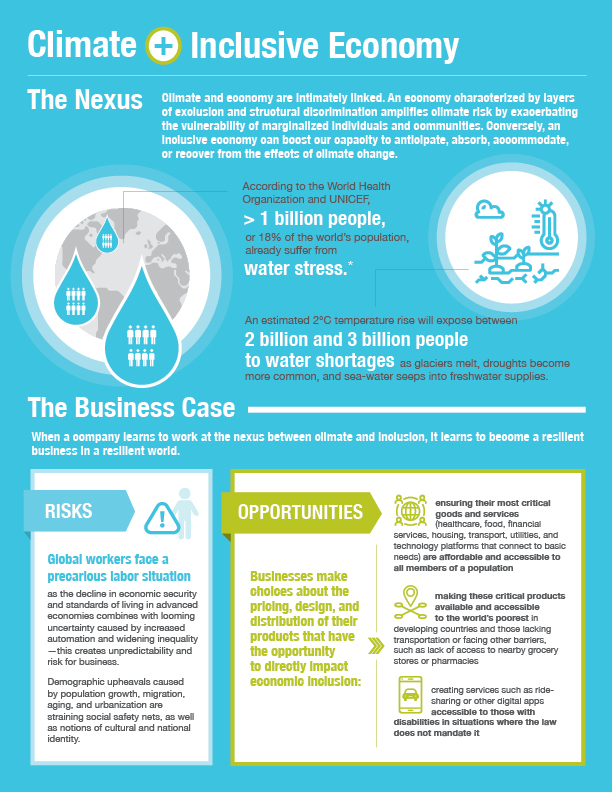
Climate and Inclusive Economy
The Nexus
Climate and economy are intimately linked. An economy characterized by layers of exclusion and structural discrimination amplifies climate risk by exacerbating the vulnerability of marginalized individuals and communities. Conversely, an inclusive economy can boost our capacity to anticipate, absorb, accommodate, or recover from the effects of climate change.
According to the World Health Organization and UNICEF, more than 1 billion people, or 18% of the world’s population, already suffer from water stress.
An estimated 2°C temperature rise will expose between 2 billion and 3 billion people to water shortages as glaciers melt, droughts become more common, and sea-water seeps into freshwater supplies.
The Business Case
Risks
Global workers face a precarious labor situation as the decline in economic security and standards of living in advanced economies combines with looming uncertainty caused by increased automation and widening inequality —this creates unpredictability and risk for business.
Demographic upheavals caused by population growth, migration, aging, and urbanization are straining social safety nets, as well as notions of cultural and national identity.
Opportunities
Businesses make choices about the pricing, design, and distribution of their products that have the opportunity to directly impact economic inclusion:
- ensuring their most critical goods and services (healthcare, food, financial services, housing, transport, utilities, and technology platforms that connect to basic needs) are affordable and accessible to all members of a population
- making these critical products available and accessible to the world’s poorest in developing countries and those lacking transportation or facing other barriers, such as lack of access to nearby grocery stores or pharmacies
- creating services such as ride-sharing or other digital apps accessible to those with disabilities in situations where the law does not mandate it.
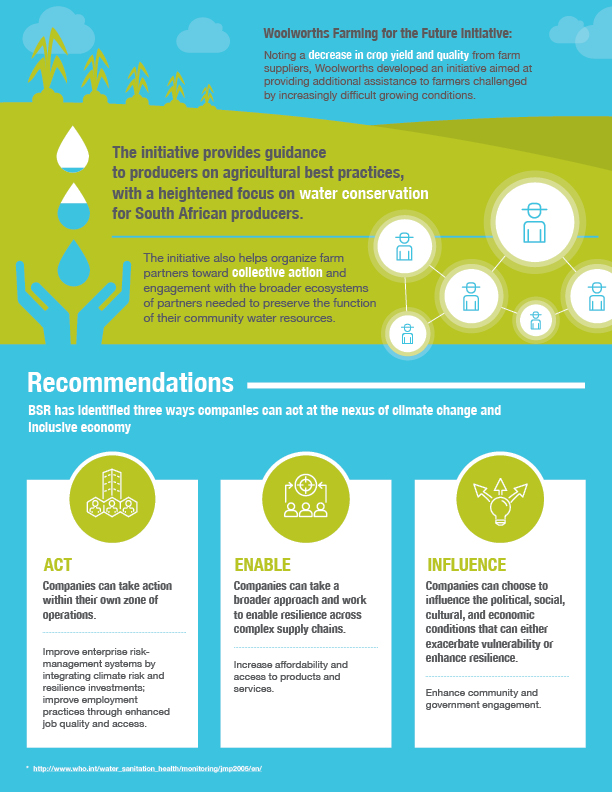
Climate and Inclusive Economy (continued)
Woolworths Farming for the Future Initiative
Noting a decrease in crop yield and quality from farm suppliers, Woolworths developed an initiative aimed at providing additional assistance to farmers challenged by increasingly difficult growing conditions.
The initiative provides guidance to producers on agricultural best practices, with a heightened focus on water conservation for South African producers.
The initiative also helps organize farm partners toward collective action and engagement with the broader ecosystems of partners needed to preserve the function of their community water resources.
Recommendations
BSR has identified three ways companies can act at the nexus of climate change and inclusive economy:
-
Act
Companies can take action within their own zone of operations.
Improve enterprise risk- management systems by integrating climate risk and resilience investments; improve employment practices through enhanced job quality and access.
-
Enable
Companies can take a broader approach and work to enable resilience across complex supply chains.
Increase affordability and access to products and services.
-
Influence
Companies can choose to influence the political, social, cultural, and economic conditions that can either exacerbate vulnerability or enhance resilience.
Enhance community and government engagement.
Climate Nexus Report Series




Reports | Friday September 14, 2018
In Search of Justice: Pathways to Remedy at the Porgera Gold Mine
Reports | Friday September 14, 2018
In Search of Justice: Pathways to Remedy at the Porgera Gold Mine
Preview
BSR’s report, In Search of Justice: Pathways to Remedy at the Porgera Gold Mine, explores how to provide remedy for persons harmed at or around the Porgera Gold Mine in Papua New Guinea. It describes existing remedy mechanisms, identifies barriers to access, and issues recommendations for improving access to remedy. The overall purpose of this report is to help rightsholders in Porgera receive effective remedy for harms they have endured in relation to the mine’s operations.
While this report and recommendations were commissioned by Barrick Gold Corp. (Barrick) and its partially owned subsidiary, Barrick (Niugini) Limited (BNL), BSR has maintained full, independent control over the research and conclusions. The recommendations were developed as part of a year-long process of research and engagement with local, national, and international stakeholders.
We hope that the recommendations this report provides can serve as the basis for constructive dialogue among communities, Papua New Guinea’s government, other interested stakeholders, and the mine owners and operator. The recommendations outlined in this report and the issues raised and discussed draw upon international human rights principles and are grounded in a human rights-based approach.
The next and most important step will be for the mine to engage in dialogue with the community and work toward an agreeable and viable action plan. With these recommendations, BSR is providing general guidance. This document is intended as a road map for the difficult and necessary work that remains. The path forward should entail a collaborative process that involves the mine and the community—and, where appropriate, the PNG government. The report’s recommendations are designed to serve as the basis for a new dynamic in Porgera, one in which the benefits of the mine are more equitably distributed and human rights are promoted and enhanced, not undermined.
10 Key Recommendations
Kisim tok pisin liklik ripot hia
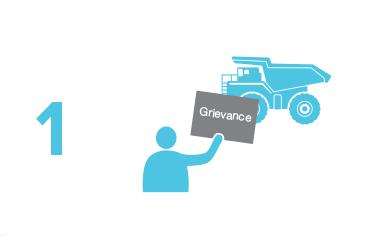 |
Reform the Company Operational Grievance Mechanism in line with the UN Guiding Principles and with direct community consultation. |
|---|---|
 |
Enter into a dialogue with the 119 women who underwent the Porgera Remedy Mechanism to ascertain and address their remaining needs to achieve full restoration. |
 |
Establish a free Victim Advocates’ Office to serve as an entry point for victims, providing information and helping them access appropriate pathways to remedy. |
|---|---|
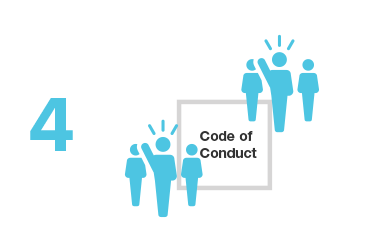 |
Build the capacity of victims’ representative organizations in Porgera to raise awareness of human rights and to genuinely represent the needs of victims. |
 |
Address barriers to existing remedy pathways in Porgera, focusing on those pathways that are most vital and utilized by victims of the mine’s operations. |
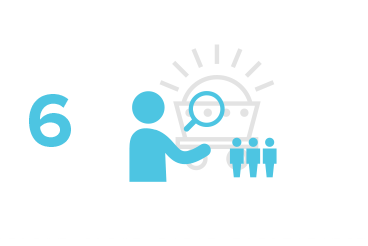 |
Expand the mandate for Barrick’s Independent Observer to cover all human rights harms and institutionalize the position so its formal powers will extend past the current officeholder. |
 |
Support the creation of a National Human Rights Institution (NHRI) or the extension of the Human Rights Ombudsman mandate to address private sector-related impacts on human rights. |
 |
Address gender-specific impacts and make direct investments in the women affected by the mine’s operations, recognizing that there is a severe gender imbalance in the costs/benefits of mining in Porgera. |
|---|---|
 |
Redesign community engagement and investment, and strengthen the human rights capacity at the mine by assessing current efforts, engaging with the community, and employing internationally recognized best practices. |
 |
Create a company action plan, in dialogue with the community, to establish immediate, intermediate, and long-term actions designed to implement the report’s recommendations and secure access to remedy for victims in Porgera. |
|---|
Blog | Wednesday September 12, 2018
The Impacts of Climate on Health: Why Business Should Care and How to Act
As climate change intensifies, so do its impacts on human health. Here’s how business can act.
Blog | Wednesday September 12, 2018
The Impacts of Climate on Health: Why Business Should Care and How to Act
Preview
Every year since 2011, the World Economic Forum’s Global Risks Report has identified climate-related risks as a top threat to business. In 2018, failure of climate change mitigation and adaptation was ranked within the top 10 global risks, alongside extreme weather events and natural disasters. Climate-related risks are wide-ranging, persist throughout value chains, and can be expected to pose severe financial threats to companies worldwide.
At the same time, climate change affects each and every human around the globe, with profound and potentially lasting implications that could undermine decades of progress in public health. As climate change intensifies, so do its impacts on human health. These range from direct impacts from increases in the frequency, intensity, and duration of extreme heat and extreme weather events to impacts from changes in the distribution and burden of both vector-borne diseases, like malaria and dengue, and water-borne infectious diseases. Other implications include human undernutrition from crop failure, population displacement from sea-level rise, occupational health risks, and increases in noncommunicable diseases, like depression connected to displacement and disasters.
Furthermore, the health impacts of climate change are expected to be distributed unevenly across the globe and make preexisting health inequality worse.
After decades of progress on global health, climate change is posing a new threat—one that could be devastating for humanity.
Why should business care? These changes have direct implications for economic growth, with huge social and financial costs for civil society, government, the general public, and business. For companies, these risks can affect strategy, finance, operations, human resources, and compliance. While business has been addressing climate for years now, much of its work has focused on climate change mitigation. Today, business has an imperative to also support society in adapting to the health impacts associated with a changing climate, which is why we are excited to publish Climate and Health: The Business Case for Action, the latest in our climate nexus report series exploring the connection between climate resilience and sustainability issues.
While the healthcare sector has the single most critical role to play in addressing this intersection, all sectors should care about this issue. Here are three reasons why and suggestions for what business can do:
Reason 1: The health impacts of climate change affect companies in every sector, all over the world. For instance, pollution and other effects of climate change will contribute to worsening health outcomes and have a detrimental effect on workforce health and productivity.
What business can do
- Assess and understand your company’s footprint and the extent to which it can help mitigate and address the growing health risks associated with climate change through its business, products, and services.
- Enable greater societal resilience by increasing awareness of climate-related diseases and health impacts within the workforce and the broader ecosystem.
Reason 2: Companies operating at the intersection of health and climate have the opportunity to contribute to solutions. These include financial institutions and service providers, food, beverage, and agriculture (FBA) companies, and information and communications technology (ICT) companies.
What business can do
- Create mechanisms to respond to climate-related events more effectively, amplify positive impact on health, and enable resilience. For instance, the food industry can ensure proper food supply, the financial services sector can develop new products and services to help individuals manage the health-related effects of climate, and artificial intelligence and big data companies can develop and commercialize technologies and solutions to understand, map, and anticipate the impacts of climate change on health.
- Collaborate across industries to build effective solutions and scale impact. The ICT sector can be a source of innovation and a partner for other industries to create new models and solutions that address the rising threats posed by climate to public health.
- Collaborate and create industrywide information, positions, and potentially voluntary standards to define what climate and health mean at a sector level. In particular, the healthcare (see below), FBA, financial services, and ICT sectors can recognize their roles and responsibilities and bring more resilience to reach greater impact.
Reason 3: Healthcare companies have a critical role to play. For this sector, the notion of resilience is central, as these companies must stay in business and ensure continuity to be able to supply drugs and health solutions to patients.
What business can do
- Adapt quality-assurance systems, risk-management structures, and supply chain management practices to address climate-related risks and opportunities. For pharmaceutical companies, this should start with mapping the portfolio and identifying the products and services that are most likely to be affected by a changing climate.
- Invest in R&D to develop new drugs and/or delivery models that provide solutions to climate-related diseases. This can build climate and health resilience in tandem.
After decades of progress on global health, climate change is posing a new threat—one that could be devastating for humanity. The negative impacts of climate change on health are already palpable, and they are likely to increase drastically. Business has a clear role to play: Not only can companies mitigate climate change to prevent negative health impacts, they can leverage their assets, products, services, and innovation to provide solutions that reduce climate-related burdens on health.
There is room for companies across the ecosystem to build climate resilience and benefit health, and BSR encourages business to seize these opportunities.
BSR’s climate and health nexus report is the second in our series, which launched this week with our climate and supply chain report. Stay tuned for more on the connections between climate resilience and inclusive economy, women’s empowerment, human rights, and a just transition to the low-carbon economy in the months to come.
Reports | Wednesday September 12, 2018
Climate and Health
Climate change will impact the health of humans around the world. This paper explores the intersection of climate and public health issues and highlights the business case for action.
Reports | Wednesday September 12, 2018
Climate and Health
Preview
Climate change affects each and every human around the globe, with profound and potentially lasting implications for global health. This paper uses data and case studies to highlight the impacts of climate change on health and help companies across sectors understand the resulting consequences for business.
The report demonstrates why and how business can act, and it explores how to establish a deeper understanding of the nexus of health and climate throughout the company; articulate the risks and opportunities for companies across sectors; secure buy-in from senior leadership; and identify, assess, prevent, mitigate, and remedy the adverse impacts of climate change on health.
This report is part of a series of six climate nexus reports that cover human rights, inclusive economy, women’s empowerment, supply chain, just transition, and health. This series is aimed at business to drive resilience inside the company, across supply chains, and within vulnerable communities.
Climate and Health
The Nexus
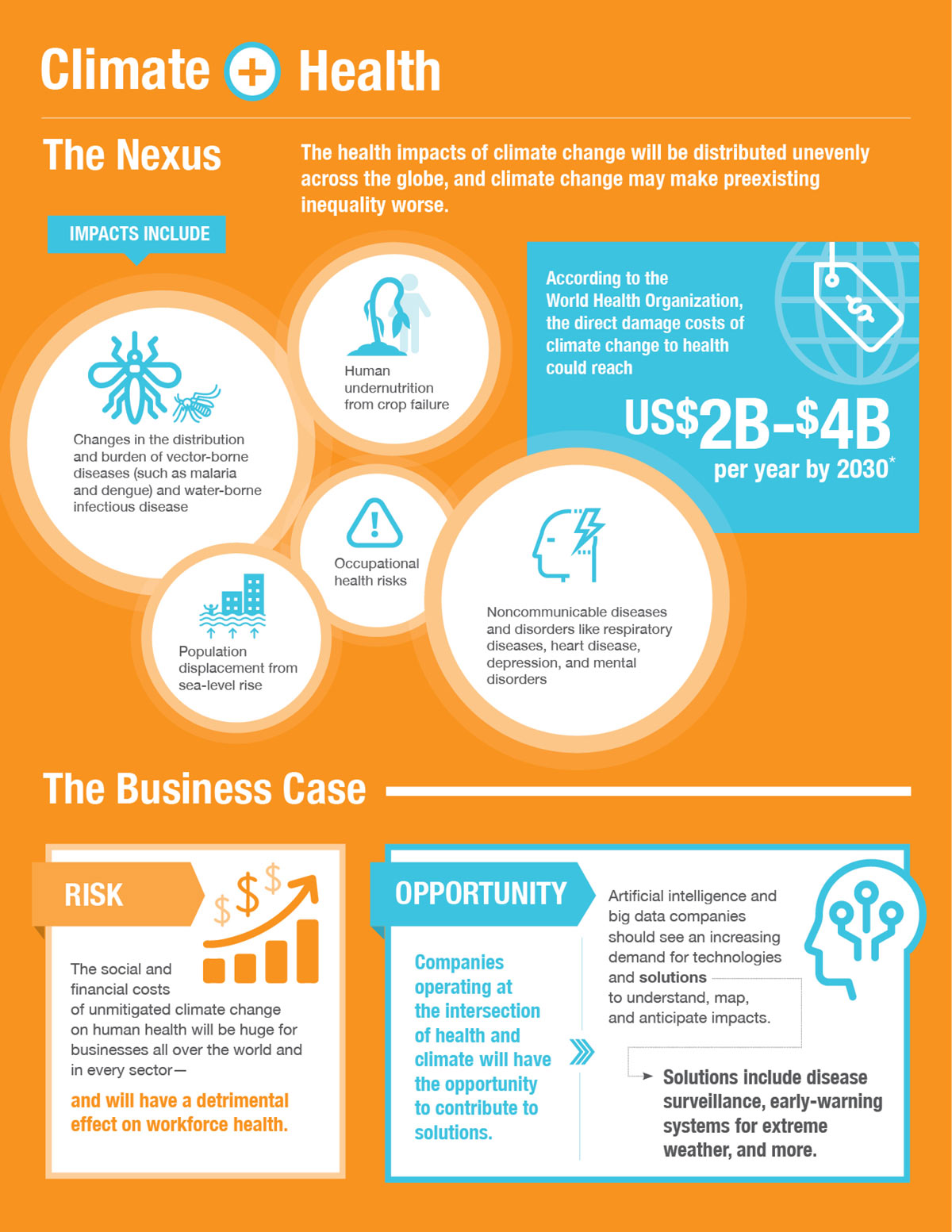
The health impacts of climate change will be distributed unevenly across the globe, and climate change may make preexisting inequality worse.
According to the World Health Organization, the direct damage costs of climate change to health could reach US$2B to US$4B a year by 2030.
Impacts include:
- Changes in the distribution and burden of vector-borne diseases (such as malaria and dengue) and water-borne infectious disease
- Human undernutrition from crop failure
- Population displacement from sea-level rise
- Occupational health risks
- Noncommunicable diseases and disorders like respiratory diseases, heart disease, depression, and mental disorders
The Business Case: Risk
The social and financial costs of unmitigated climate change on human health will be huge for businesses all over the world and in every sector— and will have a detrimental effect an workforce health.
The Business Case: Opportunity
Companies operating at the intersection of health and climate will have the opportunity to contribute to solutions.
Artificial intelligence and big data companies should see an increasing demand for technologies and solutions to understand, map, and anticipate impacts.
Solutions include disease surveillance, early-warning systems for extreme weather, and more.
Climate and Health (continued)
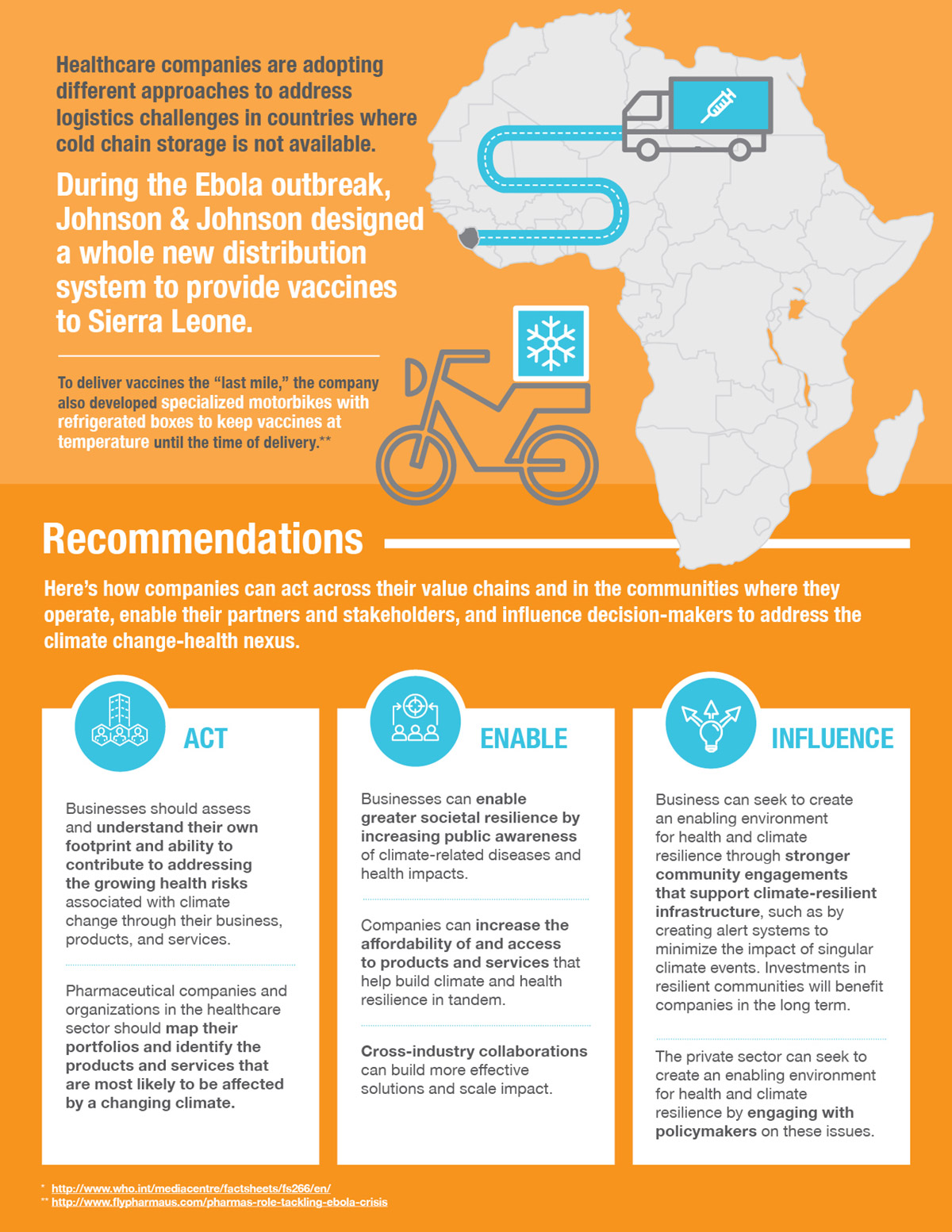
The Coca-Cola Company, among other partners, committed to investing US$21,000,000 (including cash and in-kind technical logistics expertise) to improve the distribution and storage of medical products in ten African countries.
Recommendations
Here’s how companies can act across their value chains and in the communities where they operate, enable their partners and stakeholders, and influence decision-makers to address the climate change-health nexus.
-
Act
Businesses should assess and understand their own footprint and ability to contribute to addressing the growing health risks associated with climate change through their business, products, and services.
Pharmaceutical companies and organizations in the healthcare sector should map their portfolios and identify the products and services that are most likely to be affected by a changing climate.
-
Enable
Businesses can enable greater societal resilience by increasing public awareness of climate-related diseases and health impacts.
Companies can increase the affordability of and access to products and services that help build climate and health resilience in tandem.
Cross-industry collaborations can build more effective solutions and scale impact.
-
Influence
Business can seek to create an enabling environment for health and climate resilience through stronger community engagements that support climate-resilient infrastructure, such as by creating alert systems to minimize the impact of singular climate events. Investments in resilient communities will benefit companies in the long term.
The private sector can seek to create an enabling environment for health and climate resilience by engaging with policymakers on these issues.
Climate Nexus Report Series
Blog | Tuesday September 11, 2018
Three Tips for Partnerships to Advance Workplace Health
BSR partnered through HERproject with Evidence Project, Meridian Group International, Inc., and Bayer Pharmaceuticals to create printable health education materials for the workplace covering issues like voluntary family planning and menstrual hygiene.
Blog | Tuesday September 11, 2018
Three Tips for Partnerships to Advance Workplace Health
Preview
Now more than ever, collaboration is the key ingredient to long-term solutions for systemic challenges. UN SDG 17 specifically calls for effective public-private and civil society partnerships to address systemic sustainability issues like increasing workers’ access to knowledge about their health or supporting women with information about menstrual hygiene and voluntary family planning.
That’s one reason why BSR partnered through HERproject with the USAID-funded Evidence Project, Meridian Group International, and Bayer Pharmaceuticals to create printable health education materials for the workplace. A baseline assessment in HERhealth factories conducted by the Evidence Project indicated that female factory workers generally reported low levels of reproductive health-related knowledge, including on menstrual hygiene, the fertility window, and reproductive health services.
To address this, factory nurses, welfare officers, and peer educators need handouts, posters, and other materials they can use to supplement their efforts to educate workers on key health issues. Such materials can be hard to come by for many factories, and when they are available, most educational materials are printed on glossy paper with many colors and photos, which makes them costly to print and unsustainable to use at volume in the long term.
With input from HERproject, Meridian and Bayer adapted a set of Health Education Materials and an Implementation Guide for factories. These materials cover important health issues facing women and men workers, including voluntary family planning, healthy timing and spacing of pregnancy, menstrual hygiene, engaged fathers and health, and handwashing.
The materials are available electronically in color and black and white (to save on printing costs) to be easily printed at the factory site. They come in three formats:
- Mini-Posters, to be posted in public areas,
- Handouts with more information for workers to take home, and
- Supplemental materials to reinforce learning.
There is also a User’s Guide for Partner Organizations, including brands/retailers, NGOs, and other interested parties, which explains how the materials can be used in workplace programs throughout global supply chains. We have recently started using them in our HERhealth factories in Bangladesh and will be measuring their effectiveness.
While the time required to establish an impactful partnership is often considerable, we’ve seen that the investment is often justified by the results.
While the time required to establish an impactful partnership is often considerable, we’ve seen that the investment is often justified by the results. Here are a few things we’ve learned from this collaboration that you may find helpful in your efforts to partner for impact:
- Identify what each partner can uniquely contribute: When multiple partners are involved in a collaboration, each has a unique role to play. For example, here HERproject brings in industry insights, The Evidence Project and Meridian have vast technical expertise, and HERproject and implementing partners Change Associates and Mamata have in-depth knowledge of factory management and workers. In this particular endeavor, EngenderHealth Bangladesh played an instrumental role in engaging with the Bangladesh Ministry of Health and its technical committee to get their formal approval of the materials. The interconnected relationships between partners were very important to navigate; the collaborative approach enabled the partners to get formal buy-in from the Ministry of Health and major Bangladesh industry groups like the ILO/IFC Better Work program and the Bangladesh Garment Manufacturers and Exporters Association (BGMEA), including approval to include their logos on these materials.
- Context, context, context: Materials for workers won’t be effective if they are not developed and tested locally. Drafts were shared with factory workers, nurses, and management in Dhaka and Chittagong for their input, and this simple, low-tech solution was based on actual need. The materials are currently available in English and Bangla, and they will soon be made locally relevant and available in other languages for use in new locations.
- Deepen the partnership to scale: A long time horizon and resource plan will enable the expansion of the scope and allow the collaboration to reach scale. With the success of this initiative to date in Bangladesh, we are now planning to replicate and contextualize this work for other countries where HERproject operates, such as Ethiopia and Kenya.
Here at BSR, we know that partnership will be key to our ability to realize the UN SDGs. If you’re interested in learning how to work with us on the SDGs, including specifically to use partnerships (SDG 17) to support gender equality and empower all women and girls (SDG 5), please don’t hesitate to contact us.
The Evidence Project seeks to expand access to high quality voluntary family planning/reproductive health services worldwide through implementation science, including the strategic generation, translation, and use of new and existing evidence. The project is led by the Population Council in partnership with the Population Reference Bureau.
BSR's HERproject™ is a collaborative initiative that strives to empower low-income women working in global supply chains. Bringing together global brands, their suppliers, and local NGOs, HERproject™ drives impact for women and business via workplace-based interventions on health, financial inclusion, and gender equality. Since its inception in 2007, HERproject™ has worked in more than 800 workplaces across 14 countries and has increased the well-being, confidence, and economic potential of more than 800,000 women.
Blog | Monday September 10, 2018
Why Climate Resilience and Supply Chains Go Hand in Hand
A new BSR report—the first of its series—explores the business case for integrating climate risks into supply chain management.
Blog | Monday September 10, 2018
Why Climate Resilience and Supply Chains Go Hand in Hand
Preview
According to the U.S. National Oceanic and Atmospheric Administration (NOAA), 2017 was the third-warmest year on record, the U.S. experienced three of the top five costliest hurricanes in U.S. history that same year, and the 20 warmest years on record have all occurred since 1995. Businesses already experience the negative impacts of climate change, from infrastructure damage to disruptions to logistics, input supplies, and customers. Since 2011, the World Economic Forum’s annual Global Risks Report has ranked climate risks a high priority for business in terms of both likelihood and impact.

It is critical for business to understand the full spectrum of climate risk: not merely how physical impacts affect infrastructure, but also the extent to which their workers and assets are exposed and how communities experience and adapt to these impacts. It is clear from our research that businesses do not yet fully recognize and understand how climate change affects the people in their value chains.
What businesses often overlook is that building climate resilience simultaneously advances other goals, including respecting human rights, increasing inclusivity, empowering women, improving the health of workers and communities, and managing supply chains.
What businesses often overlook is that building climate resilience simultaneously advances other goals, including respecting human rights, increasing inclusivity, empowering women, improving the health of workers and communities, and managing supply chains. To help businesses explore the interaction between climate and these areas, and to direct companies to opportunities for synergy and interventions that will build climate resilience, BSR is launching a series of reports on the “nexus” between climate resilience and other key sustainability issues: supply chain, health, inclusive economy, women’s empowerment, just transition, and human rights.
These reports aim to provide companies with an initial understanding of the importance of these intersections and, more importantly, the business case for action to drive resilience inside their companies, across supply chains, and within vulnerable communities.
A New Blueprint for Business
Join us at BSR18 this fall for a conversation about climate-related financial disclosures and specifically the TCFD recommendations.
The first report in this series, Climate and Supply Chain: The Business Case for Action, explores the business case for integrating climate risks into supply chain management.
At its core, supply chain management has four primary objectives, any of which could be negatively affected by climate impacts:
- Reduce the overall cost of production,
- Enhance the speed and responsiveness of delivery,
- Enhance the quality of goods and services produced, and
- Manage the uncertainty of major disruptions.
The characteristics of modern supply chains—their global geographical reach, specialized inputs that are increasingly produced in specific locations, and reduced inventories from just-in-time production—render them more vulnerable to disruption by climate risks.
For example, during Thailand’s severe flooding in 2011, more than 14,500 companies reliant on Thai suppliers suffered business disruptions worldwide and total insured losses were estimated between US$15 billion and US$20 billion. Western Digital, with one third of the global hard drive market, lost 45 percent of its shipments, HP lost US$2 billion, and NEC cut 10,000 jobs due to a global shortage of hard disk drives.

The recommendations of the Task Force on Climate-related Financial Disclosures (TCFD) provide a clear categorization of climate risks, which are unifying the vocabulary to describe them. The task force uses two categories of risk, both of which companies should assess throughout their supply chains:
- Physical climate risks from acute weather events and chronic climate patterns are disrupting the availability of raw material and energy supply, supplier operations, and local communities along the supply chain.
- The transition to the low-carbon economy also presents policy and legal risks that result from several trends, including the pricing of greenhouse gas (GHGs) emissions, disruptions from new technologies like blockchain, market risks from growing customer demand for low-carbon and climate-resilient goods and services, and reputational risks to a company’s brand equity and future business.
BSR recommends that companies address climate risks in their supply chains by focusing where they have the greatest impact and greatest influence and taking several steps:
- Consider a broad range of climate risks and prioritize parts of the supply chain that are most at risk.
- Implement supply chain actions, including with internal procurement teams, with suppliers, and through broader collaboration, and develop measurable targets for these efforts.
- Evaluate the impact of supply chain actions and adjust programs and goals over time.
By integrating climate risks and building the climate resilience of the communities on which supply chains depend, companies increase the likelihood of fulfilling their supply chain objectives. To learn more about how your company can build climate resilience into its supply chain, download the report or contact us.
BSR’s climate and supply chain nexus report is the first in our series. Stay tuned for more on the connections between climate resilience and health, inclusive economy, women’s empowerment, human rights, and a just transition to the low-carbon economy in the months to come.
Search Again?