Photo by Pavel Babic on iStock
Key Points
- Corporate climate adaptation efforts have not kept pace with growing physical climate risks, leaving many companies underprepared for increasing disruptions.
- Climate risk management and adaptation extend beyond protecting physical assets and operations to strengthening the resilience of the people, ecosystems, and supply chains on which business performance depends.
- El Niño is a naturally occurring climate pattern, but it is unfolding in a warmer, increasingly climate-stressed world. With the 2026-27 El Niño expected to amplify already intensifying physical climate risks, companies need to accelerate adaptation to protect business continuity and competitiveness.
- BSR engaged nearly 100 stakeholders across multiple industries to identify how businesses can translate physical climate risk into practical adaptation plans across operations, supply chains, workforces, and communities.
From Long-Term Climate Scenarios to Near-Term Stress Tests
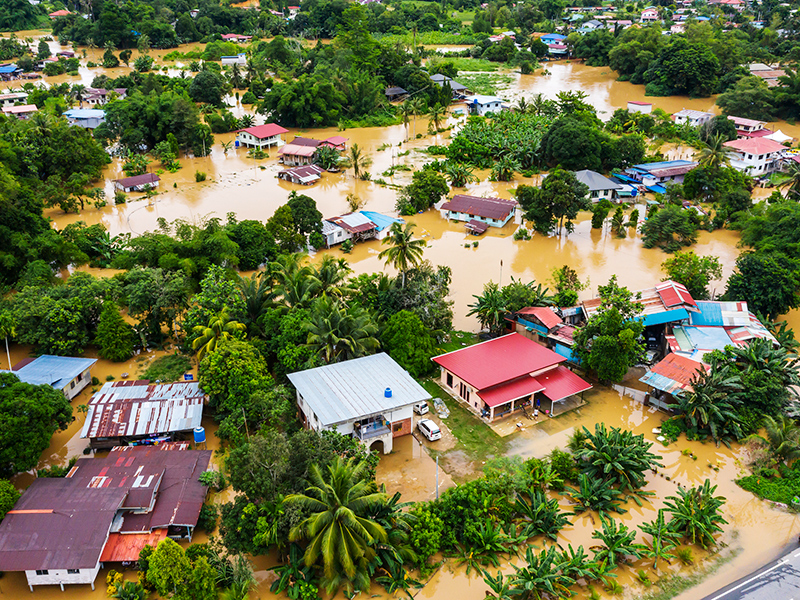
The physical impacts from climate change are increasingly becoming material to business, financial, and economic performance. Recent months alone have brought record-breaking, deadly heatwaves and wildfires across Europe; Canadian wildfire smoke and hazardous air pollution across large parts of North America; and severe flooding in Vietnam, southern China, and South Korea. The health-related risks to workers, transport disruptions, and destroyed croplands send clear signals that companies and supply chains need to prepare for more frequent and severe climate impacts.
For businesses, climate hazards can compound and cascade across value chains. Drought may reduce crop yields while lowering hydropower generation. Extreme heat can raise electricity demand while lowering worker productivity. Flooding can damage infrastructure and disrupt ports, roads, and logistics, while wildfire smoke and disease outbreaks can affect workforce health and operations. These interconnected impacts can result in delayed shipments, higher input costs, energy disruptions, and pressure on already vulnerable suppliers.
Businesses Face Escalating Financial Risks from Climate Impacts
- 200,000 jobs and 40,000 businesses have been affected by climate change-induced wildfires in Southwest France, described as an “economic catastrophe.” Companies are facing cash-flow problems and seeking support for deferred loan and tax payments, insurance claims, social security contributions, and placing employees on government unemployment schemes.
- Recent fatal floods in Tibet and Nepal illustrate how climate risks can cascade: destabilized mountain landscapes can contribute to landslides and flooding, with devastating impacts on communities, hydropower, infrastructure, and tourism.
- The latest assessment from global insurance broker, Aon, estimated natural catastrophes caused at least US$76 billion in economic losses in Asia-Pacific in 2025 with insurance covering only 10%. Floods in China, India, Pakistan, and Southeast Asia affected transport, infrastructure, and agriculture.
As the impacts and costs of climate change continue to rise, adaptation can no longer be treated as a future planning exercise. Businesses need to act now to protect operations, maintain supply chain continuity, and remain competitive, while embedding adaptation into both near- and long-term decision-making.
The economic case for adaptation is also becoming clearer. WRI analysis finds that every $1 invested in adaptation and resilience can generate more than $10 in benefits over ten years, while JP Morgan estimates that every $1 invested in adaptation can generate returns of up to $43.
Yet corporate climate adaptation has not kept pace with rising physical risk or the strengthening investment case. Many companies have identified climate-related risks through scenario analysis and disclosure processes, but relatively few have translated these findings into comprehensive adaptation plans and implementation. As a result, businesses remain exposed to disruptions across operations, supply chains, logistics networks, and the ecosystems and communities on which their businesses depend.
The emergence of the 2026–27 El Niño cycle brings these challenges into sharper focus. In June 2026, the World Meteorological Organization and U.S. National Oceanic and Atmospheric Administration announced El Niño has formed with a high chance it will become very strong between November and January—potentially the largest on record.
Although it is a naturally occurring climate pattern, El Niño is now unfolding in a warmer and increasingly climate-stressed world. Over the next 12 to 18 months, it is expected to amplify many of the physical climate hazards businesses already face, including extreme heat, flooding, wildfire conditions, water shortages, disease outbreaks, and disruptions to hydropower and transportation.
The 2026–27 El Niño serves as a near-term stress test of corporate resilience. It is an immediate opportunity for companies to move from theory to practical action on adaptation that strengthens business continuity and supports the people and ecosystems on which they depend.
How El Niño and Climate Change Affect Business
While every El Niño is different, it is typically associated with wetter conditions in parts of southern South America, the southern United States, the Horn of Africa, and Central Asia, and drier conditions across Central America, northern South America, the Caribbean, Australia, Indonesia, and parts of southern Asia.
Past El Niño events demonstrate how climate variability can translate into significant business disruption. Strong events have simultaneously affected agricultural production, commodity prices, hydropower generation, disease, wildfire activity, and transportation. The 1982–83 and 1997–98 El Niño events reduced global economic output by US$4.1 trillion and US$5.7 trillion, respectively, over the following five years. The 2015–16 event triggered severe drought, fires, and haze across Southeast Asia, a record Pacific hurricane season, a 1-in-500-year Caribbean drought, and disease outbreaks across the globe.
For companies, the question is not whether all of these weather events occur, but whether their operations, suppliers, workers, and surrounding communities are prepared for a period of heightened climate volatility.
Vulnerable Conditions Exacerbate Climate Risk
The financial severity of climate impacts depends not only on the hazard itself, but also on vulnerability—the ability of people, ecosystems, and infrastructure to withstand and recover from climate shocks. Degraded ecosystems, fragile infrastructure, worker displacement, and limited access to healthcare can all increase vulnerability, thereby amplifying losses and slowing recovery. Vulnerabilities are often overlooked in standard climate risk analyses despite having the potential to cause some of the most significant climate-related damages. When these vulnerabilities are omitted, companies face blind spots in their operational, financial, supplier, and reputational risk management.
Climate and El Niño Risks Vary by Sector and Geography
Climate change and El Niño affect sectors and geographies unevenly. The below table highlights areas of concentrated near-term exposure from El Niño and how unaddressed societal and ecosystem vulnerabilities can translate into business risk.
| Sector | Geographies to Watch (2026–27 El Niño) | Key Societal and Ecosystem Vulnerabilities | How This Translates into Business Risk |
|---|---|---|---|
| Food, Beverage, and Agriculture | South and Southeast Asia, Australia, West Africa, parts of Latin America | Smallholder farmer livelihoods; heat stress and extreme weather impacts on farmers; limited farmer access to healthcare; degradation and loss of critical land, freshwater, and marine ecosystems, including impacts to soil, water sources, biodiversity, and pollinator habitats; climate-sensitive crops (cocoa, coffee, rice, palm oil, sugar, cotton, tropical fruits, grains) | Lower yields, supply shortages, higher commodity prices, procurement cost increases, production disruptions, loss of ecosystem services, and long-term supply insecurity |
| Consumer Goods and Manufacturing | South and Southeast Asia | Heat stress on manufacturing workers; limited worker access to finance and healthcare; flood-prone factory districts and ports; climate-sensitive agricultural inputs (e.g., cotton) | Lower worker productivity, workforce absenteeism and turnover, workplace harm or injury, factory shutdowns, shipment delays, supply disruptions, compliance risks, loss of input quality, and increased operating costs |
| Power, Utilities, and Heavy Industry | Brazil, India, Southeast Asia, Southern Africa, hydro-dependent industrial markets |
Water scarcity, depleted reservoirs, heat-driven electricity demand, hydro dependence; heat stress and extreme weather impacts on outdoor grids, plant, and maintenance crews; loss of cooling and refrigeration for workers and communities during outages |
Power shortages, higher energy costs, operational disruptions, asset impairment, emissions volatility, water-related production constraints, and heat-related risks to workforce safety and productivity |
| Healthcare and Pharmaceuticals | South and Southeast Asia, parts of Latin America, Pacific regions, Indian manufacturing clusters | Heat stress on health workers and pharmaceutical manufacturing workers, water scarcity, disease outbreaks, overstretched healthcare systems, climate-sensitive agricultural inputs | Workforce absenteeism and turnover, workplace harm or injury, reduced pharmaceutical production, supply disruptions, increased operational risk, and loss of critical and highly sensitive materials |
| Real Estate and Construction | Gulf states, South Asia, Southeast Asia, California, Texas, Gulf Coast, U.S. Southeast | Heat stress and extreme weather impacts on outdoor workers; increasing insurance constraints; flood-, wind-, and wildfire-prone asset locations | Reduced labor productivity, workplace harm or injury, project delays, higher insurance and financing costs, asset impairment, and stranded assets |
| Infrastructure and Logistics | Panama Canal, Mississippi River, Amazon Basin, and other drought-exposed inland waterways; flood-exposed ports and coastal freight corridors in South and Southeast Asia | Water-stressed regions restricting navigation and cargo loading; low-lying and flood-prone ports, roads, and rail; heat stress and extreme weather impacts on port, dock, and transport workers; competing demands on freshwater systems that also supply drinking water and support river ecosystems | Freight delays, higher transportation costs, inventory disruptions, supply chain bottlenecks, reduced customer reliability, and workplace harm or injury |
Note: As El Niño conditions develop in the tropical Pacific, its impacts in Europe are more indirect and expected to peak in the autumn and winter periods. Other regions are expected to be affected more directly and severely, demonstrating the importance of understanding value chain exposure and transboundary risk.
Corporate Climate Adaptation: From Long-Term Planning to Near-Term Action
Climate adaptation is often treated as a long-term planning issue because many physical climate risks are framed around scenarios for 2030, 2040, or 2050. The 2026–27 El Niño changes that perspective by creating a near-term opportunity to test whether existing climate risk assessments, supplier programs, business continuity plans, and worker protections are sufficient under increasingly volatile conditions.
Investing in climate adaptation can protect enterprise value by avoiding operational losses, reducing downtime and recovery costs, improving supply chain reliability, protecting worker health and productivity, and strengthening the resilience of critical assets and natural resources. Adaptation can also help stabilize input costs, support insurability and access to finance, protect revenue and market share, and strengthen relationships with suppliers, customers, investors, and communities. These investments can generate broader social and environmental benefits by strengthening livelihoods, water security, ecosystems, and community resilience. The scale and timing of returns will vary by geography, climate exposure, business model, and the design and implementation of individual adaptation measures.
What Companies Are Experiencing Today
BSR engaged nearly 100 stakeholders in the first half of 2026, including several companies in consumer goods, food and beverage, technology, utilities, and finance, to pinpoint how to accelerate corporate action on climate adaptation. Business practitioners find:
- The urgency to act is growing. Workers, suppliers, critical infrastructure, and communities across sourcing and manufacturing regions are already affected. Climate risk assessments need to extend across the value chain, and companies need to move quickly from assessment to implementation to protect assets, suppliers, people, and ecosystems vital for business continuity.
- To unlock investment, adaptation needs to be integrated into business and financial plans. This may be framed as business continuity planning, risk mitigation, or growth opportunities. While climate risks may be undervalued in the marketplace, companies that act now will be prepared to manage shocks. Relying solely on insurance as a risk carrier is insufficient, as insurers are raising premiums or canceling coverage in high-risk areas.
- Adaptation needs to be practical, location-specific, and flexible in execution. Adopting adaptation pathways and establishing risk thresholds can support companies in managing uncertainty. This can help guide companies in the more challenging process of moving from risk identification to adaptation planning and implementation of solutions.
- Adaptation needs to address people and nature, not solely physical assets. Worker health, safety, and well-being, together with business dependency and impacts on ecosystem services, can materially affect productivity, continuity, and recovery. People and nature should not be underestimated in risk analyses, nor as identifiers and enablers of risk mitigation solutions.
- Investor expectations and disclosure requirements on physical climate risk and adaptation actions are increasing. IFRS, for example, requires disclosure of anticipated adaptation efforts and the resilience of the entity’s strategy and business model to climate-related changes and uncertainties.
- Demand for collaborative solutions is high. Many climate risks transcend the capacity of any single company to address alone, particularly in shared supply chains, industrial zones, and critical ecosystems. Stakeholders emphasized the need for pre-competitive, cross-value-chain action to share costs, align incentives, and scale solutions.
What Can Business Do Next?
BSR’s latest sustainability insights and events straight to your inbox.
Topics
Many corporate adaptation efforts focus appropriately on safeguarding facilities and operations by strengthening water and energy resilience, backup systems, flood and wildfire protection, cooling technologies, insurance coverage, and other critical infrastructure. Operational adaptation investments are essential and should be tailored to local conditions, integrated into long-term capital planning, and informed by structured assessments.
However, effective adaptation extends beyond protecting physical assets. It also strengthens the resilience of the workers, suppliers, communities, and ecosystems on which businesses depend. This enables companies to reduce logistics disruption, secure critical inputs, protect workforce productivity, and accelerate recovery after shocks.
With El Niño expected to amplify climate-related disruptions over the coming 12–18 months, companies will need to move quickly from risk assessments to funded, prioritized adaptation. The following actions can reduce business disruption while strengthening resilience across operations, suppliers, workers, communities, and ecosystems.
- Stress-test critical value chains and identify key vulnerabilities. Map exposure across supplier regions, commodities, transport routes, and critical operations. Then identify where physical climate hazards intersect with vulnerabilities—underlying societal inequities, fragile ecosystems, and faulty infrastructure that prohibits climate readiness. Use these hotspots to prioritize adaptation investment based on potential business impact. Assess the company's adaptive capacity to determine whether existing governance, programs, and policies are sufficient to manage increasing climate volatility, or whether additional investment is required.
- Align efforts across the business. Climate risks cut across operations, procurement, finance, risk, and human resources, but these functions often manage them through different processes and budgets. Adaptation also may be framed as business continuity planning, risk management, employee well-being, supply chain resilience, or growth opportunities. Aligning terminology, ownership, and existing initiatives, and identifying gaps enables a more coordinated enterprise-wide approach, helping companies maximize resources, avoid duplication, and make more effective investment decisions.
- Engage suppliers before disruption occurs. Work with suppliers to identify where drought, heat, water stress, or price volatility could threaten capacity, quality, or delivery. Responses may include supplier financing, flexible procurement planning, weather-informed risk tools, and contingency planning, tailored to the realities of each sourcing relationship. Companies can also consider collaborative approaches and co-investment to address shared risks in sectors or geographies.
- Protect workers in exposed regions. Identify where direct, contracted, and supply chain workers face heightened risks from heat, wildfire smoke, flooding, water stress, or disease. Measures such as heat action plans, paid disruption policies, worker grievance mechanisms, healthcare access, and local partnerships can protect workforce availability and productivity—and strengthen broader societal resilience—while reducing injury, absenteeism, and disruption costs.
- Safeguard natural assets that support business operations and supply chains. Assess where forests, freshwater systems, soils, wetlands, coastal ecosystems, and other natural assets provide critical services and where climate change and ecosystem degradation create compounding risks. Investments in ecosystem restoration, water stewardship, community-led sustainable land management, and other nature-based solutions can reduce physical risks, protect resource availability, and strengthen long-term value-chain resilience.
- Collaborate to address shared climate risks. Many climate risks cannot be addressed cost-effectively by one company alone. Working with peers, suppliers, governments, financial institutions, civil society, Indigenous Peoples, and local communities can enable co-financing, reduce maladaptation risk, and scale solutions across shared landscapes, watersheds, sourcing regions, and manufacturing and industrial zones.
How BSR Can Support
BSR works with companies to translate physical climate risk into practical adaptation plans across operations, supply chains, workforces, and communities. This can include:
- Climate and nature risk assessments, scenario analysis
- Adaptive capacity and internal alignment
- Adaptation strategy design and planning
- Implementation support
- Partnerships and collaboration
Conclusion
As physical risks become more frequent and severe, and the 2026–27 El Niño stands to amplify those impacts, climate adaptation is becoming a business and financial imperative. This El Niño cycle provides an immediate opportunity to test business readiness and identify where investment is most needed.
El Niño may expose weaknesses in adaptation strategies, business continuity plans, and supplier relationships. Rather than viewing El Niño as an isolated weather event, companies can use it as a practical stress test to identify vulnerabilities, prioritize investments, and improve preparedness for a future of greater climate volatility.
Effective adaptation protects more than operations and physical assets; it strengthens the workers, suppliers, communities, infrastructure, and natural systems on which businesses depend. Companies that integrate adaptation with nature preservation, and human rights into long-term business planning, will be better positioned to anticipate disruption, recover faster, and preserve long-term value. In doing so, they can also strengthen value chains, community resilience, and the ecosystems that support sustained business performance.
Our Experts
Our team consists of global experts across multiple focus areas and industries, bringing a depth of experience in developing sustainable business strategies and solutions.