Searching for:
Search results: 1191 of 1263
Case Studies | Tuesday November 22, 2016
Instituto Avon and Fundo ELAS: Speak Out Without Fear Fund
This case study was developed by Win-Win Strategies in support of the Investing in Women initiative, a collaboration platform providing companies with opportunities to share, learn, and design effective approaches to women’s empowerment.
Case Studies | Tuesday November 22, 2016
Instituto Avon and Fundo ELAS: Speak Out Without Fear Fund
Preview
This case study was developed by Win-Win Strategies in support of the Investing in Women initiative, a collaboration platform providing companies with opportunities to share, learn, and design effective approaches to women’s empowerment.
Background
The partnership between the Instituto Avon in Brazil (Avon) and Fundo ELAS (ELAS) grew out of a common interest in addressing violence against women. The issue of domestic violence has long been at the center of Avon’s social investment strategy, as it is critical to its largely female employees and customers. ELAS, with its focus on investment in women’s leadership and rights, has supported numerous women’s organizations in Brazil that have worked for many years to address the issue of gender-based violence and create social change.
In 2009, Amalia Fischer, then executive director of ELAS, was invited to speak at Avon about ELAS’ work. Following that meeting, Avon and ELAS began working together to develop a partnership aligned with both organizations’ goals. This partnership led to the development of a fund called Fundo Fale Sem Medo, or the Speak Out Without Fear Fund, which is now in its third year.
Together, Avon and ELAS designed the launch of the fund and completed all supporting communications and strategy. As part of this partnership, ELAS runs a competitive process each year to award grants to projects designed by local women’s organizations that utilize innovative approaches to address the issue of domestic violence.
The program is currently funding 31 organizations, with projects ranging from a rock music festival that highlighted women’s rights and domestic violence prevention, to a program that uses sports as a vehicle to teach girls about their rights and help prevent violence. The program also provides workshops on how to reduce gender-based violence and brings the grantee organizations together for capacity-development and to foster collaborations among them.
The Strategy
The decision to support ELAS was based on Avon’s view that to address an issue like domestic violence, it was important to work with strategic players with credibility and a proven track record. This type of relationship is core to Avon’s approach of working in partnership with other organizations and with NGOs with direct links to the issues of interest to Avon.
Avon and ELAS share the perspective that the most appropriate and effective strategies to end violence against women are those that involve local women’s organizations. In working with ELAS, Avon has a partner with knowledge of these organizations, experience in the community, and the ability to support locally relevant solutions. As Lirio Cipriani, the executive director of the Avon Institute noted: “In order to face this pressing, challenging, and widespread issue, we must cooperate with strategic players in a coordinated manner. Supporting women’s organizations is essential; we recognize that their work has led to important institutional transformations and strengthened the support network that can serve women in violent situations.”
Over three years of funding to ELAS, Avon has supported 77 projects to fight domestic violence in Brazil, and ELAS has received a total of 7 million Brazilian reals (equivalent of more than US$2 million) from Avon to support the selected grantee projects. During the project period, in addition to written progress reports, ELAS and Avon have held regular face-to-face and virtual meetings, working together in a transparent manner to monitor the projects, develop and revise assessment tools, and ensure effective collaboration.
Two key factors were highlighted as contributing to the success of the partnership:
- ELAS and Avon have shared values and a shared interest in social investment to support social transformation and women’s empowerment. In particular, they both believe that empowering and financially supporting local women’s organizations is an important strategy to stop violence against women.
- ELAS and Avon each appreciated each other’s mission and expertise. ELAS reported that Avon understood the experience and knowledge that ELAS brought to the table. ELAS also reported that it knew of the work that Avon was doing to empower women and valued its commitment to end violence against women, reflected in Avon’s other partnerships with the public sector and civil society.
Impact
Both parties are inspired by the work they have been doing together to address the issue of domestic violence in Brazil and have seen positive impacts on women in the organizations reached. Nonetheless, Avon identified measuring impact as a challenging area, as specific measurement indicators were not part of the first and second years of the Speak Out Without Fear Fund. To address this, in the third year of the fund, Avon and ELAS jointly developed a set of behavioral indicators, such as the number of people engaged and affected, and public-policy-related indicators, such as the number of policies initiated or driven by the project.
Lessons Learned
The case study findings highlight the importance of co-creation of indicators and evaluation tools and the challenges in doing so. Because the size and nature of projects varied greatly, it was difficult to measure their impact with common indicators. Furthermore, it was challenging to establish indicators for behavior change, which often occurs slowly over time. By the third edition of the fund, however, the partners realized that they needed to align expectations about what could be measured during a project period, and subsequently developed indicators.
More broadly, the partnership between Avon and ELAS proved to be transformational—not simply a transactional funding relationship—because of the parties’ ability to work together to truly co-create the Speak Out Without Fear Fund. This required open minds, mutual respect, transparency, ongoing communication, and patience on both sides. In addition, because staff has changed at both institutions during the partnership period, it was important to have organizational buy-in for the partnership and ongoing sharing of information internally at Avon about the fund’s activities.
Amalia Fischer of ELAS remarked that the partnership built with Avon now goes much deeper than project funding and has helped ELAS develop new, meaningful relationships and networks. And Lirio Cipriani of Avon noted: “The partnership has enabled Avon to support solutions [to end domestic violence in Brazil] that are appropriate for the local conditions and, as a result, can lead to more profound and lasting transformation.”
Developed in Partnership with:


Reports | Thursday September 1, 2016
Responsible Luxury Initiative: Animal Sourcing Principles
This document sets out the general principles according to which all animals, both farmed and wild- caught, in our supply chains should be treated. The principles have been developed to take into account the diversity of animal products we source as well as the different regulatory environments in which animals…
Reports | Thursday September 1, 2016
Responsible Luxury Initiative: Animal Sourcing Principles
Preview
As companies in the luxury sector, dedicated to excellence in all areas, we are committed to responsible and sustainable business principles and practices, including sustainable sourcing. We work toward upholding such practices and principles throughout our own businesses as well as in our supply chains, by working with supply chain partners who share our values and approach to sustainable and responsible business. Since we may use material from animal origin, such as leather, animal fibers, exotic skins, and fur, in some of our products, we are deeply committed to principles and practices that require animals in our supply chain to be treated with care and respect, and for these species to be sustained, through sustainable trade, species conservation, and protection of ecosystems.
Blog | Tuesday June 14, 2016
Sustainability and CSR: A Word about Terms
What is CSR, what is sustainability, and why does BSR prefer to use one term over the other?
Blog | Tuesday June 14, 2016
Sustainability and CSR: A Word about Terms
Preview
If you came to BSR’s website looking for information on corporate social responsibility or to ask, “What is CSR?”, only to find a lot of talk about sustainability, you may be wondering why this is so and whether you’ve come to the right place (you have!).
So why does BSR focus on sustainability vs. CSR? And what’s the difference, anyway?
First, a quick qualifier: As a global nonprofit business network and consultancy, we take a flexible approach to the use of terms in our project work, reflecting the diverse needs and understanding of our members and partners in different parts of the world. In our experience, CSR, sustainability, sustainable business, corporate citizenship, and the like are all generally used to describe the same thing, and so we are happy to use whatever terms resonate most in a given place and context.
For purposes of our own branding and thought leadership, however, we see value in consistency and have made some clear choices based on what we are trying to achieve—and we recommend that our members do the same. In our case, the language of sustainability wins out over CSR for a number of reasons.
Sustainability conveys greater ambition because it focuses on what we need to achieve, rather than where we are today. The original definition of sustainable development, from the first Rio Earth Summit in 1992, focused on “meeting the needs of the present without compromising the ability of future generations to meet their own needs."
The language and tools of CSR, at least in its early forms, tended to focus on meeting—or balancing—the needs of stakeholders today. Additionally, the term is often confused with philanthropy. As BSR and the broader field have come to focus more on long-term systemic issues, such as climate change and the inclusive economy, we felt that the ambition conveyed by sustainability better captures the objectives of our work.
Sustainability emphasizes a common agenda for all sectors of society, while the “C” in CSR calls out corporate practices more exclusively. BSR’s above-mentioned focus on critical systemic issues has come with a greater commitment to multistakeholder collaborative initiatives, in which business, government, and civil society all have critical roles to play.
Sustainability is a holistic concept that encompasses the full range of environmental, social, and economic issues addressed by our work. While the same is true of a good CSR strategy or program, the “S” in CSR is too-often construed to mean a narrower focus on social issues. That is also why we now go by “BSR” instead of our original moniker, “Business for Social Responsibility.”
Sustainability represents a concept that, in our experience, is more easily integrated into the core purpose of business than “responsibility,” which is often perceived as a check or counter-balance to business-as-usual activity. As the field has evolved from an exclusive focus on risk management and avoidance of harm to also encompass innovation and value creation, sustainability provides a more attractive and inspiring framing.
In short, “sustainability” reflects the ambition, reach, and inspiration required to achieve BSR’s mission of working with business to create a just and sustainable world. And although some may argue it’s just semantics, to us, sustainability—and what comes with it—is core to everything we do.
Case Studies | Wednesday March 30, 2016
Measuring the Net Positive Value of ICT in Online Education
This case study, published by BSR’s Center for Technology and Sustainability, examines the the net positive impact of ICT in online education, using as the case study Arizona State University’s current ASU Online education program for undergraduate degrees.
Case Studies | Wednesday March 30, 2016
Measuring the Net Positive Value of ICT in Online Education
Preview
This case study, published by BSR’s Center for Technology and Sustainability, examines the the net positive impact of ICT in online education, using as the case study Arizona State University’s current ASU Online education program for undergraduate degrees.
Summary
As online education has evolved in the American undergraduate education system, the use of information and communications technology (ICT) has skyrocketed. Online-class delivery systems are becoming the norm, even in face-to-face classes, as have online course-management and advising systems.
This report focuses on the net positive impact of ICT in online education, using as the case study Arizona State University’s current ASU Online education program for undergraduate degrees.
The ASU Online study indicates that there are both environmental and socioeconomic benefits to the use of ICT in online education.
Online education makes high-quality degrees accessible to a larger and more diverse group of people, many of whom would not otherwise earn a degree. Because these degrees are more accessible and affordable, they create positive socioeconomic impacts through increased incomes, greater productivity, and improved social conditions; we conservatively estimate the total socioeconomic impact to be US$545,000 per undergraduate degree. Positive environmental impacts result primarily from reduced student and faculty travel as well as avoided classroom construction, equaling an estimated carbon savings of 33.2 metric tons for that same undergraduate degree.
The ASU Online study suggests that ICT also enables innovation in education that can be scaled nationally and globally, satisfying the overwhelming need for access to education in developed, emerging, and developing countries.
Measuring the Environmental Benefits of ICT and Online Education
ASU Online was established to provide improved access to its educational offerings while also providing a new revenue stream for the university at a time when it faced reduced state and federal funding. However, the ASU Online campus has evolved to be a critical component of ASU’s sustainability plan: It plays a key role within ASU’s broader sustainability strategy, which includes climate neutrality, zero waste, zero wastewater, and low hazardous-material goals. The university continues to aggressively pursue these goals, including net zero energy by 2030, so ASU has made measuring environmental benefits a requirement across the university.
The Assessment Process
This report was prepared by ASU sustainability scientists from the university-wide Julie Ann Wrigley Global Institute of Sustainability, including the W.P. Carey School of Business, the Ira A. Fulton Schools of Engineering, and the Global Sustainability Solutions Services of the Walton Sustainability Solutions Initiatives, with both intellectual and financial support from Dell.
In order to assess the net positive impact of ICT at ASU Online, the research team developed high-level models of variables and populated them through structured interviews of key stakeholders and ICT platform experts across the education landscape, with a focus on Arizona State University and ASU Online. In addition, we conducted a literature review of published studies in areas relevant to net positive assessment of online education. We used delivery and completion of undergraduate degrees as the unit of analysis.
Because net positive is a relatively new concept, it was difficult to find any studies during our literature review that explicitly studied online education from this point of view. Instead, we focused our search terms on the various aspects of online education that create value or positive impacts to society.
The Net Benefits Model
Study Scope
For the purposes of this study, ASU means the entire ASU enterprise, consisting of 18 schools and colleges, five physical campuses, and the ASU Online virtual campus. ASU Immersive is used to describe the historic campus-based ASU, while ASU Online describes the unit that manages ASU degree programs through the ASU Online platform.
For the purposes of this case study, we view this greater ASU enterprise as a system that takes in enrollees, uses energy and other resources as inputs, and then produces outputs such as graduates and negative environmental impacts. Graduates, in turn, create positive socioeconomic impacts and outcomes. Increasing the number of graduates while reducing resource consumption enhances ASU’s overall net positive sustainability goal. ASU Online plays a critical role in achieving ASU’s overall sustainability goals.
Models and Metrics
Interviews and literature review provided the content for the development of two models and two key areas for output metrics: the holistic value proposition and the dynamic view of ASU Online through 2030.
Holistic Value Proposition
Any business model results in a specific set of benefits to stakeholders. This bundle of benefits—the value proposition—can be characterized for all stakeholders in the value network. This distribution of value capture is referred to as the Holistic Value Proposition (HVP) (O’Neill et al., 2006). The HVP for this study included 20 interviews of internal and external experts from the following stakeholder groups: broader society, online students, academic institutions offering online education, faculty, employers, and experts from the ICT industry.
A Dynamic View: ASU/ASU Online 2015-2025
Education innovation and its impact on the sustainability of higher education at ASU, which we measure in this section, is scalable both nationally and globally. In the ASU case, the net positive position of ICT in online education is primarily due to avoided carbon plus the positive socioeconomic impact of education access and affordability. Many more people will attain a degree through ASU than would have without online access.
Using a somewhat idealized best-case scenario of the ASU complex if it meets its growth and operational sustainability goals, the study determined that by 2025 ASU will be educating 100,000 students through immersive courses and 100,000 online, with nearly 75 percent of the total student body taking some portion of their classes online. This will have the net effect of producing more graduates for a much lower environmental footprint than today, and the use of ICT will be a key driver.
The big impacts at a national level are the economic and social returns of a degree, which we document in the next section of this report. The longer-term net positive story is one of innovation in a dynamic global market with its overwhelming need to educate students in developed, emerging, and developing countries. Online education may be the only hope for 9.5 billion people to get a high quality education in the coming decades.
Socioeconomic System-Wide Effects
Access to and completion of an online undergraduate degree program offers a number of social and economic benefits.
A key finding of this study, supported by the interviews, is that many ASU Online students would not get a degree at all if an online degree were not available. Access to education is one of the biggest contributions of ASU Online. Hout (2012) argues that the societal gain increases when more people are educated. If education boosts collective as well as personal productivity, then increased educational attainment for a population might be a key causal factor in overall economic growth—in fact, estimated social returns due to education might exceed individual returns. Lange and Topel (2006) observed this trend in metropolitan cities.
Ellwood & Jencks (2004) found that college graduates are less likely to go through divorces than those who have no degree. A number of studies have suggested that college education improves a person’s general health (Mirowski & Ross, 2003). Although causality is difficult to prove, a general argument made by many studies is that formal education improves a person’s understanding of the qualities and habits that promote good health.
Although there have been no attempts to establish causal linkages between education and happiness, Yang (2008) showed that people with a college degree are happier than those without a college degree.
The ASU Online Handprint and Footprint Model
In developing this report, the research team used the Global e-Sustainability Initiative (GeSI) methodological framework as a guide to develop the carbon-focused environmental aspects, or footprint, of the net positive statement. We also considered using the framework to express the socioeconomic benefits, or its handprint. The research team will provide the report data in GeSI, along with observations on its applicability to this type of net positive analysis, in the near future.
When it comes to assessing the net positive impact of ASU Online, key factors included in the scope of the model are the net ICT footprint of ASU Online and the potential social and economic handprint of students that online access enables to complete a degree.
The model quantifies handprint by including the expected additional average lifetime economic earnings after attaining a bachelor’s degree, adjusted for a shorter remaining career span, and potential higher net worth at retirement. Potential benefits are based on reported research findings regarding the lifetime value of completing an undergraduate degree compared to not completing the degree. We consider broader social returns largely in terms of avoiding and/or contributing social services. We conservatively estimate the net positive socioeconomic impact per degree to be US$545,000. The model also identifies the overall system-wide social impacts of attaining a college degree.
For the footprint, the model focuses on quantifying carbon dioxide equivalent (CO2e) emissions. Other environmental impact categories such as paper reduction, water use, and building construction were only briefly considered during this study and we made no attempt to formally quantify them. The factors we used to calculate the footprint in this study include increases in direct ICT emissions, net new data center construction and ICT equipment, telecommuting savings, and reduced construction and use of campus facilities. The net positive impact on emissions is conservatively calculated to be 28.3 metric tons of CO2e per degree produced.
The ratio of the positive benefits of producing a college graduate to the resources required to do so, including emissions, is growing larger quickly due to the maturation of online education and the dedication of higher-education institutions to making it so. ICT plays a central and critical role.
Limitations and Gaps, Future Research
During this research, we identified six significant limitations of the ASU Online study, and suggest next steps for future research.
The increased investment in ICT systems to accommodate online study and the increase in greenhouse gas (GHG) production from added ICT systems for online study are not thoroughly identified in this study. Next steps in a follow-up research project would include gathering and analyzing appropriate samples of use data.
The quantification of GHG savings from reduced campus infrastructure needs makes an assumption about the annual operating savings as a percentage of the reported GHG impact of the campus and a very high-level estimate of the net benefits from classroom construction avoidance. Steps in a follow-up research project would include validating the assumptions stated above for both operational and construction scenarios.
Initial findings on enabling the completion of a degree are based on a limited sample of cohorts that started the ASU Online undergraduate degree and interview information gleaned from ASU experts. A follow-up study might use a survey or structured interviews to gather more complete information about the demographics and perceptions of the student base in the ASU Online degree programs. Additional and larger cohorts could also be added.
Initial suggestions about lifetime income and lifetime social impacts are based solely on the many continuing studies of the impact of completing a college degree compared to only having some college courses completed. Although existing sources of data for these handprint economic and social factors may prove to be adequate, a follow-up study would explore these sources in greater depth.
This is a single case study. It will be hard to generalize to a broader base at a national level without conducting some additional case studies and/or gathering a limited set of data for a larger sample of universities. This should be done in a follow-up study.
Other environmental factors briefly discussed during this study and then excluded from it include water use on campus, solid waste disposal from campus to landfill, water runoff and sewage waste from campus, and food supply chain issues.
Conclusion
The contribution of ICT and ASU Online to the net positive position of the ASU complex is substantial and based almost entirely on increased access to and affordability of undergraduate degrees. At the same time, it is lowering the environmental footprint required to produce those degrees.
The important point is that ICT is enabling innovation in education in general and in online education specifically. The ratio of the positive benefits of producing a college graduate to the resources required to do so, including emissions, is growing larger quickly due to the maturation of online education and the dedication of higher-education institutions to making it so. ICT plays a central and critical role.
For complete data analysis and access to report appendices, download the report or view the ASU Online "how it works" page.
Case Studies | Wednesday March 30, 2016
Looking Under the Hood: ORION Technology Adoption at UPS
This case study, published by BSR’s Center for Technology and Sustainability, examines UPS’s deployment of ORION, a route-optimization software program for its drivers, and focuses primarily on the challenges related to technology adoption, from development to deployment.
Case Studies | Wednesday March 30, 2016
Looking Under the Hood: ORION Technology Adoption at UPS
Preview
This case study, published by BSR’s Center for Technology and Sustainability, examines UPS®’s deployment of ORION, a route-optimization software program for its drivers, and focuses primarily on the challenges related to technology adoption, from development to deployment.
Across industries, information and communications technology (ICT) has great potential to address some of the world’s most complex global environmental and social challenges. Even where good technology exists, however, there remains a key challenge related to adoption: selecting and installing a solution, integrating it within existing systems, and ensuring successful uptake by users to verify that the technology delivers on its promise.
New technologies often require new business processes, and even if those processes promise greater efficiency, cost savings, and/or other improvements, they also require behavior change—and change is hard.
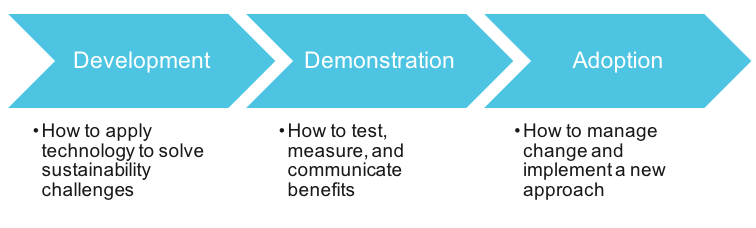
Delivering on Sustainability Solutions: From Idea to Action
A Center for Technology and Sustainability Framework
To develop this case study, BSR conducted interviews with UPS staff along with background research on the objectives and attributes of the ORION system. We hope that this case study will help other companies successfully implement technology-based sustainability solutions through a change-management framework that takes into consideration design, process, and people.
The Opportunity
Developed by UPS, ORION—or On-Road Integrated Optimization and Navigation—is a route-optimization system that analyzes a collection of data points including the day’s package deliveries, pickup times, and past route performance to create the most efficient daily route for drivers.
UPS created ORION as part of a broader effort to use data and predictive models to increase efficiency, thereby reducing both costs and environmental impacts. By charting more efficient routes, UPS was able to maximize the utilization of delivery vehicles and drivers, resulting in significant fuel savings—one of UPS’s largest costs.
ORION is expected to reduce operating costs by US$300 million to US$400 million a year once it is fully implemented in the U.S. in 2017. More than 70 percent of the company’s 55,000 U.S. routes are now using the software, with an average daily driving reduction of between six and eight miles. To put this into perspective, UPS can save US$50 million a year by reducing by one mile the average aggregated daily travel of its drivers.
Specific Change-Management Challenges for Orion
To achieve maximum cost and emissions reductions, UPS had to ensure uptake at several different project stages, each with its own unique change-management challenges:
- Development: R&D leads were asked to design a technology solution that worked better than existing practice and to prove to business leaders that the approach had potential.
- Demonstration: Prototype testing and business-case validation. Prototypes developed in the lab were then tested in the field, first for smaller and then for larger groups of UPS drivers.
- Adoption: Operationalizing and rolling out. Convincing thousands of UPS employees to embrace integration of ORION into their day-to-day work.
UPS's Approach
Implementing ORION took place in three major phases:
- Development: The Idea
UPS started developing ORION in 2003, with the aim of layering predictive algorithms on top of UPS’s existing package and vehicle tracking systems. The development took place within the Operations Research and Advanced Analytics groups, starting with a small, diverse team: a PhD in operations research, an industrial engineer, a UPS business manager, and several software engineers.
UPS combined well known software algorithms for optimizing routes with existing business rules (such as package delivery order), but initial results were frustratingly inconsistent and not easily implementable by UPS drivers. The ORION team challenged conventional wisdom and developed a set of new rules to guide their routes. Once ORION started to produce efficient results, UPS business leaders were invited to view ORION in action so they could witness first-hand the differences between a typical driver’s route and an ORION route.
- Demonstration: Testing and Validation
Next, UPS wanted to demonstrate consistent results. Once it was clear that ORION would work in a lab setting, the team tested the program for an entire operational location and showed that efficiency significantly improved. This was then repeated in two more operational locations, and then in another eight. By then the team had expanded from five to approximately 30 people. The testing and validation at each stage enabled the buy-in and resources for further expansion. The key focus of the analysis shifted from “is there a benefit?” to “how do we scale?”
- Adoption: Operationalization and Deployment
In the final stage of adoption, UPS developed a scalable software tool and then deployed this tool across the organization. The key challenge here was to inform and motivate UPS staff across the company to adopt this new system. The ORION team has grown from 50 people at the software-development stage to more than 700 people today—the majority of whom are in the field working on technology deployment.
Because UPS knew that the technology development would take significant time, the IT team developed a “hardened prototype” to start deploying even while full software development was still underway. This enabled UPS processes to integrate ORION into daily staff workflows.
At this stage UPS also faced its most significant change-management challenge: Many people didn’t believe that a computer-generated algorithm could be an improvement over decades of driver experience. Making this case involved education, communication, and follow-up, but most importantly a change in how drivers and their managers measured success.
Results: Seeing the Impact
The successes UPS has seen as a result of implementing ORION support the many years of effort that have gone into its development. The company has already seen an average daily reduction of six to eight miles per route for drivers who are using ORION routes. This reduction has already made significant reductions in fuel use and vehicle emissions.
And when ORION is fully implemented throughout the U.S. in 2016, UPS expects to see annual reductions of 100 million miles driven and fuel savings of 10 million gallons per year. These add up to 100,000 metric tons of greenhouse gas emissions avoided every year.
The Evolution of Analytics at UPS
Over the past several decades, UPS has expanded its decision-making capabilities using data and modeling tools, starting first with descriptive analytics and continuing to predictive and then prescriptive analytics.
Descriptive analytics help you understand what is happening now and what has happened in the past. For UPS, this includes identifying and tracking packages using sophisticated labeling called Package Level Detail. This allows UPS and its customers to track packages as they flow through the delivery system. Descriptive analytics at UPS also include collecting detailed truck telematics data that is analyzed to further support timely preventive maintenance of its fleet.
Predictive analytics allow you to use past data to identify where you will be in the future. For example, using historical package data, UPS can predict future package volumes. This allows UPS to match capacity with demand and better automate the package-delivery process. These Package Flow Technologies save UPS more than 85 million miles driven per year.
Prescriptive analytics go beyond making forecasts to recommending specific courses of action. ORION, with its daily recommendations for driver routes, is an example of prescriptive analytics. Because prescriptive analytics can make different (and sometimes counterintuitive) recommendations for action, change management is particularly important to ensure people trust the system.
Lessons Learned
New Technology Can Mean New Ways of Running the Business
In order to capture the full value of a new technology solution, one must think differently about the business. Because UPS had a long tradition of working in a particular way, it was challenging at first to implement a technology tool that would require a fundamentally different approach to drivers’ routes.
Indeed, when ORION was first being developed, R&D staff struggled to make it work. Developers tried to stick to the prescribed rules that the business had developed over time, but this resulted in an unworkable software algorithm that drivers couldn’t follow. When the developers took a broader perspective and re-examined driver best practices, they were able to develop a version that produced “drivable” results.
The benefits of technology-based sustainability solutions often seem straightforward—reducing miles traveled through more efficient route planning, for example. But realizing that potential requires that we re-think many other supporting systems and activities—for example, how drivers are trained and how they are measured and rewarded—in ways that can be counter-intuitive.
"With technologies that are transformational—like ORION—you have to be willing to let go of your exisiting business paradigms. You have to start with an open mind about how the technology can change the business." — Jack Levies, Senior Director of Process Management, UPS
Plan For and Invest in Implementation
With ORION, UPS found that testing and deployment represented more than 75 percent of the total cost of the project. Successful companies plan for this from the start, investing the funding, staff time, and expertise to scale. In addition, part of UPS’s vetting process for ORION was assessing whether they could easily train staff on the new system and see consistent improvements over time. For large technology systems, companies should include iteration and testing not only in product development, but also in implementation and rollout.
Even with Obviously “Sustainability-Driven” Technologies, Lead with the Business Case
With ORION, UPS’s business outcomes and sustainability outcomes were inextricably linked. Every mile driven correlated not only to reductions in miles driven, but also to reductions in greenhouse gas emissions. What ensured internal support, however, was the financial case, demonstrated through pilot testing. Sustainability advocates should always lead with a strong business rationale for any new technology, even for approaches that create obvious social and environmental impact. Without this, it will be difficult to attract the internal resources to scale.
The Technology Must Be Easy to Explain
Because ORION is based on a new kind of predictive model, it may recommend route scenarios that—while more efficient—are highly counter-intuitive for a driver. Especially at the beginning of ORION’s deployment, the UPS team paid special attention to having every aspect of the system be easily understandable by drivers. This ensured that the operations teams understood how the system worked and why it did what it did, which enabled them to see when and how it provided more efficient solutions. As drivers have become more familiar with ORION and have learned to trust its recommendations, the team has been integrating even more sophisticated and efficient optimizations that are even less intuitive.
Assessment Metrics Must Align
One challenge that UPS experienced early on in the deployment of ORION was significant drops in performance once the deployment team left a site. The core issue was that the operations teams were using old approaches to measure performance. Before ORION, drivers compared themselves against past performance on each route; if they performed better than previous months, then that was a success. With ORION, however, it became possible to compare performance against an ideal route and achieve significant new efficiencies by comparing performance against this best practice. This required adopting new ways to measure performance at each ORION site.
UPS also needed to develop short-term metrics to determine whether an ORION deployment had been successful at a particular site. Actual performance is difficult to measure over the course of just a few weeks, so UPS developed leading indicators—like the percentage of time a driver follows an ORION route—to enable success measurement during deployment. Through iteration, UPS selected short-term metrics tied to longer-term indicators of success, such as cost reductions and performance over time.
Prototypes Make the Opportunity Real
To demonstrate the technology’s potential, R&D staff took decision makers on what they called an ORION ride. Using a rental car, they took a test drive of the UPS route, guided by prototype ORION software. This demonstrated the potential of the ORION technology by allowing operations teams and drivers to witness how it worked and how it could improve on existing approaches. In particular, these rides helped UPS employees see how software algorithms, even if occasionally counterintuitive—like passing a house on an initial visit to the neighborhood only to revisit it to deliver a package later—could result in better efficiency overall.
More Sophisticated Software Systems Require Better Data
With software systems, the output is only as good as the data input. UPS found that available maps weren’t accurate enough to serve as a basis for ORION. As a result, part of any ORION deployment involves validating maps and other supporting data. UPS also conducts ongoing monitoring of data quality and has processes for addressing data inaccuracies. Any company transitioning to predictive algorithms should expect to invest significantly in the underlying data.
Deploy Slowly at the Start to Achieve Greater Scale
UPS started its deployment slowly at the beginning to ensure that the concepts were being trained effectively and that the deployment approach was successful. The company found several early ways to improve—for example, in how they measured the short-term success of the deployment and linked this to longer-term success—which they were able to incorporate. This ensured success at a critical time, when skepticism of the new approach was highest and before results had been demonstrated on a large scale.
Integrate With Existing Work Processes
To be successful, technology tools need to fit inside the processes that people already follow. This requires on-the-ground work, interviews with users, and lots of testing. Indeed, site managers and delivery drivers were integral parts of the ORION development team from the start, since they were able to provide feedback on what actually works in practice.
Looking Forward
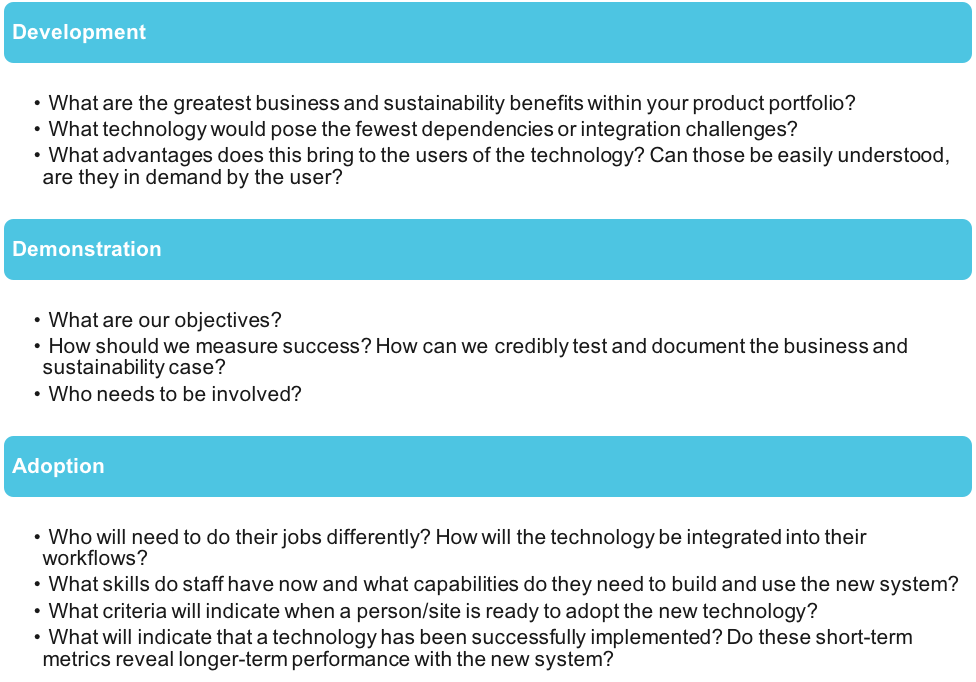
To achieve the business and societal transformations needed for long-term sustainability, new technologies and approaches must be integrated into how we do business. To help companies successfully implement technology-based sustainability solutions, the Center for Technology and Sustainability poses the following questions to help business leaders navigate successful implementation of technology solutions.
Case Studies | Wednesday March 30, 2016
Measuring Environmental Benefits of Health Information Technology
This case study, published by BSR’s Center for Technology and Sustainability, examines the environmental benefits and impacts of health IT, focusing on Kaiser Permanente’s electronic health records system.
Case Studies | Wednesday March 30, 2016
Measuring Environmental Benefits of Health Information Technology
Preview
This case study, published by BSR’s Center for Technology and Sustainability, examines the environmental benefits and impacts of health IT. Through case studies, the Center for Technology and Sustainability helps companies understand how to apply technology to solve sustainability challenges, credibly measure and communicate sustainability and business benefits, manage change, and successfully implement new approaches.
Summary
The introduction of information technology (IT) into a healthcare context continues to radically shift how healthcare is delivered. Patients today expect to be able to communicate with their doctors virtually and to do many of the healthcare tasks online that previously took place in person, such as answering questions, refilling prescriptions, and more. On the healthcare-delivery side, health IT enables the integration of patient records, providing ready access to information for doctors and patients alike.
In addition to the obvious health benefits, research to date shows that health IT can lessen environmental impacts by reducing the need for patient transportation and by reducing the amount of paper used in medical records. In turn, the electronics used in health IT use energy, create waste during manufacturing and end-of-life, and contain a variety of potentially hazardous chemicals and materials.
Approach
The Center for Technology and Sustainability supports the development, demonstration, and adoption of technology-based sustainability solutions for a variety of industries.
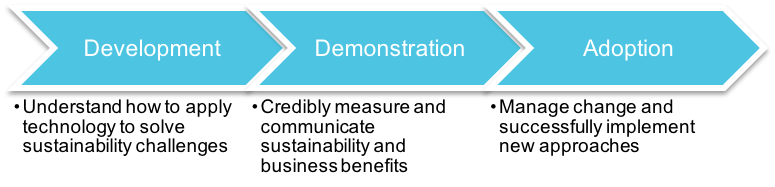
This case study focuses on technology demonstration, by reviewing and adding to work done by Kaiser Permanente (Kaiser) on the environmental impacts of its electronic health records system. Work to measure the net benefits of IT in electronic health has been limited to date, with Kaiser conducting the first major study in this area.
This case study was based on interviews with Kaiser staff, BSR analysis, and published material related to Kaiser’s activities as well as the broader benefits IT brings to healthcare. With this study, the Center for Technology and Sustainability aims to advance the measurement of environmental impacts and benefits from health IT. With better sustainability measurement, companies in the healthcare sector will be able to make decisions about technology not only based on business impacts, but also on the ability of this technology to drive social and environmental benefits. In addition, companies in the technology sector will be able to quantify the environmental impacts of their healthcare technologies.
The Opportunity
Because Kaiser Permanente was an early adopter of electronic health records (EHR) and health IT, the company has already addressed questions other companies are only now facing about the net environmental benefits of such systems. It was clear to Kaiser staff that electronic records reduce the need for paper use, but the members of Kaiser’s Environmental Stewardship Council wondered whether this benefit would be offset by potential negative environmental impacts from increased computer use.
Kaiser’s decision to invest in health IT was made based on rigorous business assessment and a quantitative evidence base. An understanding of the social and environmental impacts was one part of understanding the total cost of these systems.
Kaiser employees undertook a quantitative study to understand these environmental impacts, working with staff throughout the organization and in partnership with Kaiser’s Environmental Stewardship Council.
Because no previous studies of this type had been conducted on health IT, Kaiser developed the model for assessing net environmental benefits over approximately one year, including model development, data collection, internal review, and external review. One staff person led the work part-time, with some additional assistance for field work (such as measuring the weight of charts) and analysis.
Kaiser then published the findings of this study in the journal Health Affairs, in order to help others understand the net benefits of health IT and, if desired, apply Kaiser’s approach to their own organization. This case study focuses on the business impacts of this work and updates the analysis for 2015.
The positive environmental benefits of EHR included avoided paper use, avoided patient transportation, avoided chemical use, avoided plastic waste from x-rays, and avoided water use. The study also highlighted a number of negative environmental impacts such as increased energy use, increase in plastic waste, and an increase in chemical waste.
The study found that, by far, the biggest positive environmental benefit of health IT was the fact that patients needed to take significantly fewer vehicle trips to the doctor’s office. On the other hand, the biggest negative environmental impact came from the increased energy use from computers and electronic systems.
Business benefits seen from the integration of health IT include reduced expenditures on paper use, records transportation, and chemical purchase and disposal. Additional financial savings, such as reductions in patient transportation, are not captured within the Kaiser system but are enjoyed by patients.
Kaiser’s Approach
Measuring the environmental benefits of a particular technology is a three-step process:1
- Define Scope
- Prioritize Impacts
- Conduct Assessment
1. Define Scope
As an initial step, it is important to identify the purpose and scope of the study. The business processes impacted by the use of information technology must be assessed, along with a qualitative review of the environmental implications of these changes.
To assess the environmental impact of EHR, Kaiser identified four focus areas: (1) reductions in paper use, (2) changes in patient travel, (3) increased use of personal computers and data centers, and (4) changes in x-ray use (from chemical to digital processing).
There are a number of different frameworks used for defining the environmental priorities and impacts of healthcare, including the Global Green and Healthy Hospitals Agenda, Practice Greenhealth’s Eco-Checklist, and the Sustainability Accounting Standards Board’s Health Care Standard. Environmental issues that these frameworks identify as most relevant for the healthcare sector include chemicals, waste, energy, water, transportation, food, and green building. Kaiser used the Eco-Health Footprint, a 2009 report outlining the major impacts associated with healthcare.
2. Prioritize Impacts
An important part of any modeling exercise is determining what to include and what not to include either because data is not available or because the impacts are not significant when considered relative to other aspects of the model. There is often limited data available, especially in early stages of developing an environmental-impacts model, so it is important to start with the most significant impacts.
Kaiser’s study focused on the impact of EHR in four environmental impact areas: (1) greenhouse gases, (2) toxic chemicals, (3) waste production, and (4) water use. Kaiser excluded two environmental impact areas—the use of land for buildings and the emission of air pollutants like ozone, particulate matter, and sulfur dioxide—in order to focus on the four largest and most direct environmental impacts connected to the use of electronic health records.
3. Conduct Assessment
The final step in the model is to quantify the environmental costs and benefits of each business-process change through a combination of primary and secondary data. This should include the documentation of any assumptions made and key areas of uncertainty. Most importantly, it is crucial to assess what decisions can be made or changed as a result of the analysis.
Lessons Learned
Benefits Depend on Application
One of the most significant findings of Kaiser’s work is that the net environmental benefits of health IT depend significantly on how the organization uses the technology. A system like EHR can be used as a straight one-for-one substitution for paper use, or it can enable significant changes to delivering patient care. Also, an organization like Kaiser Permanente has several opportunities for using EHR for integrated care than would a stand-alone doctor’s office.
The Biggest Benefits Come From Rethinking the Business
If a technology enables significant transformations in how the business is operated or its services are delivered, the environmental benefits can be very large. Instead of thinking of technology as a one-for-one substitution of computers for paper-based records (which represents some modest savings in paper), Kaiser found when they thought more broadly about the transformative role of technology, they found the biggest environmental benefits. For example, adjusting business processes so that patients could interact with doctors online reduced the number of patient vehicle trips. For companies looking to apply technology, understanding the new business processes that the technology enables is a great place to start.
Concrete Measurement Improves Decision Making
This assessment helped Kaiser staff better recognize the environmental impacts, both positive and negative, of its technology decisions. Cost and quality of care are the dominant drivers of its IT systems, but a full understanding of environmental impacts helped increase awareness about these issues within the organization and gave staff a basis on which to make decisions. For example, all patients receive an after-visit summary; after assessing the environmental impacts, Kaiser provided an option for patients to receive this electronically instead of in printed form.
Assessment Requires Both Secondary and Primary Data
Much of the data used in the study already existed in the public domain. However, one challenge in conducting the study was identifying methods to obtain some key source data, such as avoided paper use and avoided patient transportation. These required the collection of primary data, including the number and types of IT equipment, the weights of paper charts, the average distance between Kaiser facilities and patient residents, and more. In addition, Kaiser had published several previous studies on the impact of EHR on the number of in-person patient visits; we used these studies as part of the analysis.
As healthcare is increasingly offered virtually, we will see further environmental benefits, such as a reduced need for clinical space and an even further reduction in patient transportation.
Looking Forward
There are two major focus areas to consider for future measurement efforts. First, computers today have lower energy use and environmental impacts than they did in 2011, when the study was conducted.
Second, there is an opportunity to expand the analysis to include other significant impacts of health IT. Aspects that were not included in Kaiser’s initial model, but which may create environmental and other benefits, include the potential to reuse floor space previously utilized for storing paper records, as well as reductions in vehicle use to transport records from site to site. The lack of paper records, for example, means that storage rooms no longer need to be heated and cooled, and being able to reuse space could potentially delay the need for additional building construction.
It is clear that the future of healthcare includes significant technology-based solutions. There is hardly an aspect of healthcare that hasn’t changed as a result of health IT, starting with electronic records but extending far beyond. As healthcare is increasingly offered virtually, we will see further environmental benefits, such as a reduced need for clinical space and an even further reduction in patient transportation. Future assessments of environmental benefits from health IT should look at these wider, more systemic impacts, especially as healthcare organizations become more integrated in the face of a changing business environment and regulatory models.
1Adapted from Global e-Sustainability Initiative (2010), “Evaluating the carbon-reducing impacts of ICT: An assessment methodology.”
Case Studies | Thursday December 17, 2015
Sharing Sustainability Best Practices Through Executive Workshops
BSR’s executive workshops help companies share best practices, work together to solve problems, and build camaraderie across global sustainability teams.
Case Studies | Thursday December 17, 2015
Sharing Sustainability Best Practices Through Executive Workshops
Preview
BSR’s executive workshops help companies share best practices, work together to solve problems, and build camaraderie across global sustainability teams.
The Challenge
Staff at global companies’ local offices are working on the front lines to produce and deliver products and services, manage employees, and interact with external stakeholders. The intensity and diversity of their work can be overwhelming. Given the demands of their daily jobs, there is not often time to reflect on, share, and learn from other offices that are implementing the same corporate standards.
To help global companies’ sustainability teams—including community and government relations, health and safety, environment, and security—share knowledge, identify and implement best practices, and solve common challenges, BSR developed an executive workshop focused on improving the impact of sustainability practitioners.
Our Strategy
BSR has facilitated biannual global executive sustainability workshops for a variety of companies, and we work with each team to prepare the workshop agenda, pre-reading and workshop materials, and exercises.
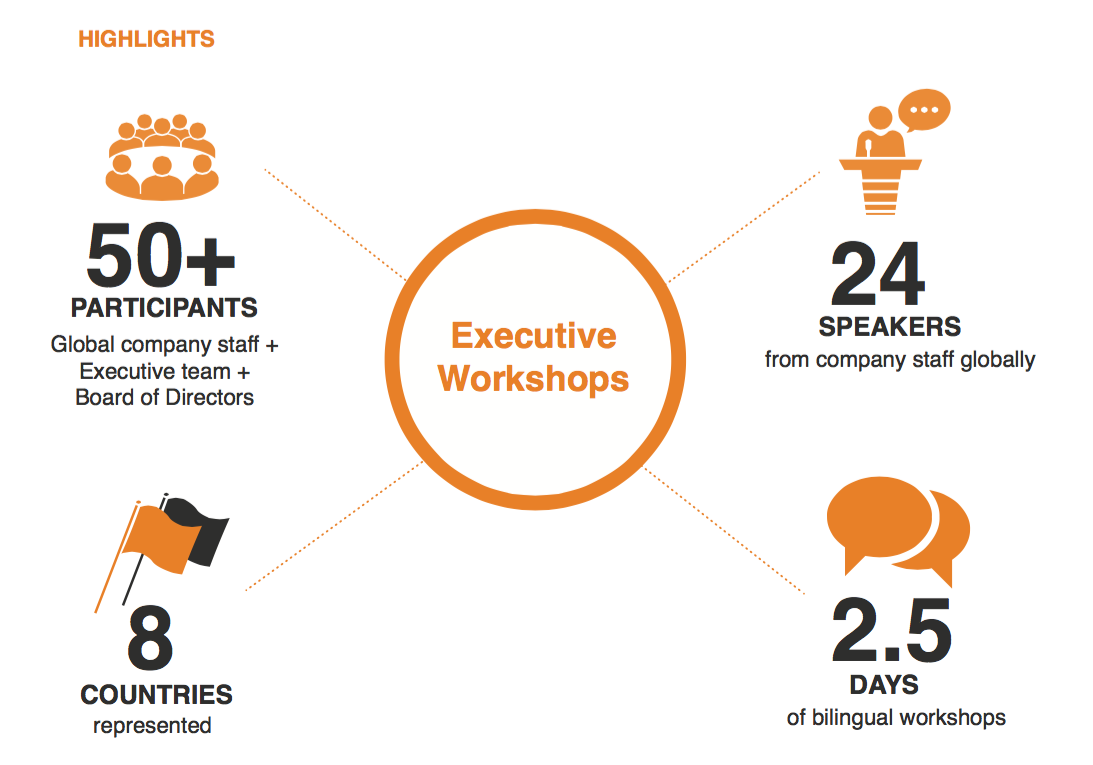
With one mining company, BSR facilitated a two-and-a-half-day workshop with more than 50 global participants, including corporate and local office managers, the executive team, and the board of directors. The workshop included presentations by 24 speakers from eight countries. During the workshop, participants prepared tools such as a set of best practices for stakeholder engagement, a “clinic” to solve problems related to the design and implementation of culturally appropriate grievance mechanisms, a shared vision describing what it means to close a mine in a responsible manner, and key performance indicators to measure the impact of the company’s various community investments.
After the workshop, BSR wrote a summary report that captured next steps for all participants, as well as recommendations for future workshops and ongoing internal collaboration.
Our Impact
While global sustainability workshops require a significant investment of time and money, they provide many returns. As a result of the workshops BSR has led, the companies were able to enhance their awareness of global sustainability practices, challenges, and opportunities; identify key performance indicators and additional tools to support local implementation of corporate standards; increase dialogue between in-country managers and the executive team and board; and contribute to a more collaborative corporate culture.
These workshops have the potential to benefit workers and communities as well, as companies are able to engage more deeply across the organization on sustainability issues and work to improve their global sustainability practices and decision-making.
Lessons Learned
- Global workshops give participants opportunities to learn best practices, build and expand relationships and networks of experts within the company, align on priorities, and work together to solve problems.
- We have found that when the workshops are more participatory—with more people and offices presenting information—they can boost the feeling of inclusion and collaboration. However, this shouldn’t come at the expense of a clear, streamlined workshop.
- Other aspects of inclusion to consider include language and translation needs, as well as the development of culturally appropriate content, which can be enhanced, for instance, if employees from indigenous groups review the materials in advance.
- Content is extremely important, but there is also value in devoting time for team-building and the development of new relationships that will support the ongoing sharing of information.
Case Studies | Tuesday December 15, 2015
A Tool for Companies to Make Strategic, Inclusive Community Investments
BSR developed a tool to help leading companies shift from ad hoc philanthropic donations to strategic investments that make sense for both the business and the community.
Case Studies | Tuesday December 15, 2015
A Tool for Companies to Make Strategic, Inclusive Community Investments
Preview
BSR developed a tool to help leading companies shift from ad hoc philanthropic donations to strategic investments that make sense for both the business and the community.
The Challenge
To increase positive impacts on society, many companies are focusing on improving access to products and services, creating high-quality employment opportunities, providing skills development and training, and investing in communities located near their offices or operations. Leading companies also see the value of working with other stakeholders to improve community well-being. Related to this trend, some companies recognize the need to shift from ad hoc philanthropic donations to strategic, community-identified investments. These projects focus on building skills and capacity, creating positive long-term impacts, and avoiding programs that make the community dependent on the company for progress.
However, companies face a number of challenges in making this shift. They must stop investing in previous philanthropic projects, and often, there is a greater demand for projects than there are funds available. Typically, companies have few staff members with experience in community investment and development, making it difficult to conduct meaningful dialogue with diverse stakeholders to identify the most sustainable and impactful projects. And it can be particularly difficult to build relationships with vulnerable groups who have not directly benefited from jobs created by the company’s presence. Additionally, it is challenging to consistently implement corporate community investment policies and standards at the local level, given the diversity from one local context to another, as well as limited access to baseline data and outcomes from previous investments.
BSR developed a new tool to address these challenges and help companies make strategic investments that benefit community members and support business goals.
Our Strategy
In 2010, BSR developed a customizable tool for companies to develop community-driven approaches to investments. This tool is one step companies can take to ensure that they meet strategic business goals as well as community priorities.
To begin, companies should conduct socioeconomic baseline and impact assessments to understand the current priorities, assets, needs, and positive and negative impacts from the companies’ presence. Companies can also map stakeholders and develop a corporate community investment strategy (BSR has tools for these two steps as well).
Using the impact assessments and stakeholder engagement efforts as inputs, the community investment tool helps companies develop a participatory approach to identify community investment projects that are aligned with the companies’ and communities’ priorities. A complementary tool helps identify and assess potential project partners. These tools enable analysis, including communities’ input, which provides key information for local community development plans. (For one example of how this tool works, please read a case study on our work with Freeport-McMoRan to develop a multi-year community/social investment plan and stakeholder-engagement process.)
Our Impact
We have customized this tool for a number of companies, and our work has reached more than more than 20,000 individuals within at least 50 communities.
For communities, these projects have helped improve access to necessary services like health, education, and water; they have given community members a chance to receive technical and entrepreneurial skills training, which has enhanced their ability to earn a higher wage; and they have supported environmental conservation, as well as community-based organizations and indigenous cultures.
These projects have also helped companies by giving them new, community-driven development strategies and tools, and by helping them build relationships with external stakeholders; improve their understanding of communities’ assets, needs, and priorities; and identify strategic, sustainable projects.
Lessons Learned
Developing this tool has helped us improve our understanding of how companies can make effective community investments. Here are some important rules for companies to keep in mind:
- Listen closely to understand employees’ and communities’ assets, needs, priorities, and visions for the future, and recognize your role as only one actor in work involving many.
- Develop comprehensive strategies to ensure that resources are used effectively to achieve desired impacts.
- Before making investments in communities, focus on addressing the impacts created by your company operations. Ongoing dialogue with communities about your company’s impacts is essential, regardless of whether or not you are partnering on community investment projects.
- Work with corporate managers to align with your company's global community-investment approach, and work directly with local and regional managers responsible for selecting projects to ensure your company’s approach reflects their daily reality and challenges. This will help ensure that the tools are actually used.
- Understand the cumulative impact of your industry’s presence, particularly if the industry is highly concentrated in specific geographic areas, such as extractives operations near mine deposits, technology companies in communities surrounding the Silicon Valley, agriculture companies in fertile valleys, or factories in trade zones. Collaborate with other industry actors to maximize the effectiveness of your investments and avoid duplicating efforts.

Case Studies | Wednesday December 9, 2015
Telenor: Responsible Decision-Making in Myanmar
BSR helped the telecommunications company Telenor understand the sustainability risks and opportunities before entering a new market in Myanmar.
Case Studies | Wednesday December 9, 2015
Telenor: Responsible Decision-Making in Myanmar
Preview
BSR helped the telecommunications company Telenor understand the sustainability risks and opportunities before entering a new market in Myanmar. By integrating sustainability into its strategy from the beginning, Telenor will grow Myanmar’s mobile market from 6 percent of the population to 90 percent of the population—in a responsible way.
The Challenge
In 2012, it was estimated that less than 6 percent of Myanmar’s population owned a mobile phone, and less than 1 percent had broadband internet access.
To address this challenge and accelerate the country’s political and economic reform, the government of Myanmar announced a significant liberalization of its telecommunications market, through which it created two new operating licenses for international telecommunications companies.
With successful business units in Bangladesh, India, Malaysia, Pakistan, and Thailand, Norway-based telecommunications company Telenor was well-positioned to win one of the licenses. However, given that Myanmar had only recently opened up for international business, Telenor wanted to become fully aware of the sustainability risks and opportunities of pursuing this opportunity. The company also wanted to ensure that it could make informed decisions about how to operate in Myanmar if its bid was successful.
In order to understand the potential sustainability risks and opportunities of operating in Myanmar, Telenor commissioned BSR to undertake pre-investment due diligence, covering human rights, labor rights, corruption, and environmental sustainability.
Our Strategy
We began our due diligence in late 2012, using an approach based on our human rights impact assessment (HRIA) framework, with additional considerations, including bribery, anticorruption, and environmental issues, as well as opportunities to support social and economic development.
A key part of our approach was interviewing a diverse cross-section of stakeholders, including international, regional, and local leaders in civil society, government, business, and relevant industry associations. We also spoke directly with rights-holders in Myanmar to gather their insights on the important political, regulatory, and social context, such as privacy, land rights, and labor conditions.
We then mapped the key risks and opportunities, identified potential mitigation measures, and provided recommendations. These recommendations were refined during a series of workshops with Telenor, which drew upon the company’s extensive experience working in other emerging markets.
Throughout, it was important that our analysis was based upon the UN Guiding Principles on Business and Human Rights, and upon an understanding of what leverage would be available for Telenor. For example, our recommendations included the importance of collaborating with other local, regional, and international organizations to build capacity in areas such as labor rights, health and safety, and privacy.
Our Impact
Telenor submitted—and won—a license to operate in Myanmar. The company launched its service in 2014 and intends to provide coverage for 90 percent of the Myanmar population within five years.
Telenor launched its service in the Myanmar market with sustainability integrated into its approach from the beginning—using the focus areas and key recommendations made during BSR’s due diligence process. These focus areas include anticorruption, responsible supply chain management, safety and security, environment, and human rights—particularly related to privacy and freedom of expression, land rights, children’s rights, and conflict areas. In addition, the company is delivering significantly increased and more affordable connectivity to the Myanmar population, which has the potential for significant social and economic impact.
Lessons Learned
Telenor’s systematic management of sustainability risks and opportunities in Myanmar reinforces the importance of due diligence and the informed identification of sustainability risks and opportunities before business decisions are made.
The due diligence process also underscored the importance of engaging with a diverse range of stakeholders. We learned, for instance, that some stakeholders were more focused on the risks arising from investment, while others were more focused on the opportunities. All types of stakeholder perspectives are legitimate and should be sought, and the result is smarter and more informed decision-making.
Finally, it is important that due diligence includes a consideration of opportunities, as well as risks. In this case, the telecom industry has the power to transform society by providing increased access to information and services such as healthcare, finance, and education.
Case Studies | Thursday December 3, 2015
Working with Tech Leaders to Power the Internet with 100 Percent Renewable Energy
The Future of Internet Power was founded in 2012 with a vision to power the internet by 100 percent renewable energy.
Case Studies | Thursday December 3, 2015
Working with Tech Leaders to Power the Internet with 100 Percent Renewable Energy
Preview
The technology industry’s use of data centers represents two percent of all U.S. electricity use—a percentage that is likely to grow with our reliance on internet communications. The Future of Internet Power was founded in 2012 with a vision to power the internet by 100 percent renewable energy.
The Challenge
While the thriving technology sector provides countless business and societal benefits, the industry is concerned about reducing the climate impacts of its energy-intensive data centers. In 2010, data centers represented 2 percent of all U.S. electricity use, and that percentage is likely to grow with our increasing reliance on mobile and internet communications.
Today, internet companies and data center operators are addressing their impacts by considering the source of electricity that powers data centers, which is often a mix of renewables, natural gas, and coal. But to scale up the use of sustainable, low-carbon electricity, it’s important for companies to collaborate across the industry and work with local utilities and policymakers to develop the infrastructure and promote the regulations and policies that will support the procurement of renewables for internet power.
Our Strategy
In 2012, BSR launched the Future of Internet Power, a collaborative group comprising the world’s most influential internet companies—now including Adobe, Akamai, Autodesk, eBay, Etsy, Facebook, HP, LinkedIn, Salesforce, and Symantec—that aims to power the internet with 100 percent renewable energy.
For internet companies, making these commitments reality involves overcoming a number of potential hurdles: navigating regional environmental policies and incentives, paying cost premiums for renewable versus coal power, and addressing challenging infrastructure requirements for offsite power generation. These and other factors make the sourcing of low-carbon power difficult for individual companies to manage alone. Through the Future of Internet Power, companies can collaborate with peers, suppliers, and power developers to create smarter business practices and opportunities for shared investments.
Our Impact
The Future of Internet Power has played a foundational role in helping the technology sector make aggressive and achievable commitments to renewable energy. As of November 2015, four Future of Internet Power members had committed to 100 percent renewable energy: Adobe, Autodesk, Facebook, and Salesforce.
One example of BSR’s efforts to support the sustainable deployment of renewable energy is demonstrated in our work with HP, a cofounder of the Future of Internet Power. HP had ambitious plans to power its internal IT operations globally with renewable energy and wanted to do so with a power infrastructure that was developed with sustainability in mind. BSR developed a plan to help HP evaluate proposals from power developers and ensure that the company’s new 112-megawatt wind energy project was constructed, implemented, and maintained in a sustainable way. This switch to renewables, which reduces HP’s carbon-dioxide-equivalent emissions by 340,000 tons, is akin to taking 65,000 passenger vehicles off the road.
In 2016, the Future of Internet Power’s focus will be on creating new tools for companies choosing renewables when making data-center siting decisions, encouraging industrial data center service providers (also known as “co-los”) to procure renewables, and creating new models for shared investment in renewables among internet companies and their suppliers.
Lessons Learned
In addition to sharing best practices and collaborating on solutions through the Future of Internet Power, BSR’s one-on-one work with companies like HP creates a model that we can customize for other companies to sustainably develop and manage renewable-energy infrastructure projects.
Building on the collaborative approach of the Future of Internet Power, we have been able to expand the group’s mission by joining the Corporate Renewables Partnership, a collaboration with WRI and WWF Buyers' Principles initiative, and the RMI's Business Renewables Center. These partnerships allow us to scale our impact even more, while making it easier and more efficient for businesses to leverage their influence.
Search Again?